Tokyo Taxi (GO, Uber Taxi, S.RIDE) vs Train: When It's Cheaper
Prices checked September 22, 2026 against the official pages. Every figure links to its source.

Published: September 22, 2026
This page contains an affiliate link. If you book through it, we may earn a commission at no extra cost to you. It does not change our numbers. See our disclosure.
Fares checked on September 22, 2026.
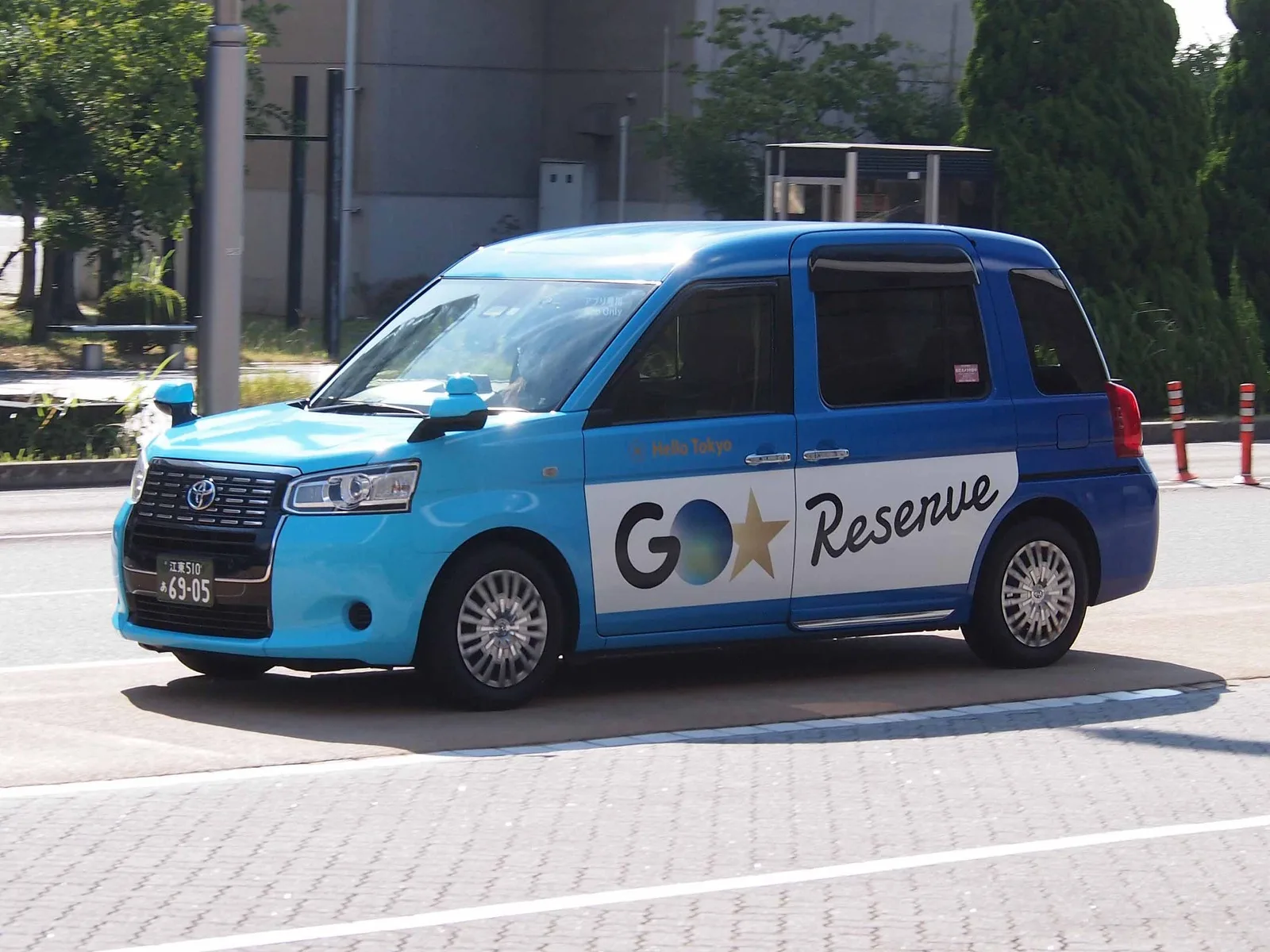
Toyota's JPN TAXI is easy to spot in Tokyo traffic: a boxy shape in a deep indigo body color Toyota calls koiai, a shade some overseas visitors know as "Japan blue," with a wide power-sliding rear door and a low, flat floor for boarding (source: Toyota's official JPN TAXI page). Every ride runs on a metered fare set by the Kanto District Transport Bureau, so the number on the meter is what you pay, whether you flag one down on the street or book it through GO, Uber Taxi or S.RIDE. This page turns that meter into a plan: what a Tokyo taxi costs beside the train, and which app adds the least on top.
The short answer
- In the daytime, for one or two people going a short distance, the train is almost always cheaper. A taxi's meter starts at 500 yen for the first 1.0 km, under the fare revision that took effect on April 20, 2026. A Tokyo Metro or Toei subway ride starts at 180 yen, and a JR Yamanote Line ride at 160 yen. See Tokyo Subway Ticket vs Suica for the full fare table.
- A taxi tends to win in three situations: after the last train, when three or four people split one fare, and when six or more people need a single vehicle. The train stops running at night, so it is not a choice at all after the last departure. Splitting a fare among riders lowers the per-person cost, and a taxi that seats a whole group can beat several separate train fares.
- GO and Uber Taxi run on the exact same public meter fare. The only difference between the two apps is what each one adds on top: a pickup fee set by the taxi company, plus GO's own 100 yen app fee or Uber Taxi's 100 yen surcharge for rides starting inside Tokyo's 23 wards. S.RIDE uses the same meter too, but its own FAQ does not give a pickup-fee amount at all, in the app or otherwise, and tells riders to check that fee with the taxi company directly.
- All the fares on this page are the ones that took effect on April 20, 2026 — a 10.14% increase over the November 2022 rates, according to the Kanto District Transport Bureau. Some English-language taxi fare calculators we checked while researching this page still use the old flag-drop distance of 1.096 km instead of the new 1.0 km, so a quick web search can turn up numbers that are already out of date.
Jump to what to book instead →
For visitors to Japan overall, 26.5% said they used a taxi or hired car during their trip, well below the 80.7% who used a train or monorail (multiple answers allowed). Source: Japan Tourism Agency, Consumption Trend Survey for Foreigners Visiting Japan, 2025 annual report (processed by Japan Trip Math). Public Data License 1.0.
What makes a Japan taxi worth it
A metered taxi in Tokyo is not just a fallback for when the trains stop running. A few things about the vehicles, the fare system and the apps make the ride itself worth knowing about, on top of the price.
Arrive at any major Tokyo station and you will usually find a line of taxis waiting in an orderly queue at the taxi rank, doors closed, engines idling, each one pulling forward the moment the car ahead pulls away. That queue, and the five points below, are as much a part of getting around Tokyo as the trains most guides spend all their attention on.
The JPN TAXI was built around the passenger, not the driver. Toyota's official JPN TAXI page describes a cab designed from the ground up for people getting in and out with bags, rather than a passenger car adapted for taxi work. The floor is low and flat, so there is no step to climb over. The rear door on the curb side is a wide, power-operated slider, not a hinged door that needs room to swing open on a narrow street. The doorway itself is tall, and the cabin has a high ceiling and large windows, so you are not folding yourself into a low seat or squinting through a small side window at the city going by. The car went on sale on October 23, 2017, and its boxy, upright shape has become the standard silhouette queued at Tokyo's taxi ranks and lined up outside hotels and stations. In its usual configuration it seats four adults; when a wheelchair is loaded through that wide rear opening, it carries up to two passengers instead, with the extra space going to the wheelchair itself. The body color most associated with the model is a specific shade Toyota calls koiai, a traditional Japanese indigo dark enough to read as near-black in low light and distinctly blue in the sun — a color some visitors from outside Japan have taken to calling "Japan blue." Not every JPN TAXI on the road is painted that exact color, since individual operators choose their own liveries, but the shape is the same car underneath. In practice, the low floor and the wide rear door mean a rolling suitcase can go straight in without being lifted over a sill, and the high ceiling means most passengers can climb in without ducking their head, even wearing a hat — small details, but ones a standard sedan taxi does not offer.
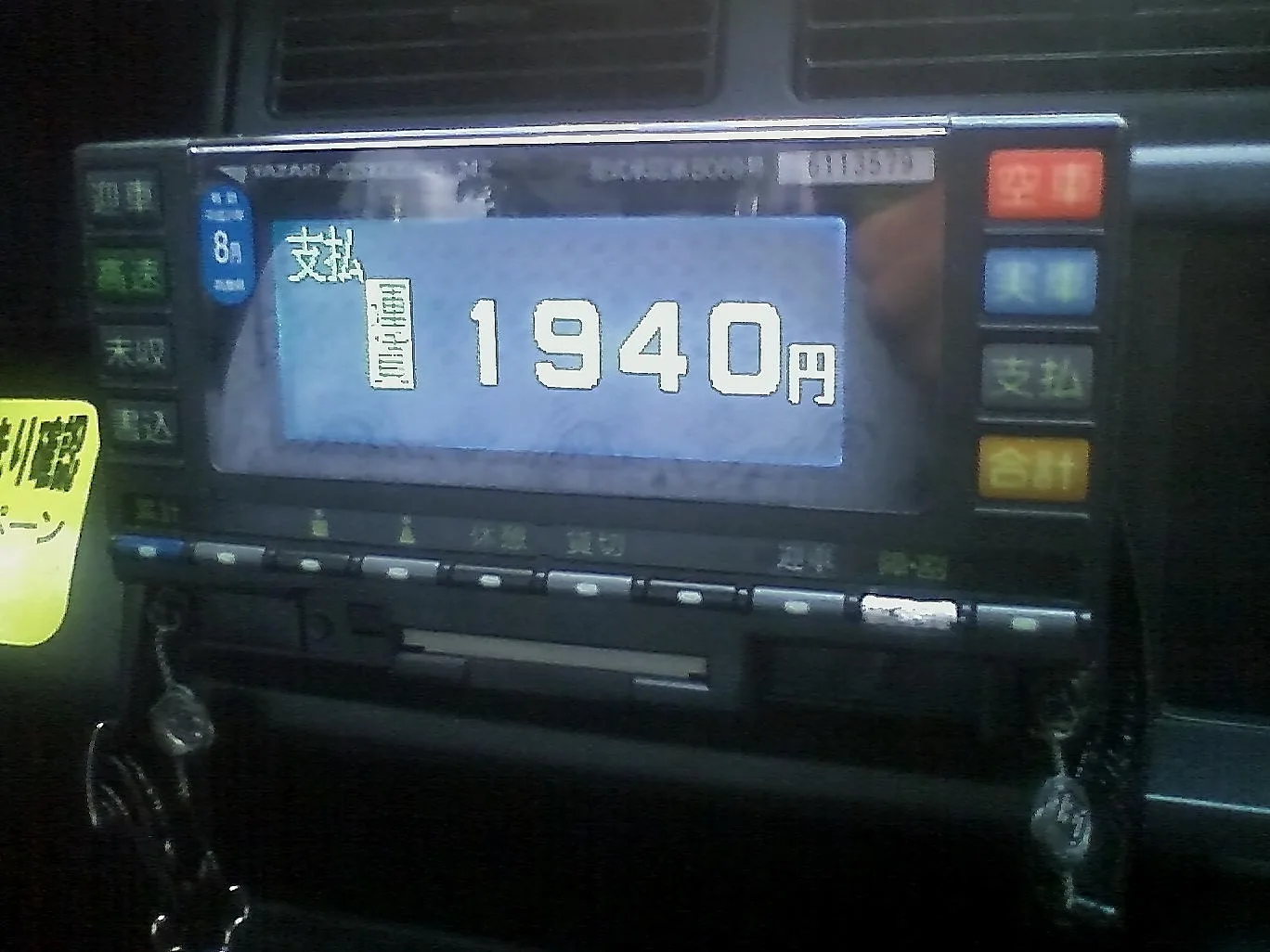
The fare itself is part of the experience for a first-time rider, not just a number at the end. Every meter in Tokyo runs inside a range set by the Kanto District Transport Bureau: a published upper limit and a published lower limit for the same route, with each taxi company choosing its own rate somewhere inside that band. There is no haggling over the price before you get in, and no need to agree on a destination fee up front the way you might with an unmetered cab elsewhere. The flag-drop amount, the distance at which the fare first climbs, and the rate for every step after that are all public numbers, set out in a government notice rather than decided privately by the company. The meter simply counts upward in fixed increments as the car moves, in full view on the dashboard the whole ride, and the amount you owe is whatever is showing when you arrive — nothing renegotiated, nothing added afterward. For a visitor used to unmetered taxis, or to an app that only reveals the final price after you confirm the trip, watching a public, regulated number tick over in real time is its own kind of reassurance.
A taxi is one of the few things in Tokyo that works at any hour of the night. GO's own support page states plainly that a car can be dispatched in the middle of the night or in the early morning, as long as a vehicle is available nearby. That matters more here than it might in a city with round-the-clock trains, because the subway and most JR lines in Tokyo close for the night and do not run again until the early morning. Once the last train on your line has gone, a taxi — or, on some routes, a night bus — is what is left. Being able to open an app after midnight and watch a car actually accept the request and start moving toward you, rather than standing on a dark street corner hoping one drives past, is a small but real difference for anyone out past the last train. For a visitor without a way to flag one down easily, closing the gap between "the last train just left" and "a car is on its way" is exactly what these apps are built for.
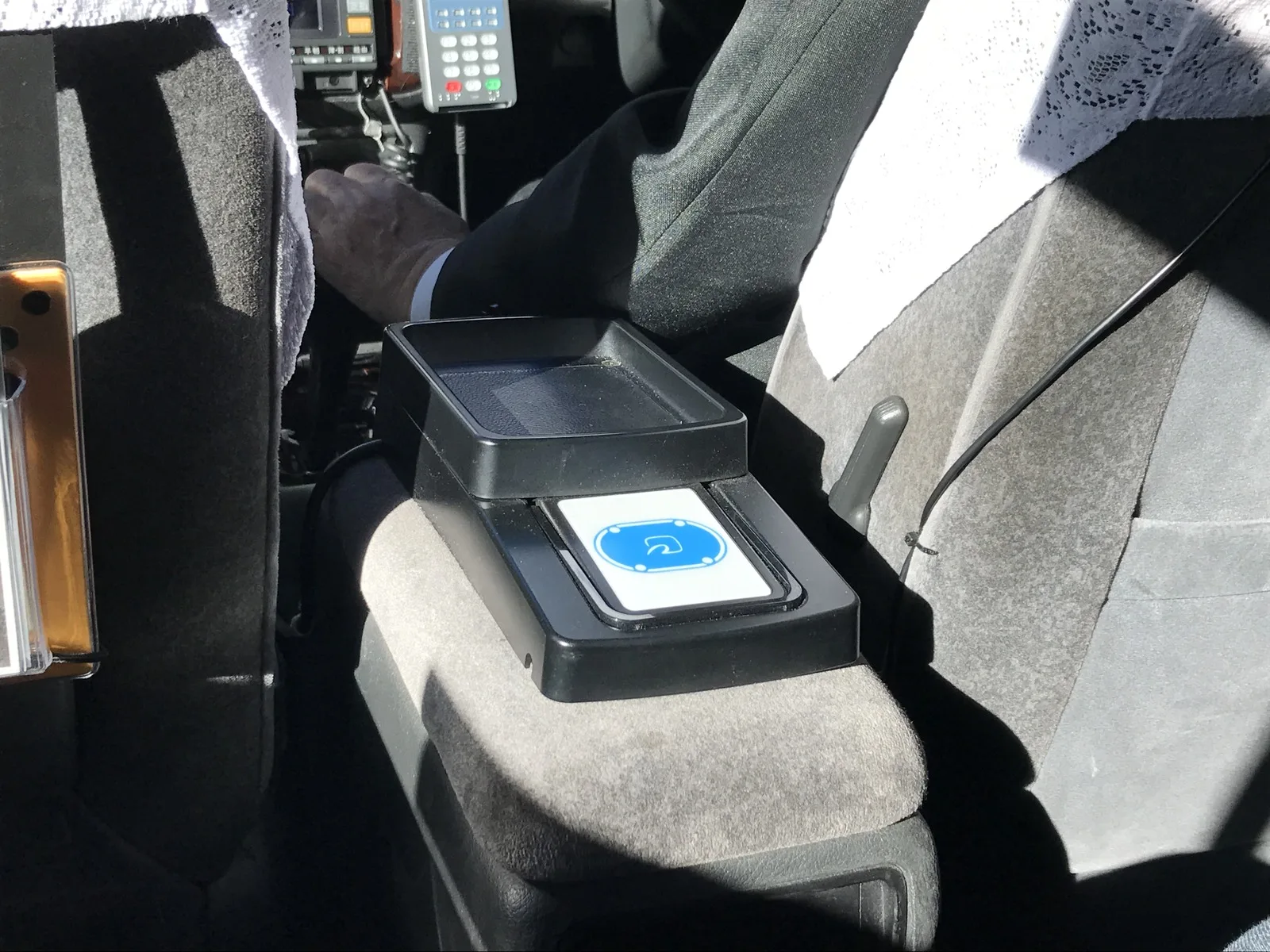
You are unlikely to need cash for any of this. In-car card readers for transport IC cards and ordinary credit cards are standard equipment in Tokyo taxis, mounted where the driver or a passenger can reach them, and GO and Uber Taxi both default to settling the fare inside the app itself. That means the ride can end the way it started — you step out and go, with the payment already handled, rather than counting out coins for an exact fare while the meter (and, at night, a line of other passengers) waits.
For a group, the ride itself can be part of the plan rather than a compromise you make because the train is inconvenient. GO PREMIUM and Uber Premier Van both let you request a larger, designated vehicle — typically an Alphard or an Elgrand, boxy Japanese minivans with three rows of seats and sliding doors on both sides, the same kind of vehicle used for family trips and business transfers around Japan. Requesting one of these through the app means a family or a small group of friends can move together in a single car, with everyone's luggage stowed inside rather than split across two taxis or dragged through a station transfer with stairs and ticket gates. It costs more than a regular car, but what you are paying for is not just capacity — it is staying together, door to door, without anyone getting separated on a platform or left waiting for the next available taxi in the rank.
Put together, these five points describe a way of getting around built for predictability rather than negotiation: a cab designed around getting in and out easily, a fare you can watch add up in real time instead of guessing at, a service that keeps running long after the last train has gone, a payment method that asks nothing of you beyond a tap, and a larger car you can call by name when the group and the luggage are both too big for a single regular taxi. None of that makes a taxi the cheapest way across Tokyo — the numbers in the rest of this page mostly say the opposite for a short daytime trip — but it explains why visitors and residents alike reach for one anyway once the train stops being the convenient option.
The numbers: fares after the April 20, 2026 update
Every fare below is the upper-limit rate the Kanto District Transport Bureau published for Tokyo's special wards and the Musashino-Mitaka area, effective April 20, 2026. This is a 10.14% increase from the rates that had been in place since November 2022. Some taxi companies set their own fare slightly below this upper limit, inside a band the bureau also publishes; the numbers here are the ceiling, which is what most companies charge.
Meter fares by distance
| Distance | Regular car, daytime | Regular car, 22:00-5:00 (+20%) |
|---|---|---|
| 1.0 km (flag drop) | 500 yen | 600 yen |
| 2.0 km | 930 yen | 1,116 yen |
| 3.0 km | 1,360 yen | 1,632 yen |
| 5.0 km | 2,220 yen | 2,664 yen |
| 10.0 km | 4,380 yen | 5,256 yen |
Source: Kanto District Transport Bureau, press release on the fare revision (Japanese), and the Tokyo Hire-Taxi Association's fare table (Japanese). The flag drop covers the first 1.0 km, and after that the meter adds 100 yen every 232 meters. A real taximeter adds that 100 yen in steps at each 232-meter mark, so it can read a few yen different from a straight-line calculation over a fractional distance; the calculator further down this page uses a continuous version of the same formula for the same reason, and can differ from this table by a few yen.
There is also a long-distance discount: once the fare passes 9,000 yen, the amount above 9,000 yen is discounted by 10% (Tokyo Hire-Taxi Association). A 25 km ride, for example, comes to about 10,845 yen before the discount by this formula, and about 10,660 yen after it — our own arithmetic, applying the association's rule to the meter formula above. None of the distances in the table reach that threshold.
Regular car, six-seat car or jumbo taxi
| Vehicle | Seats | Extra cost | Meter table |
|---|---|---|---|
| Regular car (e.g. JPN TAXI) | 4 (2 with a wheelchair) | None | 500 yen / 1.0 km, +100 yen / 232 m |
| Designated six-seat car (Alphard, Elgrand; 4-5 recommended) | Up to 6 | +2,000 yen designation fee (Nihon Kotsu's phone-booking example) | Same as regular car |
| Specified large vehicle (jumbo taxi) | About 5-9 (industry estimate; not an official published threshold) | None (its own meter table) | 570 yen / 1.0 km, +100 yen / 203 m |
Source: Nihon Kotsu, Tokyo's largest taxi operator (car types and the vehicle-designation fee), and the Kanto District Transport Bureau (the jumbo taxi's separate meter table). Industry explanations put the seat count that separates a "specified large vehicle" from a regular one at roughly five to nine seats.
What GO, Uber Taxi and S.RIDE add on top of the meter
| Service | Booking / dispatch fee | Extra | Source |
|---|---|---|---|
| Street hail / taxi rank | 0 yen | — | — |
| Phone booking (dispatch office) | Set by each company (e.g. 500 yen, Nihon Kotsu) | +500 yen for a time reservation, +2,000 yen to specify a vehicle type | Nihon Kotsu |
| GO app | Set by each company (e.g. 500 yen, Nihon Kotsu) | +100 yen app handling fee | GO |
| Uber Taxi app | Set by each company; some companies charge none | +100 yen surcharge for pickups starting inside Tokyo's 23 wards (waived on airport flat fares) | Uber |
| S.RIDE app | Set by each taxi company; not shown in the app — S.RIDE's FAQ says to check with the taxi company | Reservation service fee, shown in the app, but only if you book through advance reservation dispatch | S.RIDE |
Here's what actually changes depending on how you book: GO and Uber Taxi both run on the meter fare above, and the pickup fee is set by the individual taxi company, not the app, so you pay the same fee whether you call that company by phone, through GO or through Uber Taxi. GO adds its own flat 100 yen app fee on every ride. Uber Taxi instead adds a 100 yen surcharge only when the ride starts inside Tokyo's 23 wards, and waives it on airport flat fares. S.RIDE runs on the same meter fare as well, and its pickup fee is set by the taxi company too, but S.RIDE's own FAQ gives no amount for it at all: it tells riders to contact the taxi company directly, and it separately confirms that the fare estimate shown in the app does not include the pickup fee or highway tolls. A different fee — a reservation service fee — does appear in the app, but only when you book through S.RIDE's advance reservation dispatch rather than an immediate pickup; S.RIDE's FAQ says that fee varies by area, time and how many vehicles are available.
One more detail is specific to GO's premium tier. GO PREMIUM adds a "premium charge" of 0% to 50% of the meter fare plus the pickup fee, with a 500 yen minimum, in exchange for a designated larger car. Because that percentage is calculated on the meter fare after any late-night surcharge is already included, a GO PREMIUM ride after 22:00 effectively pays the night surcharge twice: once inside the meter fare itself, and again as a share of the premium charge on top of it. It is easy to miss on a quick fare comparison.
Calculator: distance, time and group size
Enter the distance, whether the ride falls in the daytime or the late-night and early-morning window, how many people are riding, and whether the pickup starts inside Tokyo's 23 wards. The pickup fee fields are placeholders you can edit to match what your own taxi company or app quotes.
What the calculator does not include: the long-distance discount on the part of a fare over 9,000 yen, tolls, child fares, cancellation fees, and Uber Premier (formerly Uber Premium) or Uber Premier Van, which price a ride as an upfront quote rather than the public meter rate. See the section on Uber Premium below.
Scenarios: four common rides
Adult totals, as of September 22, 2026. Ride distances and times are examples, not measured routes; use the calculator above for your own trip.
| Scenario | Group | Time | Distance | Street hail | GO | Uber Taxi | S.RIDE (fee not published) |
|---|---|---|---|---|---|---|---|
| A. Short hop | 1-2 | Day | 1.0 km | 500 yen | 600 yen | 600 yen | 500 yen |
| B. Splitting a 3 km ride | 3-4 | Day | 3.0 km | 1,362 yen | 1,962 yen | 1,962 yen | 1,362 yen |
| C. After the last train | 5-6 | 22:00-5:00 | 8.0 km | 6,621 yen | 7,221 yen | 7,121 yen | 6,921 yen* |
| D. Jumbo taxi, heavy luggage | 7-9 | Day | 15.0 km | 7,467 yen | 8,367 yen | 8,367 yen | 7,467 yen |
The pickup fee is set by the taxi company, not by GO or Uber, so the same fee applies to both apps whenever they reach the same company; this table uses 0 yen for row A (a company that charges no pickup fee at all, which Uber's own help pages say exists), 500 yen for rows B and C (Nihon Kotsu's example), and 800 yen for row D. Rows A, B and D assume the ride starts inside Tokyo's 23 wards, so Uber Taxi's 100 yen ward surcharge applies there; row C assumes a pickup outside the 23 wards, so that surcharge does not apply. Enter your own figures in the calculator above. *Row C's S.RIDE figure adds an example 300 yen fee, since S.RIDE does not publish an amount; every other S.RIDE figure in this table assumes 0 yen.
One or two people, a short daytime hop
Splitting the street-hail fare of 500 yen two ways comes to 250 yen per person, which is still more than a single Tokyo Metro or Toei ride (180 yen) or a JR Yamanote Line ride (160 yen); see Tokyo Subway Ticket vs Suica. For a single stop with no change of train, the taxi's advantage is not the fare — it is carrying luggage or saving time, not saving money.
Three to four people splitting a fare
Splitting a street-hail taxi four ways brings the per-person cost to about 341 yen (1,362 yen divided by 4). A single train ride starts at 160 to 180 yen, so for one simple, no-transfer hop the train is still cheaper per person. The gap narrows quickly if the train trip needs a change of line, since each additional leg adds its own base fare: a group of four paying two separate train fares each could spend more in total than the 1,362 yen taxi. Whether the taxi or the train wins depends on the actual route, so this only works in the group's favor when the train trip is not a single fare.
After the last train: five or six people, late at night
Once the last train has left, the train is not a choice at all, so the comparison is between taxi options only. A jumbo taxi's vehicle-designation fee, the 22:00-5:00 night surcharge and each app's own fee stack on top of each other: even a street-hailed car comes to 6,621 yen for this ride. Split six ways, that is 1,104 yen per person — still a real cost, but one vehicle for the whole group with no risk of getting separated.
Seven to nine people or heavy luggage: jumbo taxi
A jumbo taxi's street-hail fare for this 15 km ride is 7,467 yen, or about 830 yen each split nine ways. The long-distance discount (10% off the part of the fare over 9,000 yen) does not apply yet at this distance, but it starts to matter on a longer ride, such as a trip to or from one of Tokyo's airports.
When you'll actually need a taxi
A taxi in Tokyo does not follow a cherry-blossom or autumn-leaves calendar the way a sightseeing trip does. What changes the price, and whether a taxi is even useful, is the time of day and a handful of specific dates.
| When | What happens | Source, checked September 22, 2026 |
|---|---|---|
| Every day, 22:00-5:00 | Late-night and early-morning surcharge, +20% on the regular car meter fare | Tokyo Hire-Taxi Association |
| New Year's Eve into New Year's Day (2025 into 2026, the most recent example) | JR East ran all-night service on six lines in greater Tokyo. Tokyo Metro instead ran a Saturday/holiday schedule over the same period, with no all-night trains or extended hours | JR East press release, October 17, 2025 |
| Rainy or otherwise bad weather | Uber's own help pages say surge pricing can apply when demand for rides rises in situations such as bad weather | Uber, official help pages |
Whether Tokyo Metro or JR East run any special year-end schedule for December 31, 2026 into January 1, 2027 had not been published as of September 22, 2026; operators have typically announced these plans in mid-October in past years, so it is worth checking closer to the date rather than assuming this year will match 2025.
How locals choose between GO, Uber and a street hail
GO's own support pages describe the fare a rider sees as simply "the meter fare" — the same number that would show up on the meter of a car you flagged down. S.RIDE's own FAQ describes its "meter fare" the same way: the fare calculated by the taxi meter installed in the vehicle, based on distance and time, using each taxi company's own formula — again, the same public meter, not a rate S.RIDE sets itself. None of the three apps quotes its own separate distance rate for a standard taxi ride; the fare comes from the same regulated meter either way, and the apps only differ in the fee layered on top of it.
On Yahoo! Chiebukuro, a Japanese question-and-answer site, questions asking whether GO or Uber is cheaper come up repeatedly, and so do questions about the difference between the "Taxi," "Premium" and "Van" options on Uber's booking screen. We did not use individual posts on that site as a source for any fare on this page; the pattern only shows what riders inside Japan are commonly unsure about, and it matches what the official pages above already confirm: the base fare is identical, and the fee is what differs.
One correction worth making here: several English-language sites and fare calculators we checked while researching this page still describe the flag-drop distance as 1.096 km, the rate that applied before April 20, 2026. The current flag-drop distance is 1.0 km, confirmed against the Kanto District Transport Bureau's own press release and the Tokyo Hire-Taxi Association's fare table (both Japanese). If you see a Tokyo taxi fare estimate online, it is worth checking which fare table it is using.
Uber Premium: what's confirmed, and what's not published
Uber Premier (called Uber Premium in some places) prices a ride differently from Uber Taxi. Instead of the public meter, Uber's help pages describe an upfront price built from a base fare, a rate for time and distance, tolls, surge pricing and other fees — a calculation Uber does not publish the underlying numbers for.
There is one structural fact we could confirm by reading Uber's own help pages closely. On the same page where Uber lists what goes into a fare for each of its Japan services, the entries for Uber Taxi, Uber Private Car and Communal Rideshare all include a line for a late-night and early-morning extra charge. The entry for Uber Premier (and Premier Van) does not include that line at all.
That is a real difference in how the fare is described, and it is worth knowing. It does not mean a Uber Premier ride is cheaper at night. Three things stand in the way of that conclusion:
- Uber Premier has a minimum fare of 5,000 yen in Tokyo (7,200 yen on its airport flat fare), regardless of distance or time. Below that fare level in an ordinary taxi, the minimum makes Premier the more expensive option outright.
- Uber's own help pages say surge pricing can apply when demand rises, in situations such as bad weather — and, by the same logic, at times when fewer drivers are available, which can include late at night.
- The base fare and the per-minute and per-kilometer rates behind an Uber Premier quote are not published anywhere. Unlike the meter fares in the tables above, there is no way to check the math yourself before you open the app.
So the honest summary is this: Uber Premier's published fare breakdown does not list a late-night surcharge the way an ordinary taxi's does, but that is a description of what is on the page, not a promise about what you will pay. If you are deciding between a metered taxi and Uber Premier for a late-night ride, get a quote in the app and compare it with the calculator above, rather than assuming either one is automatically cheaper.
Uber Premier also charges a separate reservation fee if you book ahead through Uber Premier Reserve, starting at a minimum of 1,500 yen and changing with demand, and a 2,600 yen cancellation fee if you cancel within one hour of the scheduled pickup (on non-airport upfront-price bookings). Uber's own pages don't publish a reservation fee for Uber Taxi bookings or a dispatch fee for Uber Premier Van, so both are left out of the numbers above rather than shown as a guess.
What to book instead: chartered taxis and transfers
For a large group, a late-night arrival or heavy luggage, booking a set vehicle and price ahead of time can be more predictable than calling a car on the spot, since you know the car type and the price before you travel rather than finding out at the curb.
Check pricesAffiliate link
For the ride to or from Narita or Haneda specifically, see Narita Airport to Tokyo: Fares by Hotel Area and Time, which compares the train, bus and a fixed-fare taxi side by side. For tax-free shopping bags you are carrying to the airport, Japan Tax-Free Shopping From November 2026: How Refunds Work explains the customs step you need to do before you check in.
Either way, the ride itself is the easy part: a public meter, a card reader that just works, and — for a group with too much luggage for the train — a door-to-door option that means nobody gets left on a platform.
Common questions
Is GO cheaper than Uber Taxi in Japan?
They run on the same public meter fare, so your base price is identical either way. What differs is the add-on: GO always tacks on a flat 100 yen app fee, while Uber Taxi charges a 100 yen surcharge only for rides starting inside Tokyo's 23 wards. The pickup fee itself is set by the taxi company, not the app, so it's the same no matter which one you use to reach that company.
What's the difference between Uber's "Taxi," "Premium" and "Van" options?
Uber Taxi books an existing taxi company's metered car, so you pay the same regulated meter fare as a street hail plus Uber's fees. Uber Premier (shown in the app as "Premium" in some contexts) is a separate upfront-price service with a 5,000 yen minimum fare in Tokyo and no published per-kilometer rate. Uber Premier Van is the same upfront-price system in a larger vehicle for five or six passengers.
Is Uber cheaper than a taxi in Japan?
Uber Taxi runs on the same meter as a street hail, plus a pickup fee and, inside the 23 wards, a 100 yen surcharge — so you'll usually pay about the same as flagging one down, or slightly more. Uber Premier is the wild card: it can be cheaper or pricier depending on the route and demand, and since its price isn't built from the public meter, you can't check it against the tables on this page. See the Uber Premium section above.
Is there a late-night taxi surcharge in Japan?
Yes — on the regular car meter, you'll pay a 20% surcharge from 22:00 to 5:00. The Tokyo Hire-Taxi Association's published fare table doesn't break the late-night surcharge down by vehicle type, so budget for the same 20% on a jumbo taxi to be safe.
Is splitting a taxi fare cheaper than train tickets for a group?
It depends on your group size and the train route. For two people on a single, no-transfer train ride, the train usually still wins per person. Once your group grows past three or four, or the train trip needs a change of line, the gap narrows and a shared taxi can come out ahead. See the scenario table above.
How many people can ride in a jumbo taxi in Tokyo?
Nihon Kotsu and the Kanto District Transport Bureau confirm the jumbo taxi (a "specified large vehicle") runs on its own meter table, starting at 570 yen for the first 1.0 km. Industry explanations put the seat count at roughly five to nine.
Sources and data date
All fares were checked on September 22, 2026, and reflect the fare revision that took effect on April 20, 2026. Fares and app fees change; check the operator's or app's own page before you ride.
- Kanto District Transport Bureau: press release on the Tokyo special wards / Musashino-Mitaka fare revision (Japanese) and the full notice (Japanese, PDF)
- Tokyo Hire-Taxi Association: fare table (Japanese)
- Nihon Kotsu: taxi fares (Japanese) and vehicle types (Japanese)
- GO: fare guide (Japanese), GO PREMIUM (Japanese), what is the meter fare? (Japanese) and can I book at night or early morning? (Japanese)
- S.RIDE: what is the meter fare? (Japanese/English), does S.RIDE charge a pickup fee? (Japanese), does the app show the fare to my destination? (Japanese/English) and reservation service fee (Japanese)
- Uber, official help pages (English): Uber Products and Services, How is the price of a trip determined?, Booking Fee and Uber Premier Reserve
- Toyota: JPN TAXI official page (Japanese)
- JR East: 2025 winter extra train service press release
- Japan Tourism Agency: Consumption Trend Survey for Foreigners Visiting Japan, 2025 annual report (Japanese, PDF), Public Data License 1.0, processed by Japan Trip Math
- Tokyo subway and JR base fares: see Tokyo Subway Ticket vs Suica: Break-Even Rides per Day for sources
Tables and the calculator are arithmetic on the rules above, not a promise of savings. Next review: October 22, 2026, for GO, Uber Taxi and S.RIDE's own fees, and mid-October 2026 for any year-end train schedule announcement.