Japan eSIM vs Pocket WiFi Rental: The Cheapest Way Online
Prices checked September 22, 2026 against the official pages. Every figure links to its source.
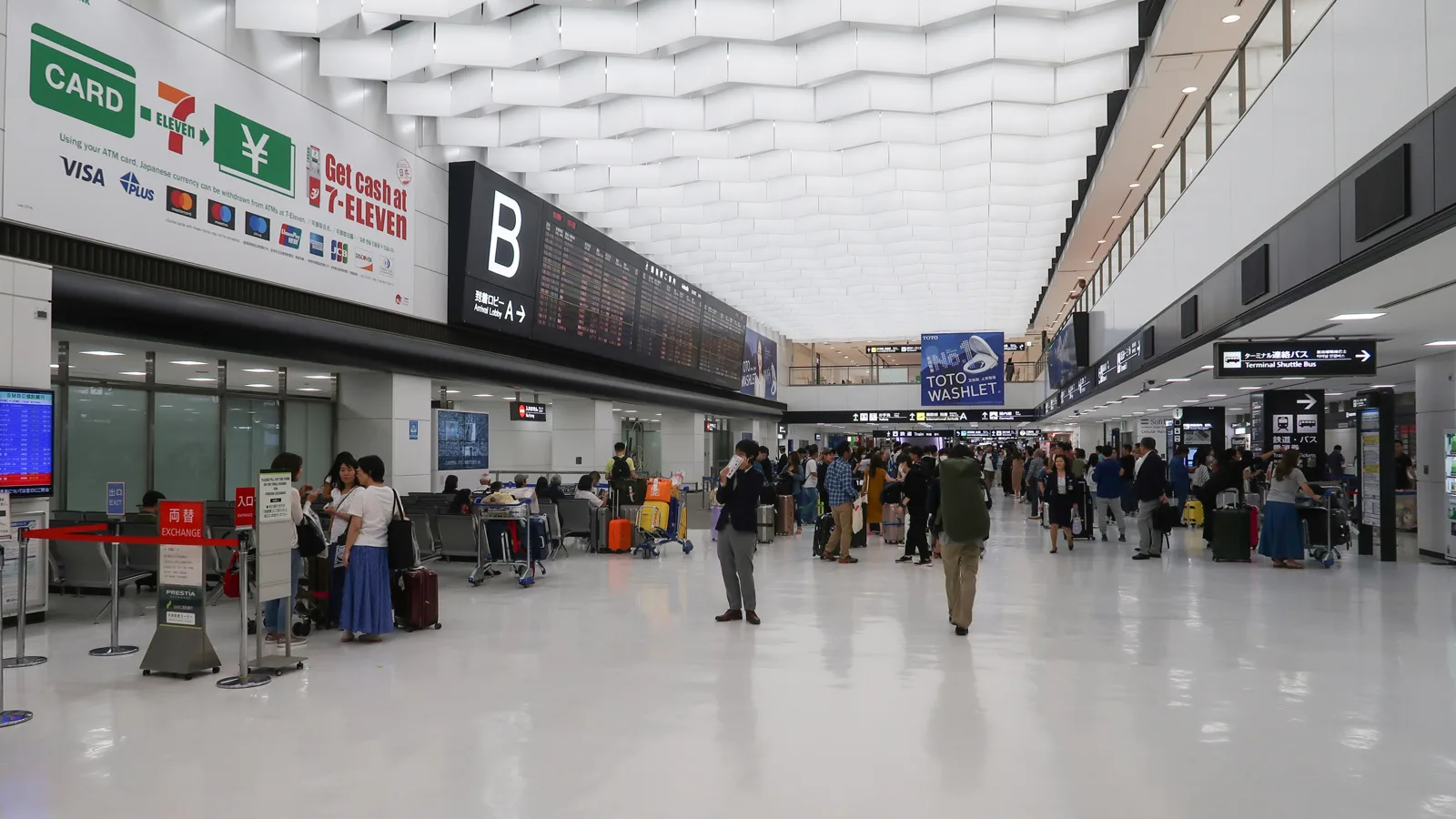

Published: September 22, 2026
This page contains an affiliate link. If you book through it, we may earn a commission at no extra cost to you. It does not change our numbers. See our disclosure.
Prices checked on September 22, 2026.
Most travelers open a map app within minutes of landing, then a translation app at the first convenience store. Groups add a second question: if two friends split off to a museum while the rest nap at the hotel, does everyone need their own data plan, or can one rented device follow the group leader instead? The answer in "eSIM or pocket WiFi?" threads that repeat across travel forums usually comes down to opinion. Here it comes down to a calculation: how many people are traveling, for how many days, and how much data each person expects to use.
The short version: an eSIM is bought per traveler, so its cost multiplies by the group size. A rented pocket Wi-Fi router is one device that a whole group can share, so its cost does not. In the trip lengths and group sizes we checked, that single difference decides which option is cheaper more often than the headline price of any one plan.
The short answer
- eSIM cost scales with the number of travelers; pocket WiFi cost does not. Buying an eSIM means one plan per phone, so a group of four pays four times the per-person price. A rented pocket Wi-Fi router is one device the whole group can share, so its price stays the same whether one person carries it or four people connect to it.
- In the trip lengths we checked, one traveler on a week or longer trip tends to do better with an eSIM, and two or more travelers on a few days to a week tend to do better sharing a pocket WiFi router. Carrier roaming, at the U.S. rates we checked (about $12 per traveler per day), was the most expensive of the three in every scenario below.
- A pocket WiFi plan advertised as "Unlimited" can still carry a fair-use rule. NINJA WiFi's own terms describe a "3GB per day" threshold tied to a restriction on excessive use, even on its unlimited-branded plans.
Jump to what to buy and how to buy it →
All figures below: adult prices, one line or one eSIM per traveler, as of September 22, 2026. See how we work out the numbers for our general method.
eSIM vs pocket WiFi vs roaming: the numbers
Prices in this section are as of September 22, 2026, in Japanese yen unless marked otherwise, and can change. We checked each operator's own English-language pages.
eSIM plans (Airalo, Ubigi)
Airalo sells a Japan-only "Moshi Moshi" Unlimited eSIM in fixed day lengths, priced in yen on its site.
| Length | Airalo Unlimited price |
|---|---|
| 3 days | 1,850 yen |
| 5 days | 2,750 yen |
| 7 days | 4,300 yen |
| 10 days | 5,550 yen |
| 15 days | 7,750 yen |
| 30 days | 11,100 yen |
Buy the longer plan and your daily rate drops fast: about 617 yen a day on the 3-day plan, down to about 370 yen a day on the 30-day one. Whether Airalo's Japan eSIM lets you tether it to another device (share its data over a phone hotspot) isn't stated on its plan pages, so we count it as one connection per traveler and leave tethering out of the numbers below.
If tethering is what you're after, Ubigi is the one we found that says so plainly, on its own plan pages: "data sharing" is allowed. It's run by Transatel, part of the NTT group, and prices its Japan plans in US dollars.
| Ubigi plan | Price |
|---|---|
| 15-day Unlimited | $39 |
| 30-day Unlimited (one-time) | $65 |
| 30-day Unlimited (monthly, cancel after 3 months) | $45/month |
| 10GB, 30 days | $16.50 |
Ubigi also lists a 7-day Unlimited plan and some smaller data plans, but the pages for those specific plans wouldn't load for us on September 22, 2026, so their prices are missing here. That gap is why Ubigi sits out of the calculator below, even though its tethering allowance is real: the calculator sticks to Airalo and NINJA WiFi, the eSIM and pocket-WiFi operators whose full lineups we could confirm.
Pocket WiFi rental (NINJA WiFi, Japan Wireless)
NINJA WiFi prices its rental routers by data allowance per day, not by trip length.
| Plan | Price per day (tax included) |
|---|---|
| 1GB/day | 440 yen |
| 3GB/day | 770 yen |
| 5GB/day | 1,100 yen |
| 10GB/day | 1,320 yen |
| Completely unlimited (SoftBank) | 1,980 yen |
| 5G unlimited (docomo) | 2,200 yen |
Even the "unlimited" plan has a ceiling. Article 20 of NINJA WiFi's own terms of use, under "Fair Use and Restriction," allows speed limits or service suspension for "excessive communications," and gives 3GB a day as its own example. The marketing page never states that number; the rulebook behind it does. We also couldn't find how many devices you can connect to one router at the same time.
NINJA WiFi's pricing has one more wrinkle worth knowing before you book: a separate page prices a 7-day, 1GB/day package at 3,795 yen, more than the 3,080 yen you'd expect from multiplying 440 yen by 7 days. Nothing on the site explains the gap, so the calculator below sticks to the day-rate table above rather than guess.
Japan Wireless, a separate rental operator, markets its "Truly Unlimited" router with the claim "No hidden caps. No daily limits. No Fair Usage Policy (FUP)" — its own words, not an outside measurement. Its own pricing guide gives these representative prices:
- About 4,064 yen for a single day
- About 20,860 yen for 30 days (about 695 yen a day)
- A promotional 14-day rate near 9,944 yen with a listed coupon code
Japan Wireless can't quite agree with itself on how many devices its router handles. The homepage says "Connect up to 8 devices"; its own pricing-guide article says "up to 15 devices." We checked both pages on September 22, 2026 and couldn't tell which one is current, so both numbers are here rather than one guess. Combined with pricing that didn't reconcile as cleanly as NINJA WiFi's, that's why Japan Wireless sits out of the calculator below.
Carrier roaming (AT&T, Verizon, T-Mobile)
If you would rather use your home phone plan, the three big U.S. carriers price international roaming in Japan by the day, in US dollars.
| Carrier | Price per line, per day | Speed |
|---|---|---|
| AT&T International Day Pass | $12 (a second line used the same day is $6) | High-speed data, no speed cap stated |
| Verizon Prepaid TravelPass | $12 | High-speed up to 5GB/day, then 3G speeds |
| T-Mobile (eligible plans) | $0 | About 128 Kbps standard; a separate, unchecked-price International data pass buys faster speeds |
AT&T and Verizon both charge close to the same $12-per-line, per-day rate, but only Verizon states a data cap that drops you to 3G afterward. T-Mobile is the outlier: no extra charge on eligible plans, but a slow default speed unless you buy an add-on whose price T-Mobile doesn't publish.
For the yen totals below, we used $1 = 157 yen, based on the U.S. Federal Reserve's H.10 foreign exchange release. Its most recently published business-day rate, as of when we checked on September 22, 2026, was 156.87 yen for September 18, 2026. Exchange rates move daily, so the calculator further down lets you set your own rate.
What being online adds to a Japan trip
A data connection is not just a bill to compare. It changes how the first hour after landing goes, how a group spends a day apart, and how easily you can keep going after your prepaid data runs low.
Staying connected from the moment you land
Japan Wireless, one of the rental operators in this guide, describes the point of its service in plain terms on its own site: staying online with a map app, a translation app and messaging apps so that a group can navigate and share the trip together from the airport onward. That framing matches what most first-time visitors actually do in the first hour after clearing immigration: find the right train platform, confirm a hotel address in a local language, or send a photo home.
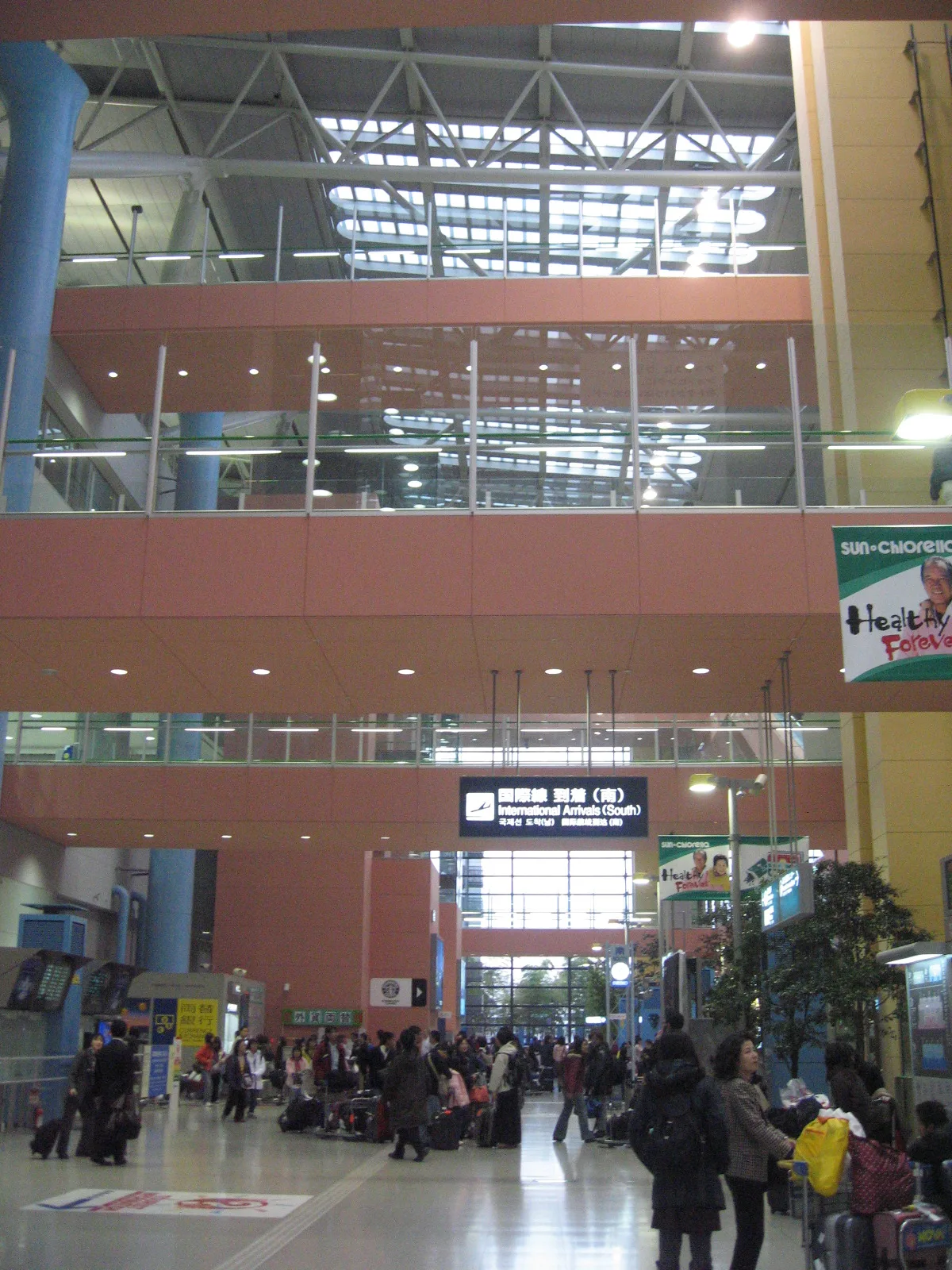
Rental pickup matters here too. NINJA WiFi advertises itself as having the largest network of pickup counters among Japan's rental operators, with routers available for pickup at the airport on arrival and return by airport counter or mail on departure. If your flight lands late or your first train connection is tight, picking up a working router (or having an eSIM already installed before you leave home) removes one thing to figure out while jet-lagged and standing in an unfamiliar arrival hall.
For a first-time visitor, the practical value shows up before any sightseeing starts: confirming which platform a connecting train leaves from, showing a hotel's address to a taxi driver, or turning an unfamiliar station name into characters a phone can search and read aloud. None of that needs much data, which is one reason the lighter 1GB and 3GB day-rate tiers listed above exist alongside the unlimited ones. A traveler who mostly checks a map and a translation app a few times a day is a different customer from one who is streaming video on the train, and the pricing tables above are built around that range.
Splitting up during the day
Group trips rarely move as one unit for an entire day. A common pattern, visible in the kinds of questions travelers post in Japan travel forums, is a morning together followed by an afternoon apart: some people want a museum, others want to shop, and everyone regroups for dinner. That pattern is exactly where the eSIM-versus-pocket-WiFi choice stops being about price and starts being about logistics.
With individual eSIMs, everyone can navigate independently and send their own photos in real time, at the cost of paying for each connection separately. With a single shared pocket Wi-Fi router, only the person carrying it has a live connection; anyone who peels off from the group is offline until they meet back up, unless they also carry their own SIM or eSIM as a backup. Neither approach is inherently better. A family with one confident phone user and several less technical companions may prefer one router that "just works" over four separate eSIM installs, while a group that regularly splits up in different directions may find that the cost of individual eSIMs buys back convenience the shared router cannot.
Two related, more specific patterns turn up in the same travel forum threads. One is that a companion who is less comfortable with technology often finds a single shared router simpler than setting up an individual eSIM, since there is only one device to configure rather than several. The other is a caution about relying on a phone's own hotspot instead of a dedicated router: some travelers describe a phone-to-laptop tethering connection taking several minutes to establish reliably, which matters if a laptop or tablet, not just a phone, needs to get online during the trip.
Topping up without WiFi
Two details from Ubigi's own product pages are worth knowing before a longer trip, even though Ubigi is not in the calculator below.
First, Ubigi's eSIM plans use what the company calls "Smartstart": the multi-day validity period does not start on the day you buy the plan, but on the day your phone first connects to a network in Japan. In practice, that means installing an eSIM weeks before departure does not waste any of the plan's days, since the clock only starts once you land and connect. That matters most for the 15- and 30-day plans in the table above, where buying early and forgetting about it costs nothing.
Second, Ubigi's app lets you buy a new data plan or top-up from inside the app itself, even without an existing internet connection, according to the operator's own description of the feature. For a rural stretch of a trip, such as a multi-day hike or a stay in a small town where a data plan runs out unexpectedly, that removes the need to find Wi-Fi just to buy more data. It is a feature specific to how Ubigi's app is built; Airalo's and NINJA WiFi's own pages describe no equivalent capability, so we do not assume other operators offer it. This is one more reason Ubigi is worth a look even though its unreachable plan pages kept it out of the calculator below: the tethering allowance and the offline top-up are both confirmed features, on the plans that were confirmed.
However you get online, the same connection that helps with maps and messaging is what makes IC-card style fare payment easier to plan around; see Tokyo Subway Ticket vs Suica for how that works once you are moving around the city.
Calculator: eSIM vs pocket WiFi vs roaming for your trip
Enter your trip length, group size and how much data you expect to use per day. The tool totals the cost for the whole group under each of the three options.
What the calculator leaves out:
- Ubigi. It is the only eSIM operator we checked that states plainly it allows tethering, but part of its plan lineup returned an error on the pages checked, so it is left out of the comparison.
- Japan Wireless. Its own site gives two different maximum device counts, and its day-rate pricing did not reconcile with a separate listed price, so we left it out rather than guess.
- T-Mobile's free roaming. It can be $0 a day on eligible plans, but at a slow standard speed, and the price of its faster add-on pass was not available when we checked.
- Whether Airalo supports tethering. Ubigi's tethering support is confirmed on its own page, though Ubigi itself is not in the calculator; check Airalo's page directly for its tethering policy.
- Children's prices. None of the operators we checked list a separate child rate.
- AT&T's second-line discount and Verizon's post-5GB speed cap, neither of which is reflected in the flat $12-per-day figure used here.
- Router loss or damage fees, insurance, and delivery or airport counter fees.
Scenarios: solo trips, couples and groups
These totals are for the whole group, as of September 22, 2026. eSIM and roaming use one plan or line per traveler; pocket WiFi is one rented device shared by the group. Roaming uses $1 = 157 yen, the rate described above.
| Scenario | eSIM (total) | Pocket WiFi (total) | Roaming (total) | What decides it |
|---|---|---|---|---|
| S1: one traveler, 7 days, about 3GB/day | 4,300 yen | 5,390 yen | 13,188 yen | eSIM is lowest; no group to split the pocket WiFi cost with |
| S2: two travelers, 7 days, about 3GB/day | 8,600 yen | 5,390 yen | 26,376 yen | Pocket WiFi is lowest; the same router covers both people |
| S3: four travelers, 7 days, about 5GB/day | 17,200 yen | 7,700 yen | 52,752 yen | Pocket WiFi's advantage grows with the group size |
| S4: one traveler, 30 days, unlimited data | 11,100 yen | 59,400 yen | 56,520 yen | eSIM is lowest again; the 30-day plan's lower per-day price outweighs having only one traveler |
Each row is an example, not a recommendation for your trip. Whether these conditions match your plans is for you to check with the calculator above.
Traveling alone for a week or more
If your trip looks like S1, a single eSIM is the whole cost, with nobody to split a rented router with. At 7 days and roughly 3GB a day, Airalo's Unlimited eSIM (4,300 yen) came in below both a rented pocket WiFi router (5,390 yen) and carrier roaming (13,188 yen) in our check.
Two people for a short trip
If your trip looks like S2, the same 7-day, 3GB-a-day pattern flips once a second traveler joins. Two eSIMs cost 8,600 yen, twice the solo price, while one shared pocket WiFi router still costs 5,390 yen, unchanged from S1. Adding just one more traveler was enough to move the cheaper option from eSIM to pocket WiFi in this example.
A family or group of four
If your trip looks like S3, the pocket WiFi advantage widens further. Four eSIMs at a slightly higher 5GB-a-day tier reached 17,200 yen, against 7,700 yen for one shared router. The gap grows with the group size because the router's price does not change, but each additional eSIM adds a full plan's cost. A group sharing one router should still plan for what happens when members split up during the day, covered above.
A long, data-heavy solo trip
S4 is the exception to "groups favor pocket WiFi." A single traveler on a 30-day trip using unlimited data still came out cheaper with an eSIM (11,100 yen) than with a pocket WiFi router rented for the same month at its unlimited rate (59,400 yen), because Airalo's 30-day plan works out to roughly 370 yen a day. Carrier roaming (56,520 yen at our checked rate) was close to the pocket WiFi total and well above the eSIM. A rented router with fewer days at a lower data tier, or a group sharing that router, would change this comparison; this scenario is specifically a long, single-traveler trip.
What to buy instead, and how to buy
None of the totals above include the researching and buying itself. Airalo and Ubigi eSIMs install from an app before you fly; NINJA WiFi and Japan Wireless routers are picked up at the airport or delivered to a hotel.
Both KKday and GetYourGuide list eSIM and pocket Wi-Fi rental products for Japan, including airport pickup options at Narita and Kansai. Check the operators' own sites linked in the sources below for current prices and terms.
Check pricesAffiliate link
If you are flying into Narita, see Narita Airport to Tokyo: fares by hotel area and time for what happens after you pick up a router or activate an eSIM. Landing at Kansai instead, see Kansai Airport to Kyoto, Namba and Umeda for the same kind of fare comparison on that side of the country.
However you get online, the goal is the same: sort it out before you're standing jet-lagged in an arrival hall, so the first thing you do in Japan is open a map, not hunt for a signal.
Common questions
Is eSIM cheaper than pocket WiFi for a group?
Usually not, at the trip lengths we checked. You buy an eSIM per traveler, so the total multiplies with the group; a rented pocket WiFi router is one device the group shares, so its price holds still. In S2 and S3 above, the pocket WiFi total stayed exactly the same as the group grew from one to four people, while the eSIM total kept climbing.
How much data do I need for a trip to Japan?
There's no single confirmed statistic on typical usage. The tiers NINJA WiFi sells (1GB, 3GB, 5GB and 10GB a day, plus unlimited) are the reference points on offer; how much you'll actually use depends on whether you lean on turn-by-turn navigation, stream video, or mostly check messages and maps.
Is unlimited pocket WiFi really unlimited?
Not entirely. NINJA WiFi's own terms of use, Article 20, describe a "fair use and restriction" clause tied to excessive daily communications, citing 3GB a day as an example threshold — even on the plans marketed as unlimited. Japan Wireless's terms don't give the same specific number; its marketing just claims "No Fair Usage Policy."
Can I share an eSIM with other devices (tethering)?
Ubigi is the one eSIM operator here that says clearly, on its own plan pages, that data sharing (tethering) is allowed. Whether Airalo's Japan eSIM supports it isn't stated on Airalo's own pages, so we treat it as a single-device connection.
How much does AT&T or Verizon roaming cost in Japan?
$12 per line, per day, for both, as of the pages we checked on September 22, 2026. AT&T adds $6 a day for a second line used the same day and states no speed cap; Verizon skips that second-line charge but drops you to 3G speeds after 5GB of high-speed data in a day.
Is T-Mobile roaming free in Japan?
On eligible plans, yes — no extra daily charge, but a slow standard speed around 128 Kbps by T-Mobile's own numbers. Faster data needs a separate International data pass, whose price T-Mobile doesn't publish on its public pages.
Does Japan Wireless support 8 or 15 devices?
Both numbers come from Japan Wireless's own site: "up to 8 devices" on the homepage, "up to 15 devices" in its pricing-guide article. We checked both pages on September 22, 2026 and couldn't tell which is current, so we're giving you both rather than guessing.
Sources and data date
All prices were checked on September 22, 2026. Prices and exchange rates can change; check the operator's page before you travel.
- Ubigi: Japan Unlimited, monthly $45, Japan Unlimited, 30 days, $65, Japan Unlimited, 15 days, $39, Japan 10GB, 30 days, $16.50
- Airalo: Japan eSIM (Unlimited), Japan eSIM (fixed data)
- NINJA WiFi: plans and prices, terms of use, Article 20, official site
- Japan Wireless: official site, rates page, pricing guide article
- AT&T: International Day Pass
- Verizon: Prepaid TravelPass
- T-Mobile: International Roaming Services
- Board of Governors of the Federal Reserve System: Foreign Exchange Rates (H.10)
Last checked: September 22, 2026.