Airports & getting around · Tokyo · Kyoto
Tokyo to Kyoto or Osaka by Shinkansen: Bringing Luggage?
Prices checked September 22, 2026 against the official pages. Every figure links to its source.

Published: September 22, 2026
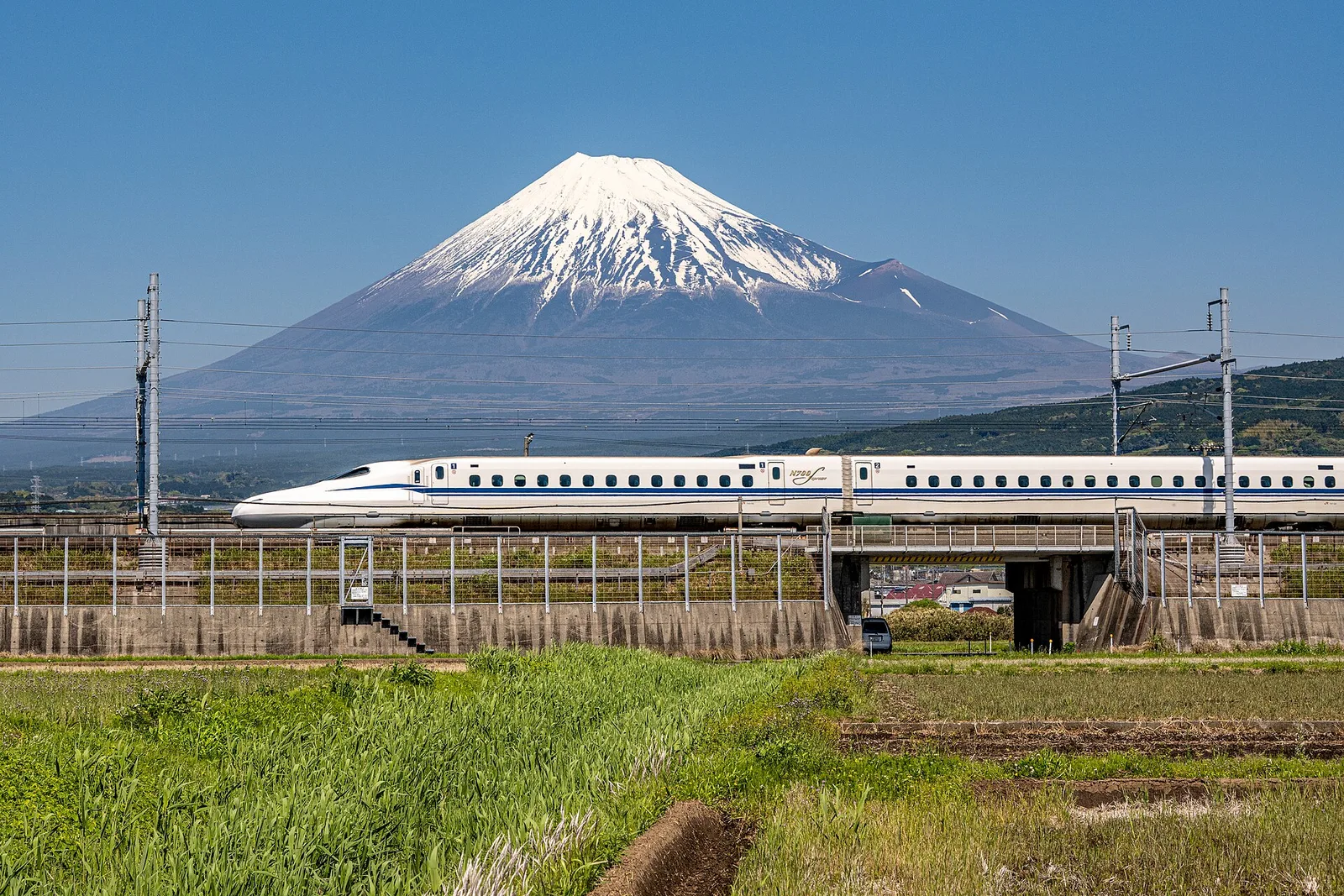
Board a westbound Tokaido Shinkansen and you'll see Sagami Bay open up on your left, Mt. Fuji rising on your right. Shin-Fuji station, the one to aim for, is about an hour out of Tokyo. And the same seat on the same Nozomi to Shin-Osaka can cost you 14,720 yen or 12,980 yen, depending only on how you book it.
Fares checked on September 20, 2026.
The short answer
- Where you buy changes what you pay. For a Nozomi reserved seat to Kyoto in the regular season, you pay 14,170 yen at the station, 13,970 yen on SmartEX, or 12,430 yen if you book EX Hayatoku 21 far enough ahead. To Shin-Osaka it's 14,720, 14,520 and 12,980 yen. The catch with the cheapest option: EX Hayatoku 21 can't be changed once booked, and neither early-discount product is sold around some holidays.
- Nozomi or Hikari? The Nozomi costs 320 yen more but gets you there faster — 2 hours 30 minutes to Shin-Osaka against 2 hours 54 on the Hikari, on the 10:00 departures we checked for September 25, 2026. Only the Hikari and Kodama offer non-reserved seats year-round.
- The season moves the price. A non-reserved seat to Shin-Osaka is always 13,870 yen. A reserved Nozomi seat runs 14,520 to 15,120 yen depending on the season, so what you pay for reserving swings between 650 and 1,250 yen.
- Big suitcase? Once your bag's three sides add up to more than 160 cm, reserve a seat with oversized baggage space — it costs nothing extra. Skip the reservation and you're on the hook for a 1,000 yen handling fee.
- Chasing the Mt. Fuji view? Book Seat E in Standard Class or Seat D in Green Class, per JR Central's English guide. Heading out of Tokyo, Fuji sits on the right-hand side of the train.
Fares here are for one adult, one way, in an ordinary car, from Tokyo. Two dates worth knowing: EX Hayatoku 21 sales close 21 days before departure at 23:30, and Supreme Class — the new private-cabin option — starts running October 1, 2026. Jump straight to the calculator →, or read on for what decides your price.
The numbers: Tokyo to Kyoto, Osaka and Nagoya fares
Every Shinkansen fare you pay is two numbers stacked together: a basic fare and an express fee. For Tokyo to Shin-Osaka on the Nozomi, that's 8,910 yen plus 5,810 yen. Prices below are in yen, checked on September 20, 2026, from JR Central's fare search for a 10:00 departure on September 25, 2026 (a regular-season day).
Station ticket or SmartEX: what is the difference?
SmartEX is JR Central's official booking service for the Tokaido, Sanyo and Kyushu Shinkansen — membership is free, with no annual fee or service fee. The table below shows regular-season fares.
| Route | Ticket | Nozomi, reserved | Hikari or Kodama, reserved | Non-reserved (any train) |
|---|---|---|---|---|
| Tokyo – Nagoya | Station | 11,300 | 11,090 | 10,560 |
| Tokyo – Nagoya | SmartEX | 11,100 | 10,890 | 10,560 |
| Tokyo – Kyoto | Station | 14,170 | 13,850 | 13,320 |
| Tokyo – Kyoto | SmartEX | 13,970 | 13,650 | 13,320 |
| Tokyo – Shin-Osaka | Station | 14,720 | 14,400 | 13,870 |
| Tokyo – Shin-Osaka | SmartEX | 14,520 | 14,200 | 13,870 |
Sources: JR Central fare search (Japanese) for the station prices; SmartEX fare list, reserved seats and non-reserved seats (both Japanese, PDF).
Book on SmartEX and you save 200 yen on a reserved seat; a non-reserved seat costs the same either way. On SmartEX, Shinagawa costs the same as Tokyo, so start there if it's closer to your hotel.
Heading to Osaka Station itself rather than Shin-Osaka? Same 14,720 yen, with a change of trains at Shin-Osaka. SmartEX only covers the Shinkansen leg, so add a local fare for that last hop to Osaka Station if you book that way — and on some routes, once you add the local line to reach the Shinkansen in the first place, a station ticket ends up cheaper than booking online.
You may see a figure of 15,800 yen floating around for a reserved Nozomi seat to Shin-Osaka, or a claim that the fare is the same on every train. Neither is right: it's 14,720 yen on the Nozomi and 14,400 yen on the Hikari or Kodama. Only the non-reserved seat actually costs the same across all three.
Early-booking discounts: EX Hayatoku 21 and 7
EX Hayatoku is SmartEX's family of advance-purchase discounts. Book early and you lock in a lower fare — but only for the reserved seat on the exact train you book.
| Product | Train | Tokyo – Nagoya | Tokyo – Kyoto | Tokyo – Shin-Osaka | Book by |
|---|---|---|---|---|---|
| EX Hayatoku 21 (fare list dated March 13, 2026) | Nozomi, reserved | 10,370 | 12,430 | 12,980 | 21 days before, 23:30 |
| EX Hayatoku 7 (fare list dated February 27, 2026) | Hikari or Kodama, reserved | 9,900 | 11,940 | 12,490 | 7 days before, 23:30 |
| EX Hayatoku 1 (non-reserved Hikari or Kodama) | Not offered on these routes | – | – | – | – |
Sources: SmartEX EX Hayatoku 21, EX Hayatoku 7 and EX Hayatoku 1 (all Japanese).
Against SmartEX's regular price, EX Hayatoku 21 is 1,540 yen lower to Kyoto and Shin-Osaka and 730 yen lower to Nagoya. EX Hayatoku 7 is 1,710 yen lower to Kyoto and Shin-Osaka and 990 yen lower to Nagoya. Sales start one month before at 10:00, and the number of seats per train is limited.
The fine print matters as much as the price:
- EX Hayatoku 21 locks you in. Once booked, you can only swap to another seat on the same train, same seat type, same price. Want to change the train or date instead? You'll need to refund it first (320 yen before departure) and book again.
- EX Hayatoku 7 gives you more room to change your mind. You can switch to another product on sale, paying the difference, within three months of your original date, and on the travel day itself you can hop to a different Hikari or Kodama at the same price.
- Neither ticket works on a different train. Not even a non-reserved seat on a later one. Stopovers aren't allowed either.
- Blackout dates. These discounts aren't sold April 24 to May 6 (Golden Week), August 7 to 16 (Obon), September 18 to 23 (Silver Week), or December 25 to January 5 in fiscal 2026. The fiscal 2027 blackout list wasn't out yet as of September 20, 2026.
- Skip looking for EX Hayatoku 1. It doesn't cover these routes — its Tokyo fare list stops at Toyohashi and Maibara, well short of Nagoya, Kyoto or Shin-Osaka.
One price applies whether you travel on a weekday or a weekend, with no separate season fee listed. We haven't personally tested booking one on a busy day outside the blackout dates.
How the season changes the fare (about 200 to 400 yen)
Your reserved-seat fee moves with the calendar: 200 yen less in the off-peak season, 200 yen more in the busy season, and 400 yen more at peak times (JR Central rule, Japanese). The non-reserved fee, by contrast, is fixed — always 530 yen below the regular-season reserved fare. So the gap between reserved and non-reserved shrinks or grows depending on when you travel.
| Season | Date we searched | Nozomi, reserved | Gap to non-reserved (13,870) | Hikari or Kodama, reserved | Gap |
|---|---|---|---|---|---|
| Off-peak (−200) | October 1, 2026 | 14,520 | 650 | 14,200 | 330 |
| Regular | September 25, 2026 | 14,720 | 850 | 14,400 | 530 |
| Busy (+200) | October 9 and November 23, 2026 | 14,920 | 1,050 | 14,600 | 730 |
| Peak (+400) | December 29, 2026 and January 2, 2027 | 15,120 | 1,250 | 14,800 | 930 |
These are all station prices for Tokyo to Shin-Osaka; SmartEX reserved fares move by the same amounts. Sources: JR Central seasonal fees (Japanese), express fee rules (Japanese) and the fare search.
One thing to watch for with dates far out: when we searched on September 20, 2026, JR Central's fare search only applied the seasonal pricing through March 2027 — March 2, 2027 correctly returned the off-peak fare, March 25 the busy fare. Search anything from April 2027 onward, though, and it defaults to the regular-season fare even on dates the calendar marks as peak, like April 29 or August 15, 2027. So a fare you see for a far-off date may come in lower than what you'll actually pay — check the calendar below before you rely on it. (We haven't checked whether JR Central changes ordinary-car fares on or after October 1, 2026.)
Puratto Kodama: a Japanese package for the Kodama
Puratto Kodama is a package deal from JR Central Tours, sold on a Japanese-language site — technically a tour product rather than a plain ticket, but it gets you a reserved Kodama seat from Tokyo or Shinagawa, plus a coupon for a drink or a local specialty.
| Route | A (Mon–Thu) | B (Fri) | C (Sat, Sun, holidays) | D (busy season) |
|---|---|---|---|---|
| Tokyo or Shinagawa to Kyoto | 10,960 | 11,300 | 11,470 | 12,660 |
| Tokyo or Shinagawa to Shin-Osaka | 11,360 | 11,710 | 11,900 | 13,130 |
Source: JR Central Tours, Puratto Kodama (Japanese), prices dated September 1, 2026.
The trade-off for the lower price is flexibility. You're locked to the exact Kodama you booked — miss it and the booking is simply cancelled, no refund. You can change your seat but nothing else, and a cancellation fee kicks in from the 10th day counting back from the day before your ride. Stopovers aren't allowed, local-line fares are extra, and it isn't sold December 26 to 31, 2026.
We haven't confirmed whether overseas visitors can book it with a foreign card or in English, and the calculator below doesn't include it.
What makes the ride worth it: Mt. Fuji, the N700S and the station bento
Money is only half the decision. Picture the ride itself: you board at Tokyo Station, the skyline thins into suburbs, and then — JR Central says — Sagami Bay opens up on your left with Mt. Fuji rising on your right. Somewhere between ninety minutes and four hours later, depending on your train, you step off in Nagoya, Kyoto or Shin-Osaka. Catch the 10:00 Nozomi we searched for September 25, 2026, and you'd land in Nagoya by 11:39, Kyoto by 12:15, Shin-Osaka by 12:30 — right around lunch. Here's what to expect along the way, roughly in the order you'll meet it.
The Mt. Fuji window: which seat to book
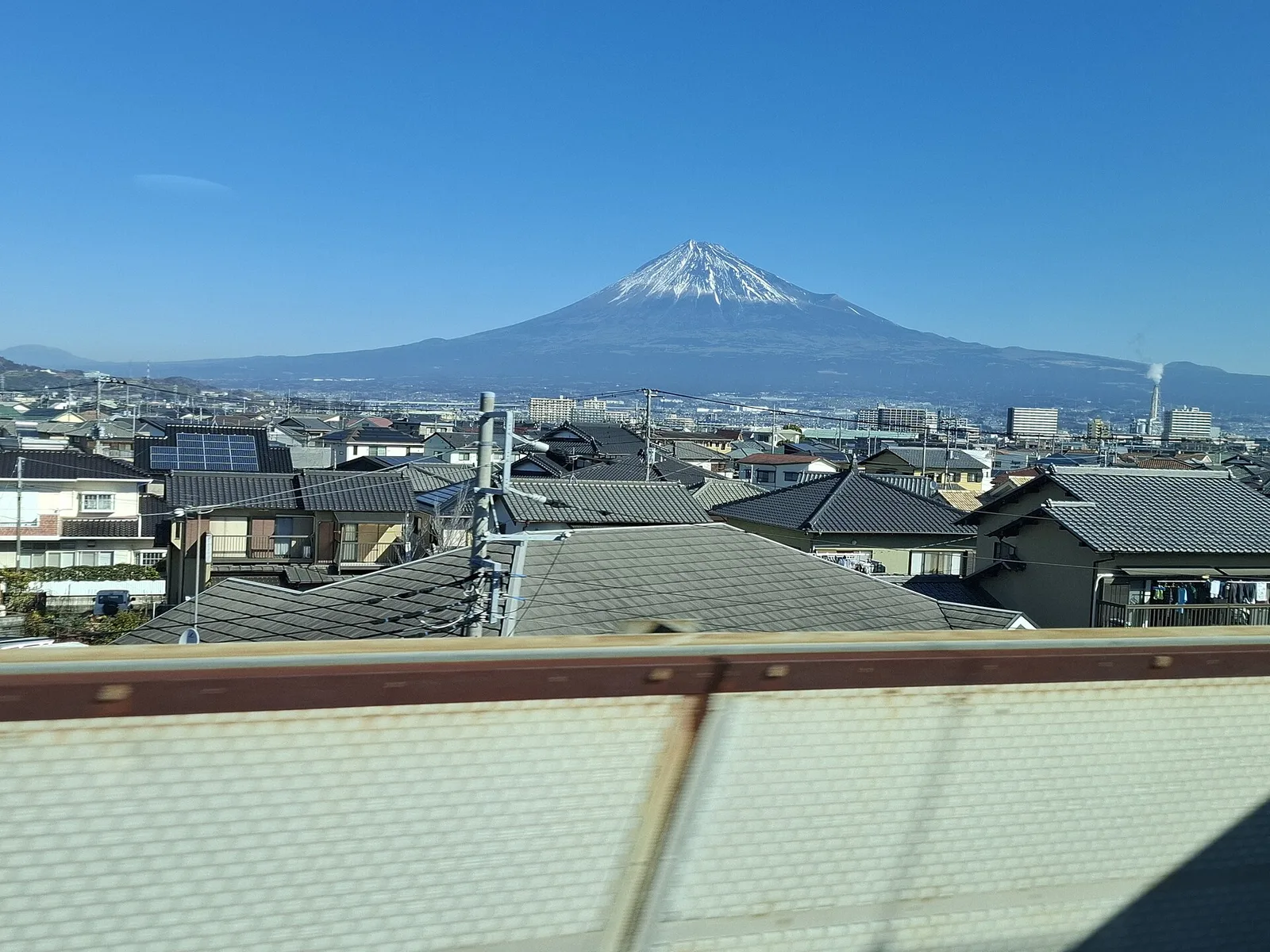
Want the view? Book Seat E in Standard Class or Seat D in Green Class — that's JR Central's own recommendation for the Golden Route (Tokyo, Kyoto, Osaka). Heading west out of Tokyo, Sagami Bay sits on your left and Mt. Fuji on your right, and the two pieces of advice line up neatly, even though JR Central never spells out in so many words that Seat E is the right-side seat. The guide doesn't name the exact stretch of track to watch for either, and it hedges on the weather itself, hoping for clear skies rather than promising you one.
Shin-Fuji, the station nearest the mountain, is about an hour out of Tokyo. Book a reserved seat through SmartEX and you can pick your spot off a seat map. On the return trip to Tokyo, the view switches sides, so pick your seat accordingly on the seat map.
Get off at Shin-Fuji or Mishima? What a stop costs
Want to break up the ride? JR Central's Mt. FUJI page suggests two spots. Get off at Shin-Fuji and a bus takes you west to Fujinomiya and Shiraito Falls. Get off at Mishima and you can sample the local food in Numazu, or catch local trains around to Fuji's east side.
One catch: SmartEX and EX Hayatoku tickets don't allow stopovers. Step off partway and the rest of your ticket is void, so a stop means booking two separate legs. The table below uses EX Hayatoku 7, sold for the Hikari and Kodama only. (We haven't checked which Hikari trains actually stop at these stations.)
| Trip | Tokyo to the stop | Stop to destination | Total | Direct fare | Extra for splitting |
|---|---|---|---|---|---|
| Tokyo – Shin-Fuji – Kyoto | 5,170 | 10,440 | 15,610 | 11,940 | 3,670 |
| Tokyo – Shin-Fuji – Shin-Osaka | 5,170 | 11,410 | 16,580 | 12,490 | 4,090 |
| Tokyo – Mishima – Shin-Osaka | 4,070 | 11,630 | 15,700 | 12,490 | 3,210 |
Prices come from the EX Hayatoku 7 fare list dated February 27, 2026; the totals are our own addition, assuming you can book both legs on the same day.
If you're exploring around Mishima, JR Central also sells the Mt.FUJI-SHOGUN PASS EAST — 2 days for 2,000 yen (adults), from ticket offices at Atami, Mishima and Shin-Fuji. It covers JR local trains, two private railways and some buses in the area, though not the Shinkansen itself. Details are on JR Central's page.
The seat, the Wi-Fi and the daily timetable
The N700S has been running since July 2020, at up to 285 km/h on the Tokaido line. In its ordinary cars, seats A and C are 440 mm wide and seat B is 460 mm, and there's an outlet at every seat. Land an older N700A or N700 instead, and outlets are limited to window seats and the front and back rows.
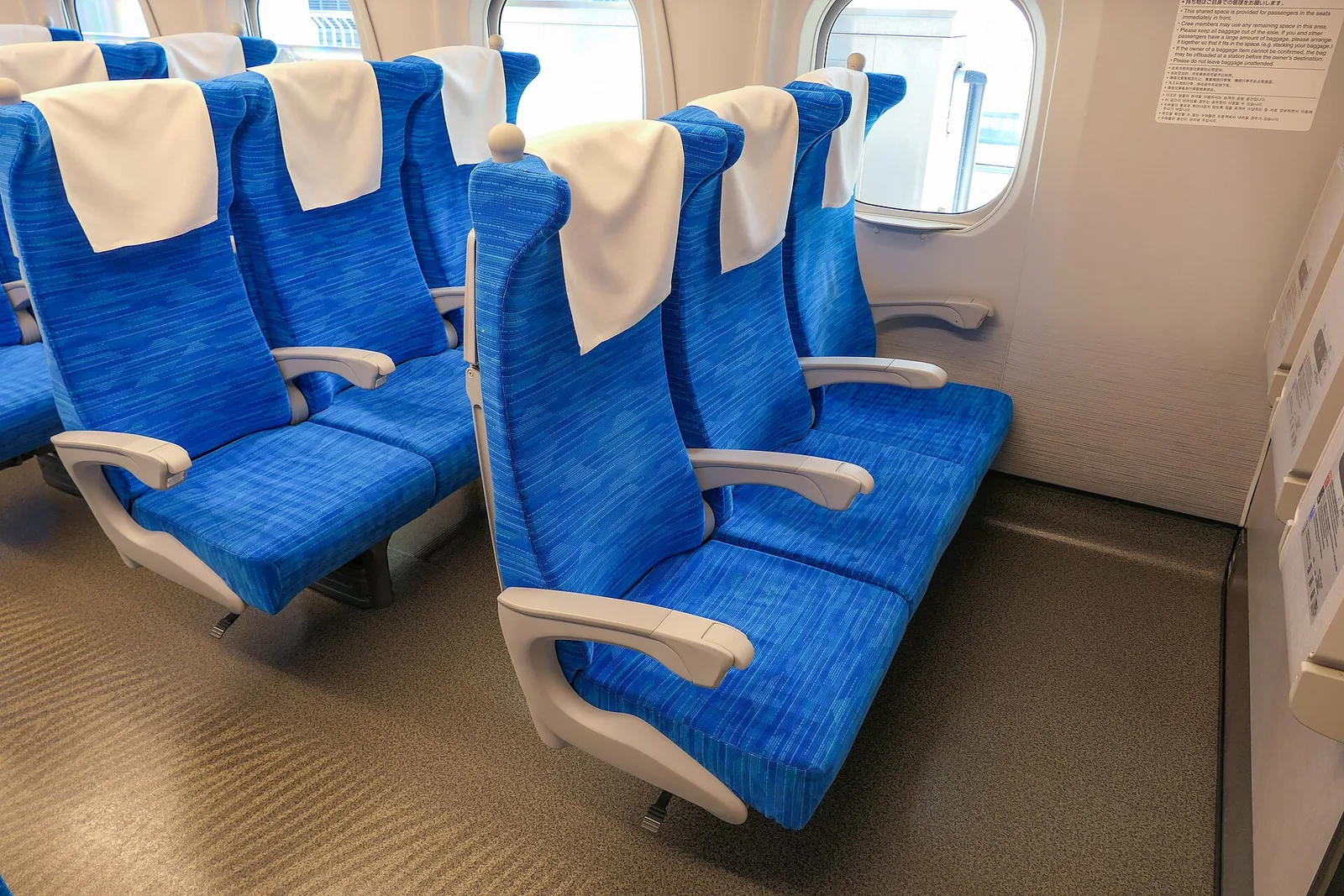
Every Tokaido Shinkansen train has free Wi-Fi: choose "Shinkansen_Free_Wi-Fi", then register an email address or use a social account, logging in again every 30 minutes. Every seat has a fold-down table. Save the phone calls for the deck between the cars — at your seat, JR Central asks for texting and typing only.
Not every train is an N700S. JR Central posts a daily list of N700S trains as a PDF, the N700S schedule. The copy we opened on September 20, 2026 was updated at 4:32 and says trains may be swapped without notice.
Standard, Green Car or the S Work car
Most people ride in the ordinary car, but the Green Car (first class) buys you room: 480 mm-wide seats on the N700S against 440 to 460 mm below, plus a reading light, a leg warmer, a footrest and an outlet at every seat. It costs 19,590 yen Tokyo to Shin-Osaka on the Nozomi, against 14,720 yen for an ordinary reserved seat — not counted in the calculator below.
Working through the ride instead? Car 7 is the S Work car, an ordinary reserved car where calls and web meetings are allowed at the seat — pick another car if you'd rather not hear typing and Zoom calls around you. Its S Work P seats (A and C, rows 6 to 10) cost 2,000 yen more and come with a table that tilts for a laptop. On the N700S, the S Work car and car 8 also get their own Wi-Fi network with no time limit, about twice the capacity of the free network everyone else uses.
Buy the ekiben before you board
Nothing is sold at your seat in Standard Class — food and drink only reach the Nozomi and Hikari Green Cars (Tokyo to Shin-Osaka), and even that sale can stop at short notice, with no sale at all on the Kodama. Green Class passengers can still order snacks by smartphone and have them brought over. Everyone else buys before boarding.
That's exactly the point of the ekiben (station bento box): JR Central's own English guide calls it part of the ride's cultural experience, food and drink at your seat, no server required. For the ekiben shop inside the ticket gates at Tokyo Station, see our JR Pass post, which lists its hours.
On time, all day
Up to 18 trains an hour and 383 of them a day in fiscal 2024 — that's the pace of the Tokaido Shinkansen, and it still averaged a 1.4-minute delay in 2024, natural disasters included. No passenger has died or been injured in an accident since the line opened, and the Tokyo to Shin-Osaka record stands at 2 hours 21 minutes, set in 2020.
Even JR Central's own pages don't agree on that delay figure: one page says less than a minute, and its company profile gives 1.6 minutes for fiscal 2023. We went with 1.4 minutes because it's the one tied to a named year.
Nozomi vs Hikari vs Kodama: which train should you take?
The Nozomi is the fastest, and the Hikari and Kodama stop more often. The times below are one train each, from JR Central's search for 10:00 on September 25, 2026: the Nozomi 143 at 10:00, the Hikari 707 at 10:03, and a Kodama at 10:27 to Nagoya or 10:57 to Kyoto and Shin-Osaka.
| Nozomi | Hikari | Kodama | |
|---|---|---|---|
| Tokyo – Nagoya | 1 h 39 min | 1 h 58 min | 2 h 39 min |
| Tokyo – Kyoto | 2 h 15 min | 2 h 34 min | 3 h 37 min |
| Tokyo – Shin-Osaka | 2 h 30 min | 2 h 54 min | 3 h 54 min |
| Reserved express fee to Kyoto or Shin-Osaka | 5,810 | 5,490 | 5,490 |
| Non-reserved seats | Cars 1 and 2 only; none in all-reserved periods | Cars 1 to 5, all year | Cars 1 to 6 and 13 to 16, all year |
Times vary train to train, and the non-reserved car numbers can change too. Reserving a seat on the Nozomi costs you 320 yen more than on the Hikari or Kodama; go non-reserved and all three trains charge the same.
Travel in a peak period and every Nozomi seat is reserved — a non-reserved ticket only gets you the deck area of an ordinary car, not a seat, and not the Green Car. The Hikari and Kodama still keep non-reserved seats then, but expect them crowded.
The Japan Rail Pass does not cover the Nozomi. If you plan to use the pass, read Is the JR Pass worth it? before you compare these fares.
Shinkansen luggage: the 160 cm rule and the 1,000 yen fee
JR Central measures your bag by adding up its three sides: length, width and height.
| Sum of three sides | What to do | Extra fee |
|---|---|---|
| Up to 160 cm | Foot space, overhead rack or the luggage area on the deck. No reservation | None |
| Over 160 cm, up to 250 cm | Reserve a "seat with oversized baggage space" | None if you reserve. 1,000 yen (tax included) if you bring the bag without reserving |
| Over 250 cm | Cannot be brought on board | – |
Source: JR Central, luggage information and the Japanese page.
Some details are easy to miss:
- No price penalty for the seat. A seat with oversized baggage space costs exactly the same as any other reserved seat, ordinary or Green car.
- Non-reserved cars are off-limits. With an oversized bag, you can't use a non-reserved seat, or even a reserved seat that isn't in the baggage-space rows.
- You're sharing the space. It sits behind the last row of certain cars, shared among the five passengers who reserved those seats, and only usable if you're one of them.
- One trade-off: reclining. JR Central notes a large bag back there can block your seat from reclining.
- The 1,000 yen fee is a little vague. JR Central's page doesn't say whether it's charged per bag or per person, or exactly when you'd pay it. We weren't able to pin that down.
- A few exceptions. Sports gear, musical instruments, wheelchairs and strollers skip the reservation requirement entirely, whatever their size, up to 250 cm in total.
- A trial worth knowing about. Some train decks have an oversized-baggage corner you can use without reserving, as a pilot program, though JR Central still asks anyone with a bag over 160 cm to book the reserved seat.
To reserve one, pick "Seat with oversized baggage space" on SmartEX, the EX service, LINE from EX, e5489 or the JR Kyushu reservation site, or ask at a reserved-seat ticket machine or station window. The deck luggage area itself locks and unlocks with a tap of your IC card.
Would rather skip carrying bags altogether? JR Central offers LUGGAGE EXPRESS: drop your bag at a station or hotel and it's delivered to your next hotel the same day, for bags up to 200 cm in total. It's a paid, reservation-only service; we haven't checked the price.
Bags matter before you even reach the Shinkansen, too. For the trip from the airport, see Narita Airport to Tokyo: fares by hotel area and time and Kansai Airport to Kyoto, Namba and Umeda: fares compared.
Supreme Class from October 1, 2026: a private cabin
Supreme Class starts running October 1, 2026 — a private cabin that sits above even the Green Car. Here's what JR Central lists for Cabin, its room-type version.
- The room. An electronic lock that opens with the same IC card or QR code you boarded with, and locks itself behind you. Car 7 seats two people and has a sofa. Car 10 fits one.
- Total control. A tablet in the cabin runs the recline, leg rest, lumbar support and seat heater, plus the lighting (brightness and color), airflow and even the announcement volume.
- Sound and power. Your own Wi-Fi network with no time limit, a headrest speaker that pairs with your device, both USB-A and USB-C ports plus outlets, a full-size table and a hanger.
- Bags. A carry-on up to 55 x 40 x 25 cm fits right beside your seat. Car 7 adds dedicated storage for bags up to 80 x 60 x 40 cm, and oversized bags are allowed.
- Service. One free drink and a sweet per person, on the Nozomi and Hikari only, plus a small paid menu you can order from your phone.
| Route (Nozomi, regular season) | Car 7 (up to 2 people) | Car 10 (1 person) |
|---|---|---|
| Tokyo – Nagoya | 47,060 | 32,660 |
| Tokyo – Kyoto | 60,240 | 41,840 |
| Tokyo – Shin-Osaka | 60,790 | 42,390 |
These SmartEX prices are for one adult, one way, with the ticket and express fee included, as of June 17, 2026 — the usual −200/+200/+400 yen seasonal swing applies. Bringing a companion into a Car 7 cabin? They still need their own ticket for the train.
You can only book Supreme Class through SmartEX or the EX service; it isn't sold at ticket windows. Availability is limited: JR Central's list dated September 7, 2026 shows just four Nozomi, one Hikari and one Kodama toward Osaka each day, and the same numbers running back toward Tokyo (four Nozomi from Hakata, one Hikari from Shin-Osaka, one Kodama from Nagoya), with some trains only announced on the day. Traveling October 1, 2026 or later? Check the current operating list on JR Central's Supreme Class page. A semi-private Supreme Class Seat is planned within fiscal 2027.
Sources: JR Central, Supreme Class (Japanese), seats and facilities (Japanese), service (Japanese).
Shinkansen fare calculator: your total by route, seat and date
Pick your route, train, seat and date, add your luggage and the number of adults traveling, and the calculator below shows your total at the station, on SmartEX and with EX Hayatoku. If the early discount isn't sold for your choice, that row just shows 0 yen.
Leave the defaults as they are and you'll see the fares from the tables above: 14,720 yen at the station, 14,520 yen on SmartEX, 12,980 yen with EX Hayatoku 21. What it doesn't cover: Puratto Kodama, the Green Car, children, S Work seats and Supreme Class. For the luggage handling fee, it counts 1,000 yen per bag, since JR Central never clarified whether that's per bag or per person and we picked the more cautious reading.
Scenarios: four trips, what each costs
One adult unless noted, ordinary car, one way, as of September 20, 2026. Each row is a calculator result.
| Trip | Station | SmartEX | EX Hayatoku | What it shows |
|---|---|---|---|---|
| A. 1 adult, Tokyo to Shin-Osaka, Nozomi, reserved, regular season | 14,720 | 14,520 | 12,980 (21 days ahead) | The early discount is 1,740 yen below the station price. SmartEX is only 200 yen lower and lets you change freely. |
| B. 2 adults, Tokyo to Kyoto, Hikari, reserved, regular season | 27,700 | 27,300 | 23,880 (EX Hayatoku 7, 7 days ahead) | The gap between the station and EX Hayatoku is 3,820 yen for two. |
| C. 2 adults, Tokyo to Shin-Osaka, Nozomi, reserved, December 29 (peak), 2 bags over 160 cm, no seat reservation for them | 32,240 | 31,840 | Not sold (December 25 to January 5 is excluded) | We counted 2,000 yen of fees. Reserving the baggage seats costs no extra fare, so the fees are avoidable. |
| D. 3 adults, Tokyo to Nagoya, Kodama, non-reserved, off-peak | 31,680 | 31,680 | Not sold (no non-reserved version) | Non-reserved costs the same everywhere. In the off-peak season, a reserved Kodama seat would cost 130 yen more per adult on SmartEX and 330 yen more at the station. |
That 2,000 yen in row C is our own assumption of 1,000 yen per bag; it's not a figure JR Central publishes directly.
When to go: shinkansen dates, seasons and Kyoto events, 2026 to 2027
Dates shift every year, so here's a snapshot: checked September 20, 2026, with a recheck planned for October 20, 2026, and again once JR Central announces the 2027 all-reserved periods.
Shinkansen calendar from October 2026 to September 2027
These season dates come from JR Central's fiscal 2026 and 2027 calendar images (the joint JR Central and JR West calendar), which we read by eye, so before you lock in plans around a specific date, double-check it on the official page (Japanese).
| Month | Peak (+400) and busy (+200) dates | Off-peak dates (−200) | Nozomi all seats reserved | EX Hayatoku not sold | Events and average dates |
|---|---|---|---|---|---|
| Oct 2026 | Busy: 9–12, 16–18, 23–25, 30–31 | 1 | 10–12 | – | Jidai Matsuri, Oct 22 (a Thursday). Supreme Class starts Oct 1 |
| Nov 2026 | Busy: 1, 6–8, 13–15, 20–23, 27–29 | 30 | 21–23 | – | Average date for maple leaves to turn: Tokyo Nov 28 |
| Dec 2026 | Peak: 29–30. Busy: 25–28, 31 | 1–3, 7–10, 14–17, 21–24 | From 25 | 25–31 | Maple leaves, average: Osaka Dec 1, Kyoto Dec 5 |
| Jan 2027 | Peak: 2–3. Busy: 4 | 6–7, 12–14, 18–21, 25–28 | Until 5, and 9–11 | Until 5. Not on the list for 9–11 | – |
| Feb 2027 | – | 1–4, 8–9, 15–18, 24–25 | – | – | – |
| Mar 2027 | Busy: 19–31 | 1–4 | 20–22 | Not on the list for 20–22 | Cherry blossoms, average (see below). GREEN×EXPO 2027 opens Mar 19 in Yokohama |
| Apr 2027 | Peak: 28–30 | 12–15, 19–22, 26–27 | Not announced | Not announced | – |
| May 2027 | Peak: 1–5 | 6, 10–11, 31 | Not announced (Golden Week) | Not announced | Aoi Matsuri, May 15 |
| Jun 2027 | – | 1–3, 7–10, 14–17, 21–24, 28–30 | – | – | – |
| Jul 2027 | Busy: 16–19, 23–25, 30–31 | 1, 5–8, 12–15, 20–21 | – | – | Gion Matsuri, Jul 1–31 (processions Jul 17 and 24) |
| Aug 2027 | Peak: 10–11, 15–16. Busy: 1, 6–8, 12–14, 17, 20–22 | 30–31 | Not announced (Obon) | Not announced | Gozan no Okuribi, Aug 16 |
| Sep 2027 | Busy: 17–20, 23–26 | 1–2, 6–9, 13–16, 21–22, 27–30 | Not announced | Not announced | GREEN×EXPO 2027 ends Sep 26 |
Sources: JR Central seasonal fees and Nozomi all-reserved periods (both Japanese); SmartEX excluded dates (Japanese). Kyoto festival dates are from the organizers listed below. GREEN×EXPO 2027 dates are from its official site.
Two patterns jump out. Off-peak days cluster on Monday through Thursday, while October and November weekends and holidays run mostly busy, and those same autumn weekends, plus November 21 to 23, fall inside the all-reserved periods too.
The fiscal 2026 EX Hayatoku blackout list only has four excluded periods. It skips the all-reserved days around Sports Day, Labor Thanksgiving Day, Coming-of-Age Day and the spring equinox weekend, so the discount still works on those dates.
Golden Week 2027 and Obon 2027: not announced yet
As of September 20, 2026, JR Central hadn't announced the Nozomi all-reserved periods for Golden Week 2027 or Obon 2027, and SmartEX hadn't published its 2027 excluded dates either. The season calendar does mark the peak days already: May 1 to 5 and August 10, 11, 15 and 16, 2027. The 2026 all-reserved periods did cover Golden Week and Obon, but we found no official statement guaranteeing 2027 will follow. We'll recheck once JR Central announces it.
Cherry blossoms and autumn leaves: the average dates
These are historical averages, not a forecast for 2027. They come from Japan Meteorological Agency records for 1991 to 2020 (we computed the averages from its yearly data). JMA has not published an official 2027 forecast yet.
| Place | Cherry blossoms open | Full bloom | Maple leaves turn |
|---|---|---|---|
| Tokyo | March 24 | March 31 | November 28 |
| Kyoto | March 26 | April 4 | December 5 |
| Osaka | March 27 | April 4 | December 1 |
Source: Japan Meteorological Agency, phenology observations (Japanese). Full bloom in late March to early April overlaps the busy fares of March 19 to 31.
Kyoto festivals you can plan around
Kyoto's city tourism association lists these festivals on fixed dates. Each is held rain or shine, generally, though weather can force changes, and dates can shift in later years.
- Aoi Matsuri, May 15. Its main procession, the Rotou no Gi, has people in Heian-period costume walking about 8 km. If it rains, the decision is made around 18:00 the day before.
- Gion Matsuri, July 1 to 31. The float processions are on July 17 and July 24. The floats are assembled from July 10 to 14 and July 18 to 21. It is on UNESCO's intangible heritage list.
- Gozan no Okuribi, August 16. The fires start at 20:00 and each burns for about 30 minutes. The organizers ask for neon and outdoor lights to be switched off from 19:50 to 20:50.
- Jidai Matsuri, October 22. About 2,000 people in costumes from different eras walk through the city. The whole procession takes about 2 hours, and there are paid seats. October 22, 2026 is a Thursday.
Sources: Kyoto City Tourism Association, Aoi Matsuri, Gion Matsuri, Gozan no Okuribi and Jidai Matsuri (all Japanese). For a hotel near the station on these dates, read Stay in Kyoto or Osaka?.
How locals plan it: tickets, seats and missed trains
The same questions keep coming up on Japanese-language Q&A and travel sites: how to go cheaply, Kodama or Nozomi, luggage, which seat for Mt. Fuji, what happens if you miss the train. We treated those as leads and checked each one against the operators' own pages. Here's what actually held up.
- Puratto Kodama is well known in Japan as the budget Kodama plan (table above). We haven't checked whether visitors can buy it.
- SmartEX saves you 200 yen on a reserved seat, and if you miss your train, JR Central's SmartEX page says you can still ride the non-reserved cars of a later one the same day. EX Hayatoku and Puratto Kodama don't give you that safety net.
- Book early, just not EX Hayatoku 1. It's a common tip, but the 1-day version isn't sold to Kyoto, Osaka or Nagoya at all — you want EX Hayatoku 21 or 7 instead.
- Non-reserved Nozomi seats are cars 1 and 2 now, not three. JR Central's release of December 13, 2024 (Japanese, PDF) made car 3 reserved-only from March 15, 2025. Older guides may still say three cars.
- Seat E for Mt. Fuji is a frequent question, and JR Central does name it (Seat D in Green Class) in its English guide. It never names a stretch of the line to watch.
- Buy food before you board. Standard Class has no food service (see above).
- No round-trip discount here anyway. The JR Group ended the round-trip discount (10% off each way for trips of 601 km or more one way) for tickets sold from March 14, 2026 (JR Central notice, October 8, 2025, Japanese). Not that it would have applied here: JR Central puts the length of the Tokaido Shinkansen at 552.6 km (fact sheet 2025, Japanese), so Tokyo to Shin-Osaka never reached the 601 km threshold. Older guides may still mention a discount.
How to buy, and what to book next
Your booking route is SmartEX, run by JR Central. Sign-up is free on the website; the app itself is only available in a handful of countries (the United States, Canada, Australia, Singapore, Hong Kong, Malaysia and Thailand, according to JR Central's guide). You'll need a credit card to register, and your card company may add a foreign transaction fee. From there you get a QR ticket for the gate. An IC card is optional — without one, you just pick up paper tickets using a pickup code at a station machine. One booking can cover up to 6 people.
Reservations open a full year ahead at 5:30 (the early-discount products aren't part of that window). At the station, reserved seats go on sale one month out at 10:00. Keep in mind SmartEX can't be combined with the Japan Rail Pass. And if your card gets declined on SmartEX, station ticket machines are your backup: they run in English, Chinese and other languages too.
Once you're off the train, here's what else you might need:
- A place to sleep. Stay in Kyoto or Osaka? compares lodging tax and train fares.
- Mt. Fuji up close. Mt. Fuji day trip from Tokyo: tour vs DIY covers the lake side.
- Airport to your station. Narita Airport to Tokyo and Kansai Airport to Kyoto, Namba and Umeda.
- Going farther west. Hiroshima day trip from Osaka starts at Shin-Osaka. For the Kansai area, see Kansai Area Pass vs Kansai Railway Pass vs ICOCA.
Common questions
Is Nozomi or Hikari better for Tokyo to Kyoto?
It depends what matters more to you. On the 10:00 departures we searched for September 25, 2026, the Nozomi took 2 hours 15 minutes against 2 hours 34 on the Hikari, for 320 yen more on the reserved seat. If you're on a Japan Rail Pass, remember you can't ride the Nozomi without buying extra tickets.
What happens if I miss my Shinkansen?
With a regular SmartEX ticket, you can hop on the non-reserved cars of a later train the same day — EX Hayatoku and Puratto Kodama don't give you that option. If you're traveling during an all-reserved Nozomi period, a later Nozomi won't have non-reserved seats at all, so take a Hikari or Kodama instead.
Do I need to reserve Shinkansen seats in advance?
Not always — non-reserved seats need no reservation at all. If you do want a reserved seat, SmartEX opens bookings a year out at 5:30, while station sales start one month ahead at 10:00.
However you book it, the ride itself does the rest of the work: pick a window seat, watch for Fuji past Shin-Fuji, and let the ekiben you grabbed at Tokyo Station be lunch before you've even left the city behind.
Sources and data date
Fares, dates and rules were checked on September 20, 2026. Prices and dates change; check the operator's page before you travel. Pages marked (Japanese) are in Japanese, and we read them in Japanese.
- JR Central: fare search (Japanese), seasonal fees (Japanese), express fee rules (Japanese), Nozomi all-reserved periods (Japanese) and English
- JR Central: luggage and Japanese page, foods and drinks (Japanese), Wi-Fi, N700S (Japanese), N700S schedule (PDF), train accommodations, S Work car (Japanese)
- JR Central: Shinkansen Perfect Guide, Mt. FUJI, Tokaido Shinkansen facts, Mt.FUJI-SHOGUN PASS, December 13, 2024 release (Japanese, PDF)
- JR Central: Supreme Class (Japanese) and its operating list (PDF)
- SmartEX: basic product (Japanese), fare list, reserved (PDF), non-reserved (PDF), EX Hayatoku 21, 7, 1, excluded dates (all Japanese), English FAQ: cheaper?, IC card, Japan Rail Pass
- JR Central Tours: Puratto Kodama and cautions (Japanese)
- JR Group: notice on the end of round-trip tickets (PDF, October 8, 2025) (Japanese). JR Central: fact sheet 2025 (PDF) (Japanese)
- Japan Meteorological Agency: phenology observations (Japanese). Averages for 1991 to 2020 computed by Japan Trip Math.
- Kyoto City Tourism Association: festival pages linked above (Japanese). GREEN×EXPO 2027: official site