Airports & getting around · New Chitose Airport · Sapporo
New Chitose Airport to Sapporo Train Cost: 1,230 vs 1,500 Yen
Prices checked November 17, 2026 against the official pages. Every figure links to its source.

Published: November 17, 2026
This page contains an affiliate link. If you book through it, we may earn a commission at no extra cost to you. It does not change our numbers. See our disclosure.
Prices checked on November 13, 2026.
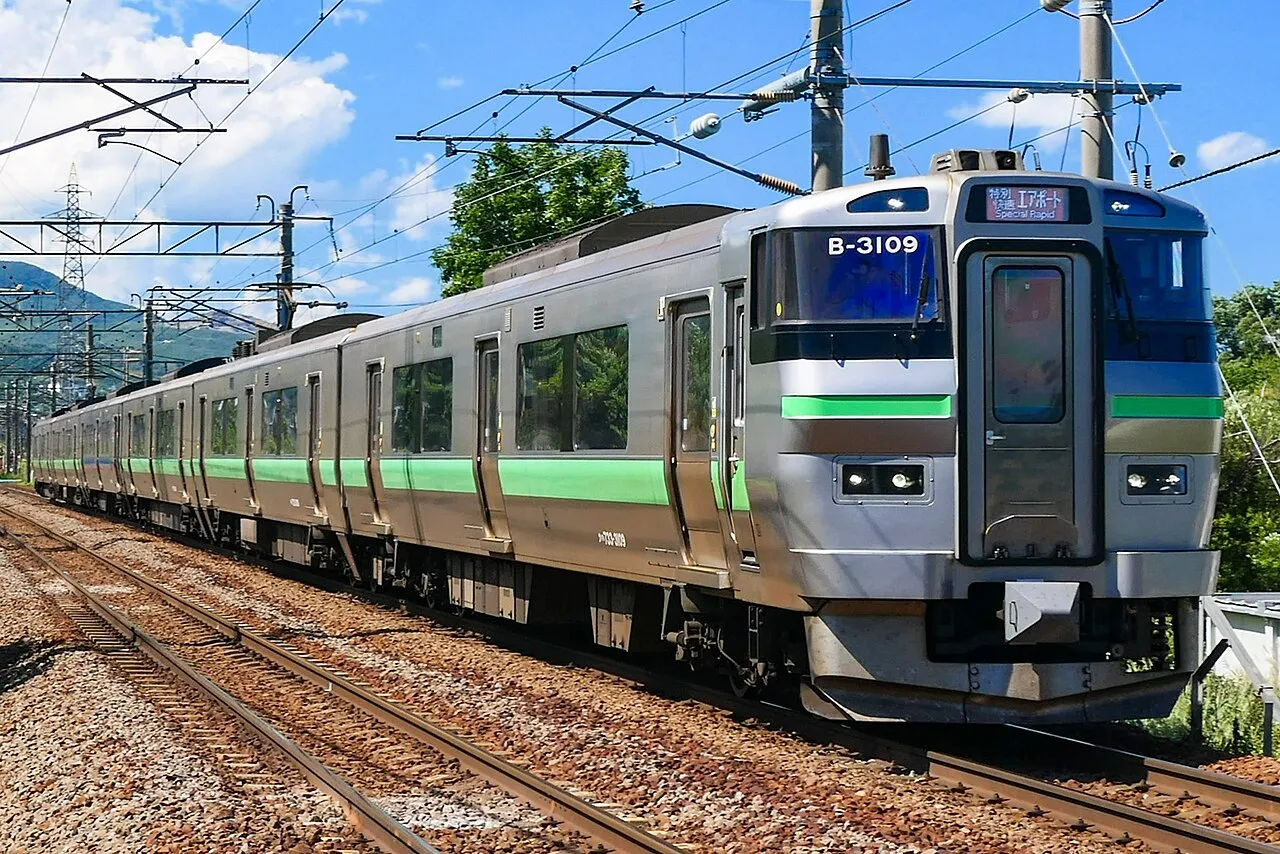
The Rapid Airport train leaves New Chitose Airport six times an hour in the daytime and reaches Sapporo with no change in as little as 37 minutes. The Chuo Bus waits at a stop right outside the arrival exit, and your suitcase goes into the trunk.
Which one costs less? The New Chitose Airport to Sapporo train cost is 1,230 yen per adult. The bus is 1,500 yen. Add a reserved seat on the train and the answer flips. Jump to What to buy instead if you want the verdict first.
The short answer
- No reserved seat, no big bag: take the train. At 1,230 yen it is 270 yen cheaper than the 1,500 yen bus.
- Add a reserved seat and the bus is cheaper. A u-Seat (the reserved car) costs 1,000 yen at the counter or 800 yen ticketless. Your train ride becomes 2,230 or 2,030 yen, which is 730 or 530 yen more than the bus. The seat only has to cost more than 270 yen to tip the result.
- Big suitcase, or a hotel far from Sapporo Station: take the bus. Speed and frequency belong to the train: 37 minutes against about 74 minutes.
Both fares changed recently. JR Hokkaido raised its fare from 1,150 yen to 1,230 yen on April 1, 2025. Chuo Bus raised its adult fare from 1,300 yen to 1,500 yen on April 1, 2026. The figures on this page come from each company's own pages after those changes. This page compares the train and the bus.
Adult fares, one way, as of November 13, 2026.
New Chitose Airport to Sapporo train cost and bus price: the numbers
You pay these amounts per adult, one way. The bus times come from Chuo Bus's timetable, updated on April 1, 2026 (the summer timetable), and read on November 13, 2026.
| JR Rapid Airport | Chuo Bus | |
|---|---|---|
| Adult fare | 1,230 yen (was 1,150 yen before April 1, 2025) | 1,500 yen (was 1,300 yen before April 1, 2026). Some stops are in a 1,400 yen zone |
| Reserved seat | u-Seat 1,000 yen at the counter, 800 yen ticketless. Total 2,230 or 2,030 yen | A seat comes with the fare |
| Ride time | 37 minutes at the fastest. Six trains an hour from 9:00 to 16:00 | Departing from in front of ANA at 8:40, arriving at Sapporo Station at 9:54 (about 74 minutes) |
| Last departure | 23:21 | 22:55 from in front of ANA, or 22:59 from the International Terminal stop (タ). Both arrive at Sapporo Station at 24:09 |
| Luggage | u-Seat car has room for large luggage | Trunk. Under 30 kg, under 0.25 cubic metres and under 2 m long |
The 1,500 yen is the fare to the main stops in central Sapporo. Stops in the 1,400 yen zone, such as the one near the Mitsui Outlet entrance, cost 100 yen less. Chuo Bus's timetable page shows the fare for each stop.
Why other pages show 1,150, 1,300 or 1,430 yen
You will see different numbers on different pages. Each one is a real fare from some point in time. Pages stopped at different moments, and two fare changes happened in the last two years.
| You may see | What it is |
|---|---|
| JR 1,070 yen | The fare before a 2019 revision |
| JR 1,150 yen | The fare before April 1, 2025 |
| JR 1,430 yen | Printed on one page next to 1,230 yen. JR's fare table lists 1,230 yen |
| Bus 1,100 yen | An older bus fare |
| Bus 1,300 yen | The fare before April 1, 2026 |
| JR 1,230 yen, Bus 1,500 yen | The fares on the official pages as of November 13, 2026 |
When two pages disagree, look for the date of the fare change. It tells you which one is older.
What to look for on the ride into Sapporo
Money is only half of this choice. The other half is what the next hour feels like. Here is what each ride gives you, from JR Hokkaido's airport page and Chuo Bus's airport pages (both in Japanese).
A reserved seat and room for a big suitcase on the Rapid Airport
Picture the train first. You collect your bag, head for the Rapid Airport, and look for car 4. That is the u-Seat car, and JR Hokkaido's airport page says every seat in it is reserved for the whole ride. You are not scanning the platform for a free seat. You walk to your car, sit down, and your large luggage has room to travel with you.
That is what the extra money buys. Without a seat, the fare is 1,230 yen. With a u-Seat, you pay 2,030 yen for the ticketless version (800 yen) or 2,230 yen for the counter version (1,000 yen). You are paying for a seat that was yours before you reached the platform, and for space beside you for the bag.
Next, think about how often the train comes. From 9:00 to 16:00 the Rapid Airport leaves six times an hour, which is a train about every ten minutes. In that window, a missed train costs you minutes, not an hour.
Then there is the speed, and the numbers are consistent on JR Hokkaido's page. The Rapid Airport runs to Sapporo with no change in as little as 37 minutes. A Special Rapid is listed at 36 minutes in the page text, though the page's heading says 33, so we use the 37 minutes of the Rapid Airport as the figure to plan around. You sit down at the airport and you stand up in Sapporo, with no second platform in between.
If you choose the train without a seat, you are paying the lowest fare of the two rides, 1,230 yen. A reserved seat is the one thing that fare does not include.
The bus: a trunk, a seat and a stop near your hotel
Picture the bus. Chuo Bus's page for first-time riders says the stop is right in front of the arrival exit. You walk out, the bus is there, and your suitcase goes into the trunk. Then you take a seat. The seat comes with the 1,500 yen fare, so there is nothing extra to reserve.
The trunk has limits, and they are written on Chuo Bus's baggage page (Japanese). A bag must weigh under 30 kg, measure under 0.25 cubic metres and be under 2 m long. If it does not fit in the trunk, the bus may refuse it. So before you pack, weigh the heaviest bag and measure its longest side against those three numbers.
You can pay in whichever way is easiest. Chuo Bus takes cash, SAPICA and other IC cards, and contactless credit cards. A child's fare is 750 yen, half the adult fare, so a family does not need a different plan from a solo traveller.
The real strength of the bus is where it drops you. It stops at 64 places in Sapporo: Susukino, Sapporo Station, the front gate of the Hokkaido Government Office, and the fronts of many hotels. If your hotel is one of them, you step off the bus almost at the door and walk your suitcase a few steps to reception. No change of trains is involved. Some stops, such as the one near the Mitsui Outlet entrance, sit in the 1,400 yen zone, so a stop can lower the fare as well as shorten your walk.
The price of that is time. The bus takes about 74 minutes from in front of ANA to Sapporo Station, against 37 for the fastest train. That is the whole trade: about 37 minutes for a seat, a trunk and a stop near your bed. A round-trip ticket for the 1,400 yen zone is 2,900 yen, up from 2,700 yen, if you already know you will return the same way.
Heading out to ski after Sapporo? The season pass math for Niseko and Hakuba is in Niseko or Hakuba: Season Pass vs Lift Tickets Break-Even.
The last ride of the night
Neither company waits for a late plane. JR Hokkaido says the last train, a special rapid bound for Teine, leaves New Chitose Airport at 23:21 on schedule, even when flights are delayed. Chuo Bus's page for first-time riders says its buses also leave on time when a flight is late.
The last bus from in front of ANA leaves at 22:55 and reaches Sapporo Station at 24:09, which is 9 minutes past midnight. At the International Terminal stop (タ), Chuo Bus's timetable shows a bus at 22:59 that reaches Sapporo Station at the same 24:09. So the last bus is a few minutes later if you wait at the International Terminal stop.
That gives you two different late nights. On the train, you have 26 more minutes at the airport than the bus from in front of ANA gives you. On the bus, you ride 74 minutes, but it lets you off at a stop close to your hotel instead of at the station.
Think about the moment you step off a late flight. You have your bag, a clock and two departures. The train gives you the later one. The bus gives you the shorter walk at the other end. Pick the one you would rather have at midnight.
Calculator: train cost vs bus price for your group
- Enter how many adults are travelling.
- Choose the reserved seat you would add to the train: none, 800 yen (ticketless) or 1,000 yen (counter u-Seat).
- Choose the bus fare: 1,500 yen for the main stops, or 1,400 yen for a stop in the 1,400 yen zone.
- Add any extra cost of your own, such as a Sapporo subway ride from the station.
- Enter 1 in the luggage box if your bag is over the bus limits, and 1 in the late-arrival box if you land after 22:00. Enter 0 if neither applies.
Left out of the totals: child fares on the train, subway or other connections in Sapporo (use the extra-cost boxes), luggage storage, and replacement transport when winter snow stops trains.
Scenarios: with luggage, with a reserved seat, on a late flight
The same two rides give four different answers. These are one-way totals for adults, as of November 13, 2026. Going from a different airport into the city? The same comparison for Tokyo is in Narita to Tokyo: Fares by Hotel Area.
| Scenario | JR total | Bus total | Result |
|---|---|---|---|
| 1 adult, no reserved seat, central stop | 1,230 yen | 1,500 yen | Bus costs 270 yen more |
| 2 adults, counter u-Seat | 4,460 yen | 3,000 yen | Bus saves 1,460 yen |
| 4 adults, ticketless seat | 8,120 yen | 6,000 yen | Bus saves 2,120 yen (530 yen each) |
| 1 adult, ticketless seat, 1,400 yen stop | 2,030 yen | 1,400 yen | Bus saves 630 yen |
The number of people does not change the winner. It only multiplies the gap.
A reserved seat flips the answer
On the 1,230 yen train, you get the cheaper ride. Reserve a seat, and the picture changes. The train becomes 2,030 yen with a ticketless seat, or 2,230 yen with a counter u-Seat. The bus stays at 1,500 yen and includes a seat. So the bus is 530 to 730 yen cheaper for each adult.
The three competing pages we compared (GLT Japan, Domingo and NearMe) do not set the train's total with a seat against the bus fare in one line. That is why the flip is easy to miss.
The u-Seat does buy something real: car 4, all seats reserved, no queuing for a place, space for large luggage. If that matters on your trip, 800 or 1,000 yen is the price. If you only want a seat, the bus gives you one for less.
Landing at 22:30
A plane due at 22:30 sits 25 minutes before the last bus from in front of ANA (22:55) and 51 minutes before the last train (23:21). The International Terminal stop (タ) has a bus at 22:59, which reaches Sapporo Station at 24:09 as well. Both the bus and the train leave on time even if your flight is late. The train gives you the longer margin. The bus reaches Sapporo Station at 24:09 and lets you off at stops across the city, so on a late night you step off near your hotel instead of in the station.
How locals plan it: suitcases on the bus, speed on the train
The usual split in Japanese travel pages matches what the two companies' own pages offer. Suitcases go with the bus, because the trunk is part of the service. Speed goes with the train, because the Rapid Airport runs often and takes 37 minutes.
Three questions come up again and again, and the official pages answer them.
- Is the bus or the train better with a big bag? The bus. It has a trunk, and its limits are 30 kg, 0.25 cubic metres and 2 m. The u-Seat car on the train also has room for large luggage, at 800 or 1,000 yen extra.
- Can I go straight to Susukino? Susukino is one of the bus's stops, so you can get off there without changing.
- Does it run in a snowstorm? Not always. Heavy snow can cancel or thin out Rapid Airport trains between December and March. On February 3, 2026, Hokkaido Shimbun reported the last train was moved earlier. The winter section below has the numbers.
The fares you see quoted in older posts, 1,150 yen for JR and 1,300 yen for the bus, are the fares from before the April 2025 and April 2026 changes.
When to go: winter snow and the 2027 Snow Festival
| Time | What to expect |
|---|---|
| December to March | Heavy snow can cancel or thin out Rapid Airport trains |
| February 4 to 11, 2027 | Sapporo Snow Festival 2027 |
| All year | JR fare changed April 1, 2025, bus fare changed April 1, 2026 |
| Timetable | The times above are from the summer timetable Chuo Bus updated on April 1, 2026, read on November 13, 2026 |
Hokkaido Shimbun reported what winter can do. On February 2, 2026, 121 JR Hokkaido trains were cancelled, 19 of them Airport trains. On February 3, 133 were cancelled, and the last train was moved earlier. That is a news report from one snowy week, not an official rule.
If you are flying in for the Snow Festival, the last bus from in front of ANA is 22:55 and the last train is 23:21.
What to buy instead, and how to pay for the ride
Best for saving money: the train at 1,230 yen if you do not need a reserved seat. Add a seat and the bus at 1,500 yen is cheaper.
Best for time: the train. 37 minutes at the fastest against about 74 minutes for the bus.
Best for luggage and a drop-off near your hotel: the bus, with its trunk and 64 stops in Sapporo.
No single answer wins on all three. The switch is simple: a reserved seat that costs more than 270 yen makes the bus cheaper.
You can pay for the Chuo Bus with cash, SAPICA or another IC card, or a contactless credit card. A round-trip bus ticket in the 1,400 yen zone is 2,900 yen, up from 2,700 yen.
Holding a Hokkaido Rail Pass? The pass and the JR Hokkaido Area Passes cover the airport-to-Sapporo train. See JR East-South Hokkaido Rail Pass: Worth It for a Week? for the full comparison.
If you plan a day trip from Sapporo or want a pre-booked transfer, you can browse options on KKday.
Browse toursAffiliate link
Pick your seat and your stop, and the rest of the answer is arithmetic.
Common questions
Can I pay for the Chuo Bus to Sapporo with an IC card or a credit card?
Yes. Chuo Bus takes cash, SAPICA and other IC cards, and contactless credit cards.
How much is the bus for a child?
750 yen, half the adult fare.
Does the Hokkaido Rail Pass cover the airport to Sapporo?
Yes. The Hokkaido Rail Pass and the Area Passes include it. Details are in JR East-South Hokkaido Rail Pass: Worth It for a Week?.
Does the bus cost the same from every stop in Sapporo?
No. The main stops in central Sapporo are 1,500 yen, and some stops are in a 1,400 yen zone. Chuo Bus's timetable page lists the fare stop by stop.
Sources and data date
All fares and times checked on November 13, 2026.
- JR Hokkaido: Fares (Japanese) and fare table PDF (Japanese)
- JR Hokkaido: Rapid Airport (Japanese)
- Hokkaido Chuo Bus: Airport bus timetable and fares (Japanese)
- Hokkaido Chuo Bus: Baggage (Japanese) and First-time riders (Japanese)
- Impress Travel Watch: Report on the April 2026 bus fare change (Japanese)
- Hokkaido Shimbun: report on the February 2026 train cancellations (Japanese)
- Welcome to Sapporo (Sapporo's official tourism site): Sapporo Snow Festival 2027 dates