Getting Around Fukuoka: Subway, Bus or IC Card vs Every Pass
Prices checked September 22, 2026 against the official pages. Every figure links to its source.

Published: September 22, 2026
This page contains an affiliate link. If you book through it, we may earn a commission at no extra cost to you. It does not change our numbers. See our disclosure.
Fares checked on September 22, 2026.
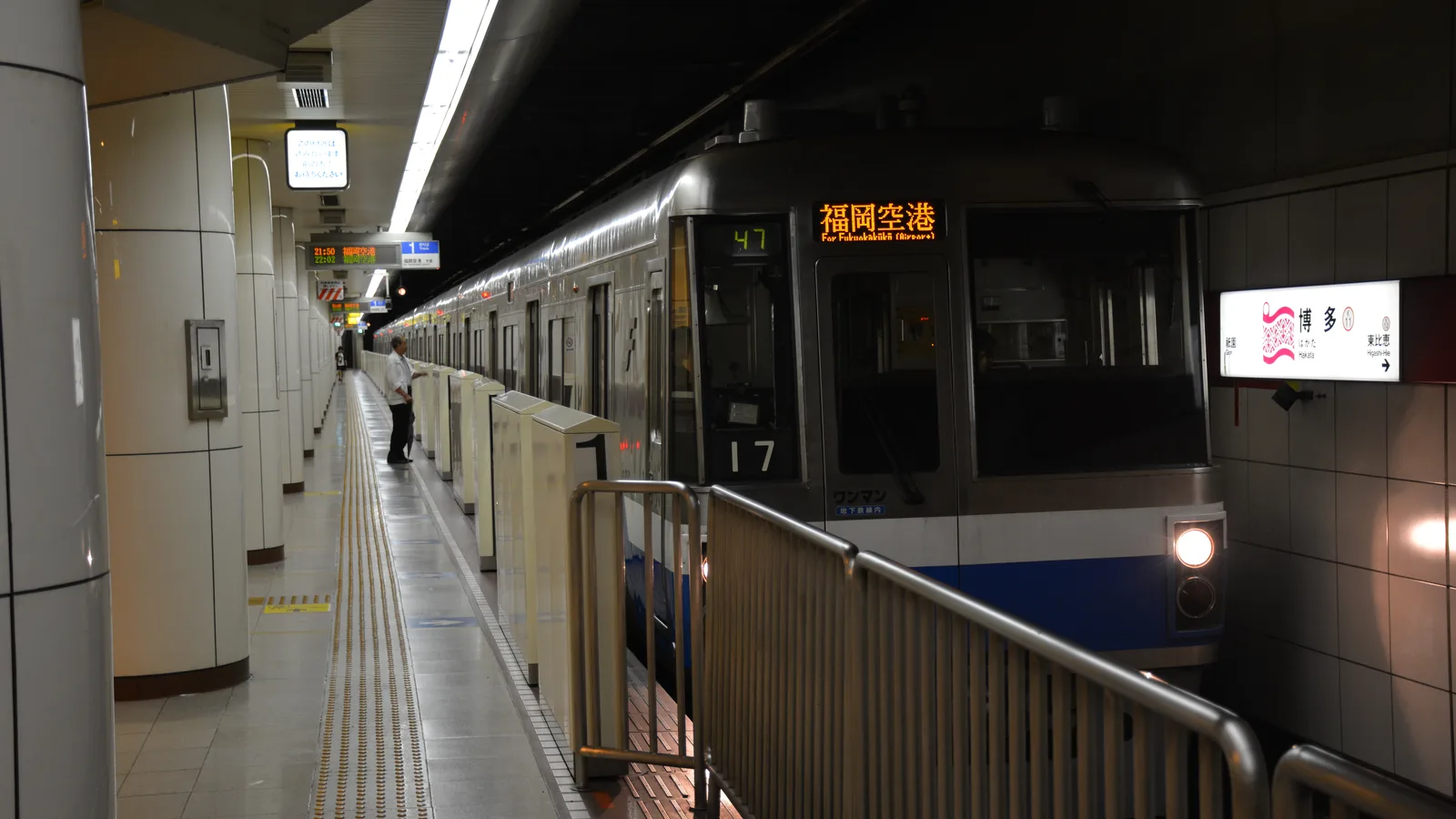
Getting around Fukuoka (Hakata) is simple once you look at the subway map: just three lines, and the whole system fits in your head after one glance. Fukuoka City Subway's own guide to its one-day pass gives a single example route: Meinohama Station, then Ohori Park Station for a lakeside walk, Tenjin Station for shopping, Gion Station for the old Hakata streets, and back to Meinohama. From Fukuoka Airport, it is one stop and about five minutes to Hakata Station, for 260 yen. Depending on when you land, you might also walk into Hakata Gion Yamakasa, a festival that fills the streets with towering decorated floats every July.
The short answer
- Riding the subway a few times in a day, an IC card or a contactless card tap is enough. Card tap is automatically capped at 640 yen a day per adult's card, the same price as the one-day pass, so there is nothing to buy in advance.
- Riding more, or traveling with children, a pass can be cheaper. The subway's one-day pass is 640 yen (adult) / 320 yen (child). Families with at least one child and no more than two adults can buy the Famichika Kippu for 1,000 yen total, however many children they have. On weekends, public holidays and school holidays, children can buy an Elementary School 100 Yen Pass.
- Nishitetsu buses in central Fukuoka charge a flat 150 yen fare, which can beat the subway for a short hop.
Jump to how to buy tickets and IC cards →
Adult, ordinary fares unless noted, as of September 22, 2026. The numbers below are our own arithmetic from the official fares; they are not a promise of savings.
The numbers: subway, bus and IC card fares
Adult and child prices in yen, as of September 22, 2026. Sources are listed at the end.
Fukuoka City Subway fares by zone
Fukuoka City Subway charges by distance zone, from 210 yen up to 380 yen for an adult paper ticket.
| Zone | Adult | Child |
|---|---|---|
| Zone 1 (up to 3 km) | 210 | 110 |
| Zone 2 (3 to 7 km) | 260 | 130 |
| Zone 3 (7 to 11 km) | 300 | 150 |
| Zone 4 (11 to 15 km) | 340 | 170 |
| Zone 5 (15 to 19 km) | 360 | 180 |
| Zone 6 (over 19 km) | 380 | 190 |
Source: Fukuoka City Subway, ticket fares (Japanese).
Fukuoka City Subway's official fare page does not publish a separate IC fare table the way Tokyo's does. We treat the IC fare (Hayakaken and other nationwide IC cards) as equal to the ticket fare, as of September 22, 2026.
Fukuoka Airport Station to Hakata Station is one stop on the Airport Line, about five minutes, and falls in Zone 2 (260 yen) - a short first ride by the standards of major Japanese airports.
The 640 yen one-day pass, and family tickets
Fukuoka City Subway's own page for its one-day pass gives a worked example: riding from Meinohama to Ohori Park, Tenjin, Gion and back would cost 980 yen ticket by ticket, against 640 yen for the pass.
| Ticket | Price | Who it's for |
|---|---|---|
| One-day pass | 640 yen adult / 320 yen child | Anyone; the whole subway network for one day |
| Famichika Kippu | 1,000 yen for the group | Families with up to 2 adults and any number of children, including infants; within two degrees of kinship, common-law couples included |
| Elementary School 100 Yen Pass | 100 yen | Children only, on weekends, public holidays and school holidays (summer, winter and spring breaks) |
| Family Pair Ticket | 800 yen | 1 adult + 1 child, bought together at a ticket counter |
Source: Fukuoka City Subway, discount tickets (Japanese). A digital version of the Famichika Kippu went on sale on July 14, 2025, alongside the paper ticket (source, Japanese).
Nishitetsu bus: the 150 yen flat-fare zone
Central Fukuoka has a flat 150 yen bus fare, covering the area linking Hakata Station, Kuramoto, Tenjin and Yakuin-ekimae, plus roughly one kilometer around 13 major railway stations in Fukuoka and Kitakyushu. Nishitetsu's official page lists 150 yen for the Fukuoka zone and 200 yen for the Kitakyushu zone.
| Ticket | Adult | Child |
|---|---|---|
| Flat fare, central Fukuoka | 150 | - |
| Fukuoka City one-day free ticket, paper | 1,200 | 600 |
| Same, digital 24-hour ticket | 1,100 | 550 |
| Same, digital 6-hour ticket | 700 | 350 |
| Fukuoka City + Dazaifu Liner Bus "Tabito," 24-hour free ticket | 2,000 | 1,000 |
Source: Nishitetsu, flat-fare zones (Japanese); Nishitetsu, Fukuoka City one-day free ticket (Japanese); my route, Fukuoka ticket sales page.
Nishitetsu's flat downtown fare was 100 yen for years and is still nicknamed the "100 yen bus" by some. News reports say it was raised to 150 yen on July 1, 2021 — Nishitetsu's own page confirms the current 150 yen fare, though that original announcement itself is reported rather than something we sourced directly to Nishitetsu. Either way, a 100 yen Fukuoka bus does not exist, as of September 22, 2026.
Nishitetsu Trains: the April 2026 fare change
On April 1, 2026, Nishitetsu Railway raised fares on the Tenjin Omuta Line (including the Dazaifu and Amagi Lines) and the Kaizuka Line for the first time in about 30 years, excluding consumption-tax adjustments. The previous revision was in 1997.
| Before April 1, 2026 | On or after April 1, 2026 | |
|---|---|---|
| Base fare | 170 yen | 180 yen |
Source: Nishitetsu, railway fare revision notice (Japanese). A separate 10 yen "station barrier-free fee," charged since March 27, 2023, was folded into the new fare and is no longer billed on its own.
For a side trip to Dazaifu, Nishitetsu and the city also sell a one-day free ticket (820 yen) and a round-trip sightseeing ticket that includes a voucher for umegae mochi rice cakes (1,000 yen). A full breakdown of a Dazaifu day trip is outside this article.
Highlights: what makes getting around Fukuoka worth it
Fukuoka's transit map is short, but it connects an airport five minutes from downtown, a lakeside park popular with residents, and one of Kyushu's biggest festivals. None of that shows up in a fare table, so here is what the tickets above actually buy you, stop by stop - the compact system that makes Fukuoka easy to improvise in, and the places at the end of each ride that are worth building a day around.
A subway map you can hold in your head
Fukuoka City Subway has just three lines, and its own description of the network gives each one's full route: the Airport Line runs from Meinohama to Fukuoka Airport, the Hakozaki Line from Nakasu-Kawabata to Kaizuka, and the Nanakuma Line from Hashimoto to Hakata (source). Together they add up to 36 stations - a fraction of the size of the networks in Tokyo or Osaka - so it is realistic to hold the whole layout in your head after one look at the map, instead of tracing a route with your finger every time you change trains.
Fukuoka City Subway's own example route for its one-day pass strings together four very different stops in a single loop: Meinohama for the start, Ohori Park Station for a lakeside walk, Tenjin Station for shopping and Gion Station for the old streets around Hakata's temples, before heading back to Meinohama (source, Japanese). It is the kind of day that would take real planning on a bigger network; here, it is just four stops on one line and a change. All three lines also cross at a small number of interchange stations in the city center, so even taking a wrong platform rarely costs more than a few minutes before you're back on track.
One stop from the airport to downtown
Fukuoka Airport Station sits inside the domestic terminal building itself, one stop and about five minutes from Hakata Station, for 260 yen. Fukuoka Airport's own access page describes it plainly: get off "at Fukuoka Airport Station in the Domestic Terminal Building," no shuttle bus or long walkway between the plane and the platform. Land on an international flight instead, and the routine changes - the subway does not reach the international terminal directly, so you need the free shuttle bus, about ten minutes, to reach the station.
That international terminal reopened in an expanded form on March 28, 2025, alongside a second runway that entered service on March 20, 2025, so if the last guidebook you read is more than a couple of years old, the arrival experience itself has moved on since it was written. Either way, for a first-time visitor, it means the trip from arrivals to your hotel in Tenjin or Hakata can be measured in minutes rather than the better part of an hour.
Two festivals that take over the streets
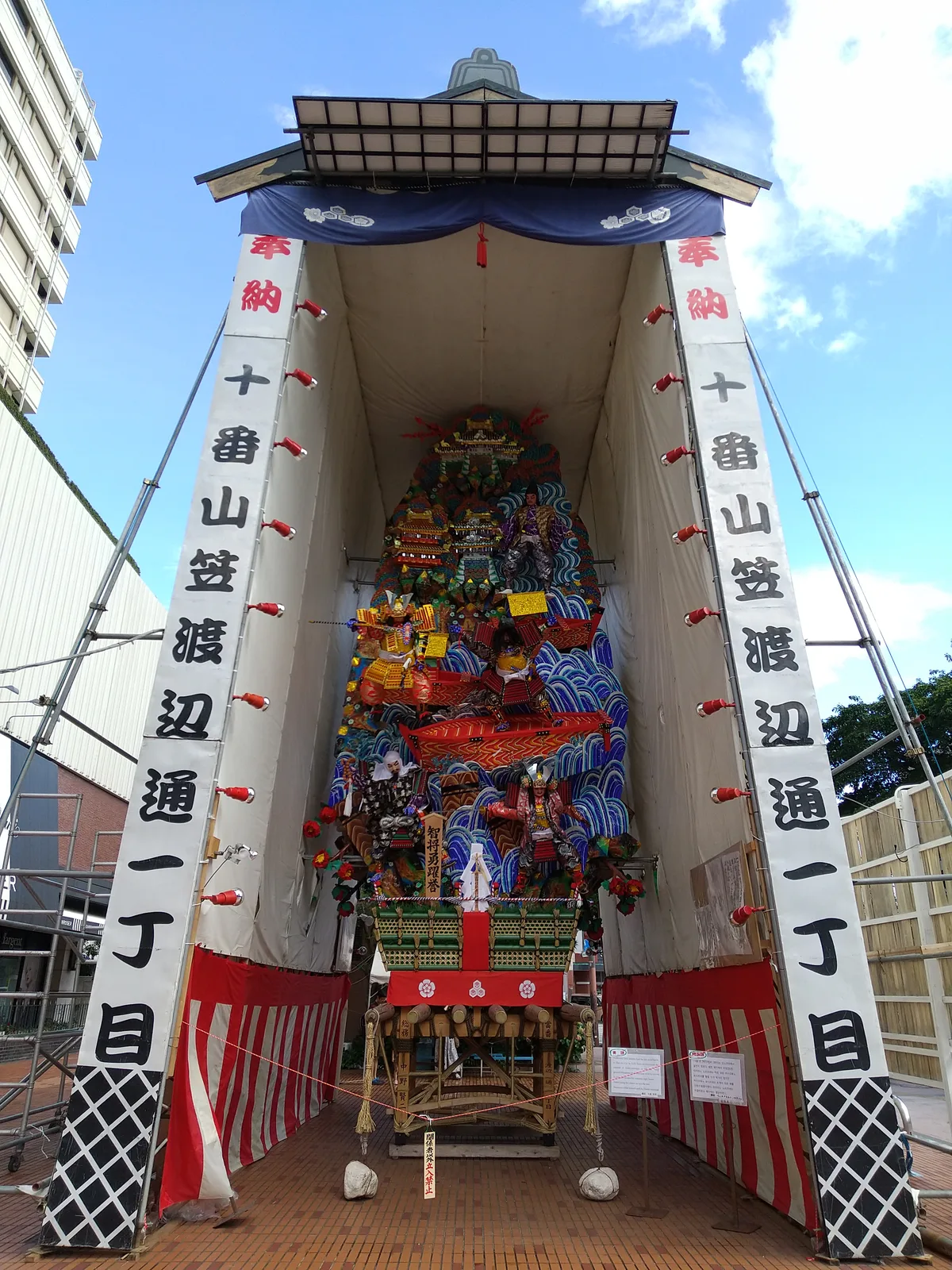
Hakata Gion Yamakasa runs every July 1 to 15, and Fukuoka's official tourism site describes it as designated as a national intangible folk heritage. Towering, elaborately decorated floats called Kazariyama, over 10 meters high, go up at 14 spots around the city, including Kushida Shrine, and stay on display through the festival period - so even if you miss the main event, you can still see one up close at street level in the days before it (source: Fukuoka's official tourism site, Festivals). The main event itself is the pre-dawn race, climaxing around a minute before 5am on July 15, when teams of men carry kakiyama floats weighing well over a tonne through the streets at a run. The 2026 event was confirmed to start on July 1; the exact dates for July 2027 had not been announced as of September 22, 2026, though the festival's own listed event date ("Annually, July 1-15") suggests the pattern repeats.
Hakata Dontaku Port Festival runs every May 3 and 4, and Fukuoka's tourism site says it draws more than two million visitors. Its finale, the Soodori parade, fills the streets with dancers clacking shamoji (wooden rice paddles) instead of the drums or bells you might expect from a Japanese festival.
Together, the two festivals roughly bookend Fukuoka's warmer months: Dontaku opens them in early May, and Yamakasa closes them out in mid-July. Time a trip around either one and the transit routes above stop being theory fast, since you'll be riding them daily to reach the crowds — build in extra time around the display sites and race route in early-to-mid July, when the streets fill up (see the festival calendar below for both dates).
A lake loop shared by visitors and joggers
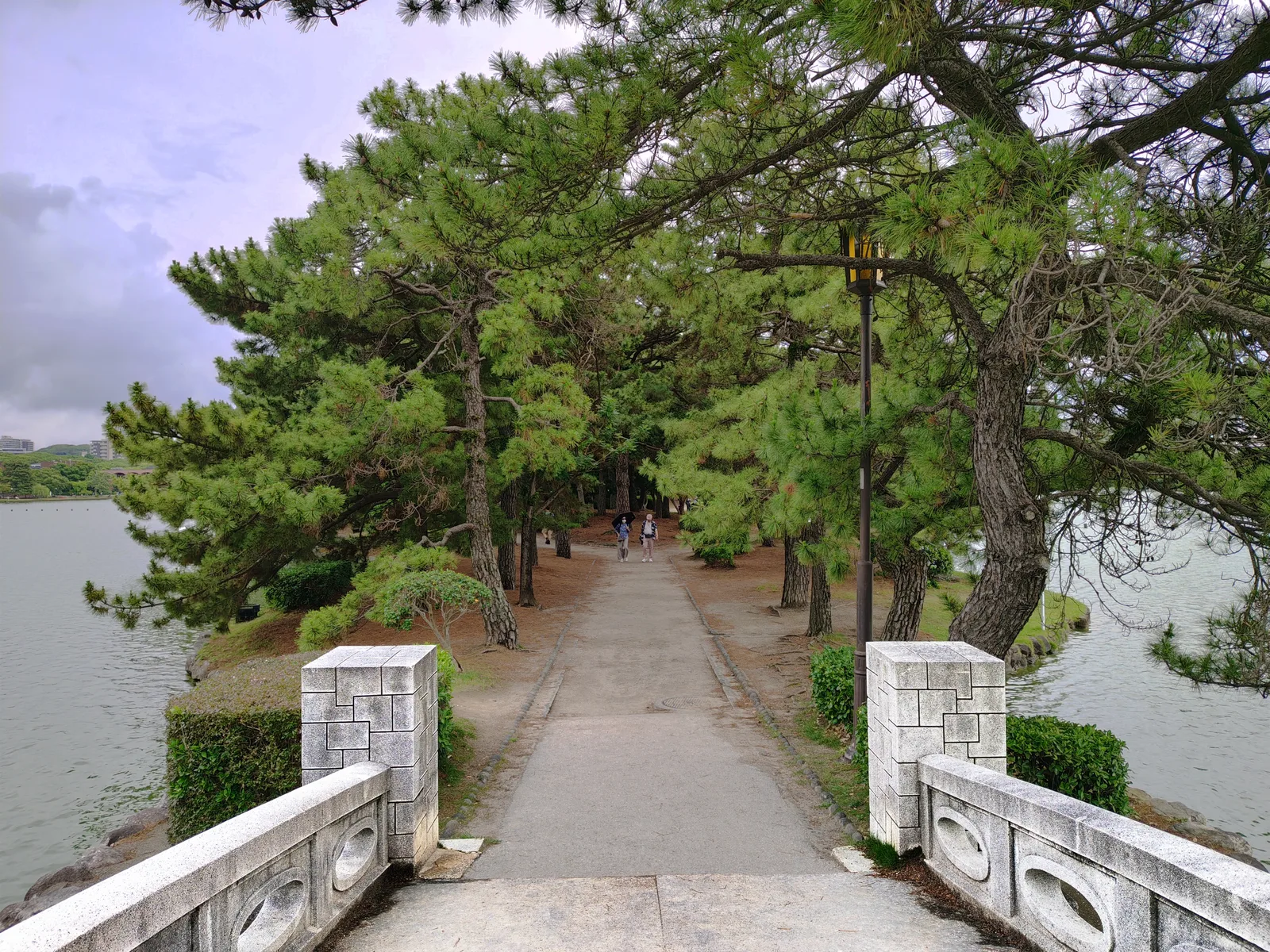
Ohori Park, a short walk from Ohori Park Station and next to the Fukuoka Castle ruins in neighboring Maizuru Park, is built around a lake with a path that circles the water, plus a pine-covered island reached by a stone bridge. On the Japanese travel review site Jalan, the park carries a 4.2 rating from 2,087 reviews, as of September 22, 2026, and several reviews mention seeing local residents out for a walk or a run - a sign the park is used for daily exercise as much as for sightseeing, so don't be surprised to share the loop path with joggers on an ordinary weekday morning. Because the park sits on its own subway stop, it folds into a half-day itinerary as easily as any of the shopping districts a few stops away - no taxi or long bus transfer required, just a walk out of the station.
Discounts baked into the pass
Show a one-day pass or a Famichika Kippu at participating spots around the city for a discount, including the Fukuoka City Museum (200 yen down to 150 yen) and Fukuoka Tower (800 yen down to 720 yen), according to Fukuoka's official tourism site's list of pass benefits. So the ticket in your pocket is not only transport - flash it again at the door of a museum or an observation deck and it keeps paying for itself. It's a small detail, but it's the kind of thing that rewards buying the physical pass over tapping a card even when the fare itself comes out the same.
A system built with families in mind
Fukuoka City Subway treats family travel as something worth designing for, not an afterthought. The Famichika Kippu lets up to two adults and any number of children ride the whole network together for 1,000 yen; the Elementary School 100 Yen Pass lets kids ride for 100 yen on weekends and school holidays even if the adults with them are paying full fare; and infants accompanied by a guardian ride free, a policy that Fukuoka City Subway's official touch-to-pay notice traces back to December 16, 2023 (source, Japanese). None of it requires filling out a form in advance - a family sets it up at a ticket counter or a staffed gate on the day, whether they're paying with cash at a machine or tapping a contactless card.
Boarding without a ticket machine or exact change
You also don't have to queue at a ticket machine before your first ride. Since April 1, 2024, Fukuoka City Subway has let riders tap a contactless-payment card straight onto the reader at any of its 36 stations - no IC card to buy or top up, no coins to count, and no advance registration - a boarding style that will feel familiar if you have used contactless transit in London or Singapore. Fares for the day are totaled and settled automatically overnight, and if you want a record of exactly where and when you tapped in, the subway's own guidance points riders to Q-move, a free trip-history site run by the payment processor. For a traveler carrying only a phone and one card through security lines and hotel check-ins, one less thing to buy, load or keep track of is its own kind of convenience. The full mechanics of that system, including its daily price cap, are explained in the next section.
Credit card tap-to-pay: how the ¥640 daily cap works
Fukuoka City Subway rolled out "Touch-to-Pay Boarding" at all 36 stations on all three lines on April 1, 2024, after a trial project with contactless card issuers. Hold a contactless-payment card, phone or wearable over the dedicated reader on the automatic ticket gate, and you're through - no advance registration is needed (source: Fukuoka City Subway, official notice on touch-to-pay boarding, Japanese).
The official notice lists the accepted payment brands as Visa, Mastercard, JCB, American Express, Diners Club, Discover and UnionPay, covering credit, debit and prepaid cards; Mastercard was added on October 17, 2024, after the service launched with Visa only. Even so, the notice adds that some cards on these networks may not work, so check with your card issuer if you're unsure.
Two price caps come with the service:
- A one-day maximum of 640 yen per adult's card - the same price as the paper one-day pass - active since the April 1, 2024 launch. Child and disability-discount fares are capped at 320 yen a day, but only after you ask station staff to set up the discount at a staffed gate before you tap in.
- A one-month maximum of 12,570 yen, covering the 1st to the last day of the calendar month, was announced on September 13, 2024 and started on October 1, 2024. That figure matches the price of Fukuoka City Subway's full-network monthly pass, so a card used daily for a month is never charged more than a monthly pass would cost.
Both caps only combine charges from the same card number on the same device; the same card number registered separately to a phone and a physical card is billed separately, and fares for a day are settled and billed the following day.
One gap to know about: JR Chikuhi Line does not accept touch-to-pay boarding, even though some of its trains run through to Fukuoka City Subway's Airport Line. If your trip continues onto the JR Chikuhi Line, buy a paper ticket for that leg or use an IC card instead. Card brands beyond the seven listed above, such as newer contactless wearables, may or may not be supported; check the operator's page before you travel.
Calculator: what a day of Fukuoka transit costs your group
Pick the number of days (the same day repeated), how many adults and children are in your group, and how many subway rides you'll take in each fare zone. The calculator compares five ways to pay for those same subway rides. If you also ride Nishitetsu buses in the 150 yen flat-fare zone, use the bottom row and add it to whichever subway row you choose.
What is not in the calculator: Fukuoka City Subway's IC fare, treated as equal to the ticket fare (a separate IC fare table was not found); card brands beyond Visa, Mastercard, JCB, American Express, Diners Club, Discover and UnionPay; children's bus fares (the bus row is for adults only); Zone 4 to 6 subway rides (add them yourself from the fare table above); Nishitetsu Railway fares (a different operator, covered in the table above); the Fukuoka Tourist City Pass and FUKUOKA 1DAY PASS, which cover more than the subway (see the comparison below); discounts at museums and attractions for pass holders; and disability fares. The results are our own arithmetic on the official fares, not a guarantee of savings.
Scenarios: four ways to spend a day in Fukuoka
Totals for one group, one day (or the number of days shown), as of September 22, 2026. Fukuoka City Subway rides only; Nishitetsu bus is shown separately and is not included in any subway pass.
| Scenario | Pay per ride | Card tap | One-day pass | Famichika Kippu | Elementary 100 yen pass | Bus (separate) | Lowest |
|---|---|---|---|---|---|---|---|
| 1 adult, 4 rides in a day (two Zone 1 + one Zone 2) | 680 | 640 | 640 | not eligible (no child) | 680 | - | Card tap (ties the one-day pass) |
| 2 adults, 2 children, 6 rides in a day + 1 bus ride | 2,200 | 2,020 | 1,920 | 1,000 | 1,660 | 300 | Famichika Kippu |
| 1 adult, 1 child, 2 days, 3 rides a day | 2,060 | 1,980 | 1,920 | 2,000 | 1,560 | - | Elementary 100 yen pass (weekends/school holidays only) |
A short day: one adult, four rides
Take one adult riding two Zone 1 trips (210 yen each) and one Zone 2 trip (260 yen): 680 yen paying per ride. Card tap automatically stops charging once the day's total reaches 640 yen, so the fourth ride is effectively free and the running total matches the one-day pass exactly, without visiting a ticket machine first. If your day looks like this, card tap and the one-day pass tie at 640 yen, 40 yen below paying per ride.
A family day: two adults, two children, six rides and a bus ride
Take two adults and two children each making one Zone 1 ride and two Zone 2 rides in a day, plus one adult bus ride in the flat-fare zone. Paying per ride comes to 2,200 yen for the subway alone. The Famichika Kippu covers the whole group's subway rides for 1,000 yen, because there are two adults and at least one child - 1,200 yen below paying per ride. Add the bus fare (150 yen per adult rider) on top of whichever row you pick; here that's 300 yen for two adults, so a day with the Famichika Kippu plus one bus trip each comes to 1,300 yen for transit.
A two-day trip: one adult, one child, three rides a day
Take one adult and one child each making two Zone 1 rides and one Zone 2 ride, every day for two days. Paying per ride totals 2,060 yen over the two days. The Elementary School 100 Yen Pass, which lets the child ride for 100 yen a day instead of paying per ride, brings the total to 1,560 yen - but only on a weekend, public holiday, or school holiday. On an ordinary weekday, that pass cannot be bought or used, so card tap (1,980 yen) or the one-day pass (1,920 yen) would be the next-lowest options for this same plan.
Adding Nishitetsu bus rides
Nishitetsu buses are not included in any of the five subway rows above. On a day you also ride the bus, add 150 yen per adult ride in the flat-fare zone to whichever row you choose (check Nishitetsu's page for the child fare). If you expect to ride the bus often in one day, compare that running total against the Fukuoka City one-day free bus ticket (1,200 yen paper, or 1,100 yen for the digital 24-hour version) from the table above.
Fukuoka Tourist City Pass vs the subway one-day pass
Fukuoka also sells passes aimed specifically at overseas visitors, which cover more than the subway alone.
| Pass | Adult price | What it covers |
|---|---|---|
| Fukuoka Tourist City Pass (city) | 2,500 yen | Subway, bus, some train sections and a ferry, one day, plus discounts at partner attractions |
| Fukuoka Tourist City Pass (city + Dazaifu) | 2,800 yen | As above, plus the Dazaifu area (not the Dazaifu Liner Bus "Tabito") |
| FUKUOKA 1DAY PASS (Nishitetsu trains + buses) | 2,800 yen | Nishitetsu Tenjin Omuta Line to Yanagawa, the Dazaifu and Amagi Lines, and Nishitetsu buses in the Fukuoka, Kurume, Saga and Chikuho areas |
| Fukuoka City Subway one-day pass (for comparison) | 640 yen | Subway only, but anyone can buy it |
Source: Fukuoka's official tourism site, Fukuoka Tourist City Pass; Discount Tickets.
These tourist passes cover more than the subway - bus, some train lines, or a ferry - so the price difference from the 640 yen subway pass reflects what's included, not a markup on the same thing.
The Fukuoka Tourist City Pass has a catch worth knowing before you rely on it: it has a digital app version, but Fukuoka's tourism site states that, due to privacy protection laws, the app is only available to visitors from South Korea, Taiwan and Thailand, as of September 22, 2026. Visitors from other countries can still buy the paper version by showing a passport at a sales counter - it just cannot be bought or loaded through the app.
If your day is subway-only, the 640 yen one-day pass or a capped card tap costs less. If you're also riding buses, some Nishitetsu train sections, or the ferry, the wider-ranging passes can work out cheaper overall once you add up what you'd otherwise pay separately - see the calculator above for the subway side of that comparison, and the bus fares above for the rest.
How locals plan it: subway, bus and the family tickets
A few patterns showed up in Japanese-language questions and official pages that don't often make it into English-language guides.
Card tap as an unofficial day pass. Fukuoka City Subway's own notice frames the 640 yen tap cap as a convenience feature rather than a discount, but the effect for a rider is the same as buying the one-day pass: once the day's fares reach 640 yen, later rides on the same card stop adding to the bill. That matches the math above - card tap never costs more than the one-day pass, and it requires no trip to a ticket machine first.
Digital bus tickets undercut the paper one. Nishitetsu's own prices favor the smartphone option over the paper one: the digital 24-hour ticket is 1,100 yen against 1,200 yen for the paper one-day ticket, and it is also valid a full 24 hours from first use rather than only until the last bus of the same day. The 6-hour digital ticket (700 yen) is naturally cheaper still, but its shorter validity window means it isn't a fair like-for-like comparison with the one-day tickets.
The "100 yen bus" question keeps coming back. A 2025 question posted on the Japanese Q&A site Yahoo! Chiebukuro asked whether the 100-yen bus between Tenjin and Hakata was still running. It has not been since July 1, 2021, when the flat fare rose to 150 yen (see above) - but the fact that the question was still being asked four years later suggests the older price has stuck in some travelers' memories. If you're budgeting based on an older guide or a friend's trip from before 2021, double-check the current 150 yen fare.
Short hops favor the bus over the subway. Speed and price trade off in opposite directions for the same trip: Tenjin to Hakata is a Zone 2 subway ride (260 yen, a few minutes underground) but only 150 yen by bus in the flat-fare zone, if you don't mind a slower ride through street traffic. Neither option is wrong; it comes down to whether you're in a hurry.
When to go: Fukuoka's festivals and how they affect getting around
Fukuoka's tourism site publishes a year-round calendar of festivals and natural sights. A few line up closely with how you'll get around the city.
| Time | Event | Where |
|---|---|---|
| Late March to early April | Cherry blossoms | Maizuru Park (Fukuoka Castle ruins), Nishi Park and other spots citywide |
| May 3-4 | Hakata Dontaku Port Festival (2 million+ visitors) | Citywide |
| July 1-15 | Hakata Gion Yamakasa | Kushida Shrine and other spots citywide |
| September 12-18 | Hakozaki Shrine Hojoya festival | Hakozaki Shrine |
| Early to late November | Autumn leaves | Yusentei Park and other spots |
| Mid-November to mid-January | Illuminations | Citywide |
| January 1-3 | New Year's shrine visits | Kushida Shrine, Sumiyoshi Shrine, Hakozaki Shrine |
Source: Fukuoka's official tourism site, Seasonal Highlights; Hakata Gion Yamakasa details from Festivals.
Fukuoka's official tourism site lists Hakata Gion Yamakasa's event date as "Annually, July 1-15." As of September 22, 2026, no separate announcement confirms the exact 2027 dates; treat "Annually, July 1-15" as the usual recurring pattern rather than a confirmed date for next year until an official announcement appears.
If you're traveling through central Fukuoka during Yamakasa or Dontaku, allow extra time for crowded streets and stations near the festival routes.
How to buy: tickets, IC cards and where to shop tax-free
Buying tickets, passes and IC cards
Every Fukuoka City Subway station sells single tickets, the one-day pass, the Famichika Kippu and the Elementary School 100 Yen Pass at its ticket machines (Fukuoka City Subway, ticket and fare pages, Japanese). A Hayakaken IC card, the subway's own IC card, is sold new for 1,000 to 10,000 yen (in 1,000 yen steps), which includes a 500 yen refundable deposit.
Nishitetsu's own IC card, nimoca, is sold for 2,000 yen (500 yen deposit plus 1,500 yen of starting credit). JR Kyushu also sells SUGOMON PASS, a version of its SUGOCA IC card limited to short-term visitors holding a non-Japanese passport, for 2,000 yen on the same 500/1,500 split, from ticket counters at Hakata and Kumamoto Stations only. All of these, plus Suica, PASMO, ICOCA, manaca, TOICA, PiTaPa and Kitaca, work interchangeably on Fukuoka City Subway and Nishitetsu buses, so the specific card you buy matters less than simply having one loaded with fare. This list is limited to cards with a published official price; an ordinary (non-visitor) SUGOCA card sold in Fukuoka is not among them.
Book hereAffiliate link
If you're heading beyond Fukuoka City to other parts of Kyushu, a region-wide guide comparing the SUNQ Pass and the JR Kyushu Pass covers those options in depth.
For getting between cities on the Shinkansen and JR network, the Japan Rail Pass is a separate ticket that does not cover Fukuoka's city subway or Nishitetsu buses - budget for local transit in Fukuoka on top of it. If you're also visiting Tokyo, our Tokyo Subway Ticket vs. Suica guide runs the same kind of comparison for Tokyo Metro and Toei fares, and our Kansai IC card and pass comparison does the same for Osaka and Kyoto.
Shopping in Tenjin or Hakata
Fukuoka's shopping districts in Tenjin and around Hakata Station both have tax-free counters for visitors leaving Japan with their purchases. For the rules on minimum spending, required documents and the November 2026 changes to Japan's tax-free system, see our Japan tax-free shopping guide.
Tap in, ride, and stop thinking about the fare — with a network this small, the only real planning left is which stop to get off at for Ohori Park, Tenjin's shops, or the old streets around Kushida Shrine.
Common questions
Is the Fukuoka City Subway one-day pass worth it?
It depends on how many rides you take. Paying per ride passes 640 yen at your fourth or fifth ride in most zones, but card tap reaches the same 640 yen cap automatically, so there's rarely a reason to buy the paper pass in advance rather than just tapping a contactless card.
How do I pay for the bus in Fukuoka?
Tap an IC card (Hayakaken, nimoca, Suica and others all work) when boarding and again when leaving, or pay the flat 150 yen cash fare in the central zone. Outside the flat-fare zone, fares are distance-based; Nishitetsu's official fare pages cover those routes.
Can I use my Suica, ICOCA or other IC card in Fukuoka?
Yes. Ten nationwide IC cards, including Hayakaken, Suica, PASMO, ICOCA, SUGOCA, nimoca, manaca, TOICA, PiTaPa and Kitaca, work on both Fukuoka City Subway and Nishitetsu buses.
How does the 640 yen tap-to-pay cap work?
Tap a contactless Visa, Mastercard, JCB, American Express, Diners Club, Discover or UnionPay card, phone or wearable at the gate reader; each ride is charged individually, but once the same card's charges for the day reach 640 yen, no more is charged that day. A separate cap of 12,570 yen applies per calendar month.
What is the subway fare from Fukuoka Airport to Hakata Station?
260 yen, one stop, about five minutes, on the Airport Line (Zone 2). It only reaches the domestic terminal; from the international terminal, take the free shuttle bus (about ten minutes) to the subway station first.
Is the Fukuoka Tourist City Pass better than the subway one-day pass?
If your day is subway-only, no - the 640 yen one-day pass or a capped card tap costs less. If you're also riding buses, some Nishitetsu train sections, or the ferry, the wider-ranging Tourist City Pass (2,500 yen or 2,800 yen with Dazaifu) can work out cheaper once you add up what those rides would otherwise cost.
Is there still a 100 yen bus in Fukuoka?
No. The flat downtown fare was raised from 100 yen to 150 yen on July 1, 2021.
How much is a day trip to Dazaifu?
Nishitetsu and the city sell a one-day free ticket for 820 yen and a round-trip sightseeing ticket with a rice-cake voucher for 1,000 yen.
Can children ride for free or at a discount?
Children (roughly ages 6 to 11) pay about half fare on the subway and bus. Families with at least one child and up to two adults can also buy the 1,000 yen Famichika Kippu, and children can buy the 100 yen Elementary School Pass on weekends, public holidays and school holidays. Infants accompanied by a guardian ride free.
Is Hakata within walking distance of Tenjin?
The two stations sit in Zone 2 (3 to 7 km) on the subway's own fare table, farther than most travelers will want to walk with luggage; the subway (260 yen) or the bus (150 yen) covers it in a few minutes instead.
Sources and data date
All fares were checked on September 22, 2026. Prices, fare zones and festival dates can change; check the operator's page before you travel.
- Fukuoka City Subway: Fare and ticket; 1-Day Pass; Ticket fares (Japanese); Discount tickets (Japanese); Touch-to-pay boarding notice (Japanese); Fukuoka City Subway home.
- Nishitetsu: Flat-fare zones (Japanese); Fukuoka City one-day free ticket (Japanese); Railway fare revision notice (Japanese); my route ticket sales page.
- JR Kyushu: SUGOMON PASS.
- Fukuoka's official tourism site (gofukuoka.jp): Fukuoka Tourist City Pass; Discount Tickets; Seasonal Highlights; Festivals.
- Fukuoka Airport, official access information: fukuoka-airport.jp.
- Fukuoka City, official page on switching from private cars to public transit (Japanese): campaign.html.
- Jalan, user reviews for Ohori Park (rating and review count, checked September 22, 2026).
Our calculator and tables are arithmetic on the fares above.