Is the JR Pass Worth It? 19,730 Yen More for Tokyo-Kyoto-Osaka
Prices checked September 25, 2026 against the official pages. Every figure links to its source.
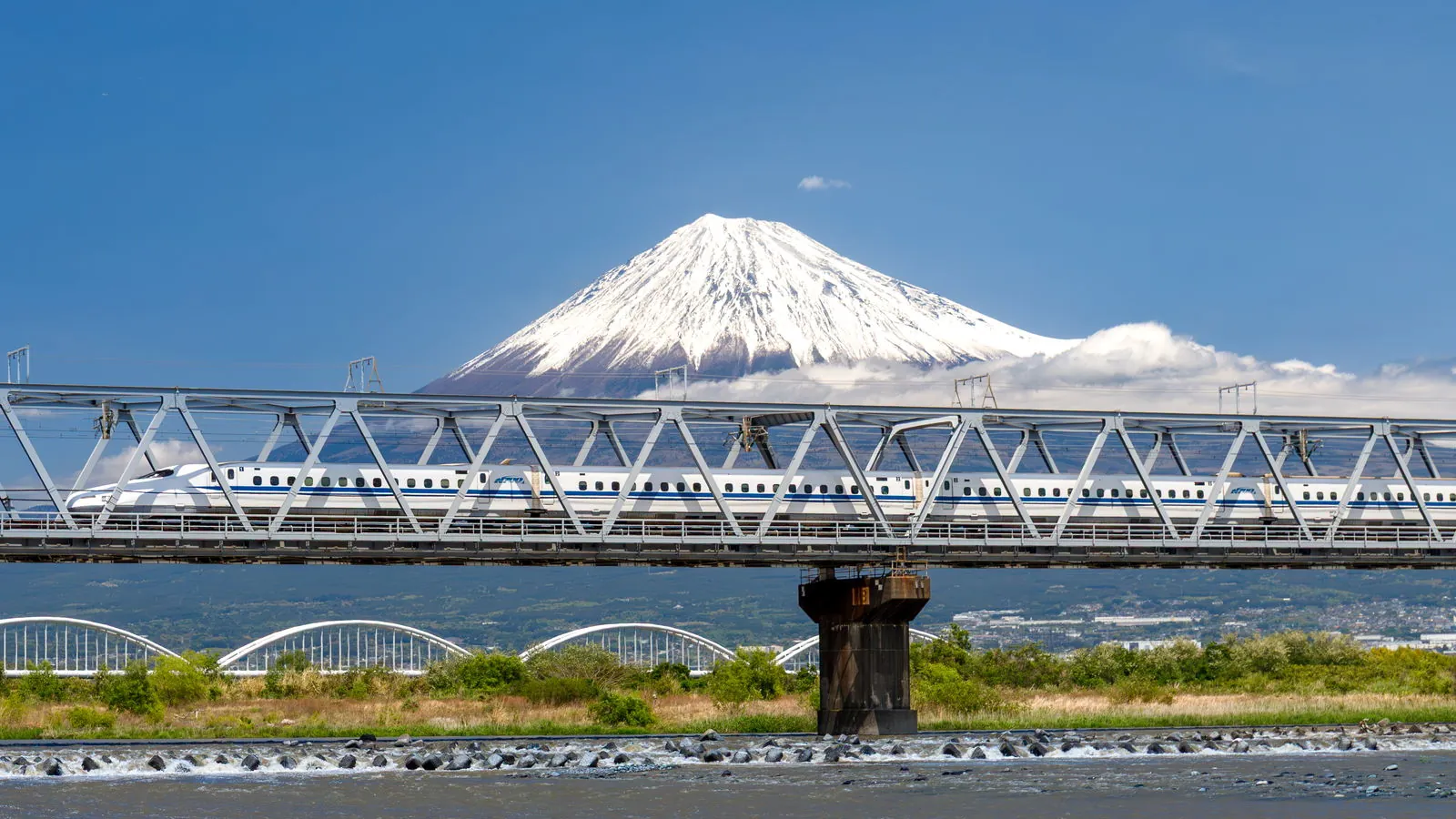

Published: September 19, 2026
This page contains an affiliate link. If you book through it, we may earn a commission at no extra cost to you. It does not change our numbers. See our disclosure.
Prices checked on September 19, 2026.
The short answer
- Tokyo, Kyoto and Osaka in 7 days: the pass does not pay off. It costs 19,730 yen more than regular tickets.
- Add a Hiroshima round trip: the pass and regular tickets cost about the same. Bought on the official site, the pass saves 1,110 yen. Bought from an overseas agent on or after October 1, 2026, it costs 1,890 yen more.
- Ride the Nozomi on that same trip: the pass costs 15,450 yen more.
If the pass does work for your trip, buy it on the official website. For passes bought on or after October 1, 2026, it is the lower-priced place to buy.
These results assume one adult, ordinary cars and regular-season fares.
A price increase is coming on October 1, 2026. If you plan to buy your pass from an overseas travel agent rather than the official website, buying on or after that date costs 3,000 to 7,000 yen more per adult pass (see the price table below). The official site's price does not change.
Jump to what to buy and how to buy the pass →
What makes the ride worth it: the Shinkansen itself
Money is only half of the decision. Picture the day: you pick a boxed lunch inside Tokyo Station, take your seat, and watch the city thin out into rice fields, rivers and, on a clear day, a snow-capped Mt. Fuji. Below is what the official pages say about that ride, in the order you will meet it. We read the official pages in English and, for Japan-side details, in Japanese.
Before you board: choose an ekiben
Food and drink are not sold in Standard (ordinary) Class on the Tokaido Shinkansen, so JR Central asks you to buy refreshments before boarding. At Tokyo Station, Ekiben-ya Matsuri is inside the ticket gates, open every day from 5:30 to 22:00. It stocks more than 150 kinds of ekiben (boxed meals for trains): famous boxes from around Japan, its own original boxes and limited-time ones. Because it is inside the gates, you enter the station first, then shop. JR Central's guide calls the seat "a restaurant with a view," and every seat has a fold-down table.
The window: Mt. Fuji and the countryside
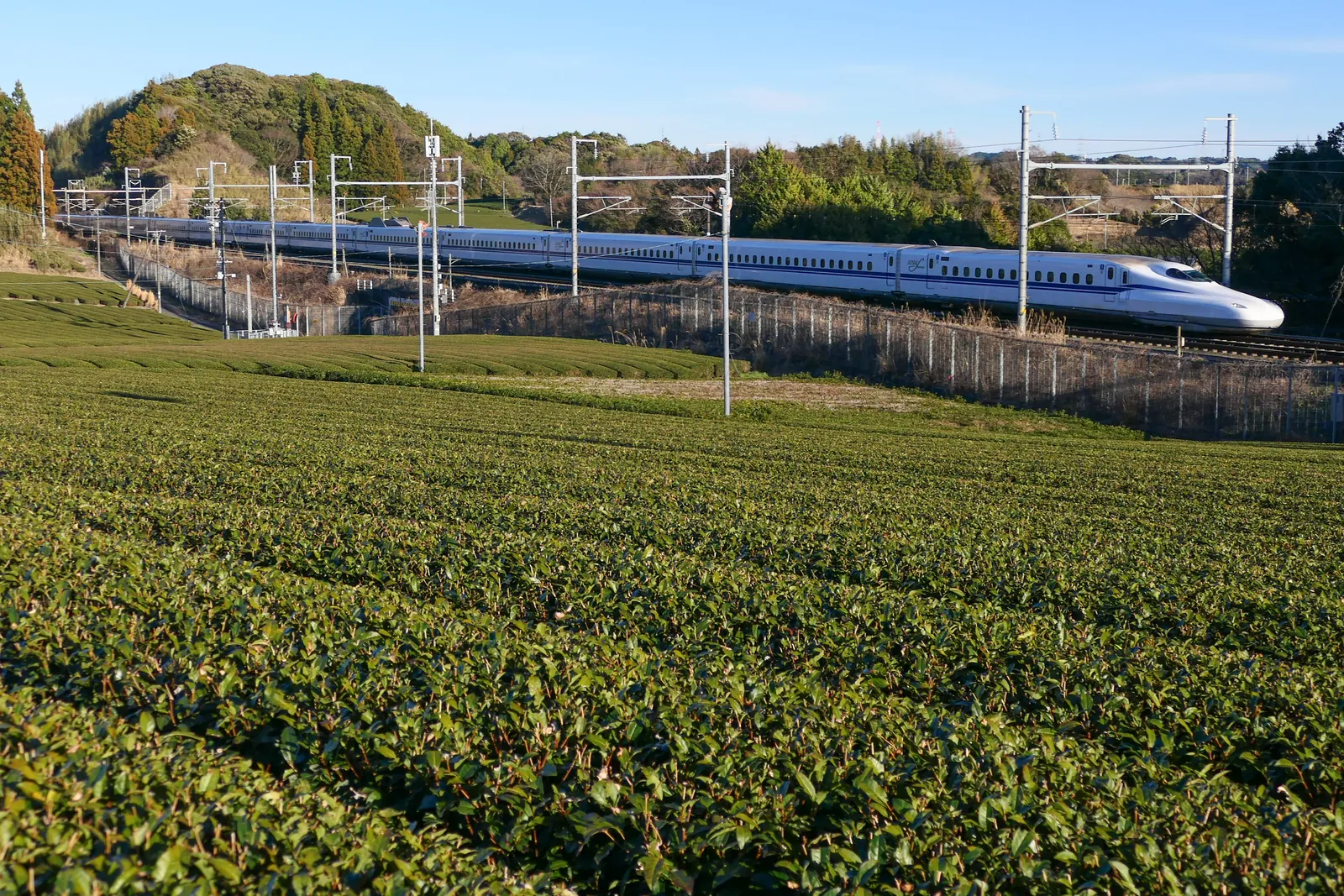
JR Central's English guide lists "iconic views of Mt. Fuji" as part of the Tokyo–Kyoto–Osaka ride, and its FAQ recommends Seat E in Standard Class or Seat D in Green Class for the best chance of seeing it. Fuji is only one part of the window: the photo above shows the line running past tea fields in Shizuoka Prefecture.
To pick a window seat you need a reserved seat. In a non-reserved car, you sit wherever there is space. JR Central says the seats have far more legroom than economy flights, even with luggage, and that the ride is quieter and smoother than flying.
Inside the train: seats, power and Green Car
The newest train, the N700S, has an outlet at every seat and all cars are non-smoking. On the older N700A and N700, ordinary-car outlets are only at window seats and the front and back rows. Free Wi-Fi is offered on all Tokaido Shinkansen trains. You cannot choose which train type you get. Browsing and texting are fine, but JR Central asks you not to make voice calls at your seat. Step out to the deck between the cars.
A Green Pass also covers the Green Car (first class) on Hikari, Sakura and Kodama, though most Hikari and Kodama trains on the Sanyo Shinkansen (Shin-Osaka to Hakata) have no Green Car. On the Nozomi or Hikari, Green Class passengers can order snacks and drinks from their smartphone, and a purser brings them to the seat.
Nozomi, Hikari or Kodama: what changes
The board at the station shows the train name in a color: yellow for Nozomi, red for Hikari and blue for Kodama. The Nozomi takes 2 hours 21 minutes from Tokyo to Shin-Osaka. The JR Pass does not cover the Nozomi (see the Nozomi section below), so with a pass you ride the Hikari or Kodama: ordinary cars on both are usable with the pass, while the Nozomi and Mizuho need a separate NOZOMI MIZUHO Ticket.
The clock: 372 trains a day
JR Central's company profile says the Tokaido Shinkansen runs 372 trains a day (fiscal 2023), with an average delay of 1.6 minutes per train that year. JR Central's guide page says "less than one minute" for the delay. The two official pages do not agree, so we use the 1.6 minutes, because it names the year.
Miyajima: sail past the giant torii gate
If you add Hiroshima, the JR West Miyajima Ferry between Miyajimaguchi and Miyajima is covered by the JR Pass. On "Otorii-bin" sailings, the ferry passes close to the giant torii gate of Itsukushima Shrine, so you see the gate and the shrine from the sea at no extra fare. The adult fare is 200 yen one way, covered by the pass. You also pay a separate Miyajima Visitor Tax of 100 yen when visiting the island — that tax is not the ferry fare.
The ferry's own pages disagree on the hours. The /point page says the Otorii-bin runs from Miyajimaguchi from 9:10 to 16:10. The ferry's top page shows a "today's operation" line and two notices (for September 19 to 22 and August 8 to 15, 2026) that say 7:05 to 16:10. Both pages also say the route can change with high tides or weather. We use 9:10 to 16:10 as the regular window, and treat 7:05 as an extension that the ferry announces for busy dates.
Practical notes for the ride
- Reserve a seat. Pass holders can reserve seats on the Hikari, Kodama and Sakura with no extra charge. Only the official site lets you reserve before you pick up the pass.
- Non-reserved cars. JR Central's guide lists cars 1 and 2 on the Nozomi, cars 1 to 5 on the Hikari, and cars 1 to 6 and 13 to 16 on the Kodama. These can change.
- Big suitcase? If the three sides add up to more than 160 cm, JR Central asks you to reserve a seat with oversized baggage space. Without a reservation, the fee is 1,000 yen. Bags of 160 cm or less need nothing.
Fares and hours checked on September 20, 2026. Sources: JR Central, Shinkansen Perfect Guide; JR Central, train accommodations; JR Central, company profile; JR Central, oversized baggage (Japanese); JAPAN RAIL PASS, train accommodations; JAPAN RAIL PASS, conditions for use; Ekiben-ya Matsuri, GranSta Tokyo (Japanese); JR West Miyajima Ferry, Otorii-bin guide (Japanese); JR West Miyajima Ferry, top page (Japanese).
The October 1, 2026 price change
For passes bought on or after October 1, 2026, overseas travel agents charge a higher price. The price on the official sales site, JAPAN RAIL PASS Reservation, stays the same.
The official site keeps its current price only for a limited period. It says it will announce the end date once it is decided.
The agent price depends on the day you buy, not the day you start using the pass. The official wording is "For purchases made on or after October 1, 2026 (based on the local time at the point of purchase)."
The JR Group announced the change on April 9, 2026. The reason given: fare changes made by some JR companies since the last price change on October 1, 2023.
Agents charge the old price until September 30, 2026. From October 1, 2026, they charge the new price. The official site charges the same price before and after October 1, 2026, so the date does not matter there.
If you buy an Exchange Order from an agent by September 30, 2026, you must exchange it for the pass within three months of the date it was issued.
Where you can buy the pass
There are only two official ways to buy the JR Pass:
- The official website (JAPAN RAIL PASS Reservation). You pay in Japanese yen by credit card. The card must be in the buyer's name. One purchase can cover passes for up to 6 people, adults and children combined (FAQ). Sales hours are 4:00 to 23:30, Japan time.
- An overseas travel agent. The listed agents are JTB, Nippon Travel Agency, KINTETSU INTERNATIONAL, Tobu Top Tours, Japan Airlines, ANA Sales Americas (Los Angeles), JALPAK and their associated agencies. The local-currency price is converted from yen at the bank selling rate on the day the Exchange Order is issued.
Stations in Japan appear on the official site as places to pick up or exchange the pass.
When can you buy? On the official site, sales open at 4:00 (Japan time) one month before your start date. With an agent, you get an Exchange Order. You must exchange it within three months of the date it was issued, and you can exchange it from one month before your start date.
The numbers
Prices checked on September 19, 2026. All prices are in yen.
JR Pass prices by where and when you buy
| Pass | Duration | Adult: official site | Adult: overseas agent, bought by Sep 30, 2026 | Adult: overseas agent, bought on/after Oct 1, 2026 | Child: official site | Child: agent, on/after Oct 1, 2026 |
|---|---|---|---|---|---|---|
| Ordinary | 7 days | 50,000 | 50,000 | 53,000 | 25,000 | 27,000 |
| Ordinary | 14 days | 80,000 | 80,000 | 84,000 | 40,000 | 42,000 |
| Ordinary | 21 days | 100,000 | 100,000 | 105,000 | 50,000 | 53,000 |
| Green | 7 days | 70,000 | 70,000 | 74,000 | 35,000 | 37,000 |
| Green | 14 days | 110,000 | 110,000 | 116,000 | 55,000 | 58,000 |
| Green | 21 days | 140,000 | 140,000 | 147,000 | 70,000 | 74,000 |
Sources: JAPAN RAIL PASS, Types and prices; JR Group press release, April 9, 2026 (Japanese, PDF).
Child passes bought from an agent by September 30, 2026 cost the same as on the official site.
A child is someone aged 6 to 11 when using the pass. If the child is 11 on the purchase date, they count as a child even if they are 12 when they use it. The purchase date is the payment date on the official site, or the issue date of the Exchange Order from an agent.
Regular ticket prices on the main routes
Adult, one-way, reserved seat in an ordinary car, regular-season prices. The Tokaido and Sanyo Shinkansen fares were searched for a departure on October 6, 2026, which is a regular-season day on JR Central and JR West. Tokyo – Kanazawa, Tokyo – Sendai and Tokyo – Nikko were searched on JR East's fare search without a date, and show regular-season prices. JR East and the Hokuriku Shinkansen have their own season calendar (see below).
| Route | Train | Fare | Limited express (reserved) | Total | Source |
|---|---|---|---|---|---|
| Tokyo – Kyoto | Nozomi | 8,360 | 5,810 | 14,170 | JR Central |
| Tokyo – Kyoto | Hikari | 8,360 | 5,490 | 13,850 | JR Central / JR West |
| Tokyo – Shin-Osaka | Nozomi | 8,910 | 5,810 | 14,720 | JR Central |
| Tokyo – Shin-Osaka | Hikari | 8,910 | 5,490 | 14,400 | JR Central / JR West |
| Shin-Osaka – Hiroshima | Nozomi | 5,720 | 5,230 | 10,950 | JR Central |
| Shin-Osaka – Hiroshima | Sakura | 5,720 | 4,700 | 10,420 | JR Central / JR West |
| Kyoto – Shin-Osaka | Nozomi | 580 | 2,500 | 3,080 | JR West (My Dia) |
| Kyoto – Shin-Osaka | Hikari | 580 | 2,290 | 2,870 | JR West (My Dia) |
| Kyoto – Shin-Osaka / Osaka | Special Rapid (Shinkaisoku), no express fee | 580 | ― | 580 | JR West (My Dia) |
| Tokyo – Kanazawa | Kagayaki | 7,700 | 6,900 | 14,600 | JR East |
| Tokyo – Sendai | Hayabusa | 6,270 | 5,360 | 11,630 | JR East |
| Kyoto – Nara | Miyakoji Rapid, no express fee | 720 | ― | 720 | JR West |
| Tokyo – Nikko | Yamabiko to Utsunomiya, then local train | 2,750 | 3,040 | 5,790 | JR East (see note) |
Things to know about this table:
- Seasons change the express fee. On JR Central, JR West, JR Shikoku and JR Kyushu, it is 400 yen more in the peak season, 200 yen more in busy seasons and 200 yen less in quiet seasons (JR Central). JR East and the Hokuriku Shinkansen have their own calendar with the same changes: 200 yen less in the quiet season, 200 yen more in busy seasons and 400 yen more in the peak season, for reserved seats only (JR East, seasonal fees (Japanese)). For fiscal year 2026 (April 2026 to March 2027), the quiet season covers Monday to Thursday in these periods: January 7 to the end of February, April 21 to 26, May 7 to 10, June 1 to July 15, September 1 to October 10, and November 1 to December 27. Public holidays, the day before them and substitute holidays are excluded. For the busy and peak seasons, see the official calendar. On a quiet-season day such as Tuesday, October 6, the three JR East routes in the table are 200 yen less. The JR Central and JR West calendar is different, so the same day can fall in different seasons.
- A non-reserved seat costs 530 yen less than the regular-season reserved fee (JR Central, JR East). This gap does not change with the season, so on a quiet-season day it shrinks to 330 yen.
- The calculator below uses regular-season prices, including the three JR East routes.
- JR East changed its fares for tickets bought from March 14, 2026. It also stopped selling round-trip tickets (JR East). Do not count on a round-trip discount there.
- Kyoto – Shin-Osaka takes 13 to 14 minutes by Shinkansen. The Special Rapid takes 23 minutes to Shin-Osaka and 28 minutes to Osaka.
- Kyoto – Nara: a reserved "Ureshii Seat" on the rapid train costs an extra 530 yen. The calculator does not include it.
- Tokyo – Nikko is the JR route, changing at Utsunomiya. The Tobu line is not covered by the JR Pass.
- Tokyo – Nikko reserved fee: JR East's fare search shows only the non-reserved fee (2,510 yen). A non-reserved seat costs 530 yen less than the reserved fee (JR East), so the reserved fare works out to 2,510 + 530 = 3,040 yen.
Nozomi and Mizuho cost extra with the pass
The JR Pass alone does not cover the Nozomi or Mizuho trains, not even in non-reserved cars. To ride them, you buy a "NOZOMI MIZUHO Ticket" (only for JR Pass holders) for each ride.
| Route | Price per ride (yen) |
|---|---|
| Tokyo – Nagoya | 4,180 |
| Tokyo – Kyoto | 4,960 |
| Tokyo – Shin-Osaka | 4,960 |
| Tokyo – Hiroshima | 6,500 |
| Shin-Osaka – Hakata | 4,960 |
| Hakata – Kagoshima-Chūō | 5,150 |
| Shin-Osaka – Hiroshima | 4,170 |
| Kyoto – Shin-Osaka | Not sold (no Nozomi with the pass) |
Sources: JAPAN RAIL PASS, Use of NOZOMI/MIZUHO trains ("Main prices"); the last two rows are from the "Prices for all sections" PDF, a price list dated from April 2025.
The official PDF also says: "This ticket cannot be used on sections where the Nozomi or Mizuho train does not stop."
- The price is the same for Green Car, reserved and non-reserved seats.
- With an ordinary-car pass, you cannot buy a Green Car ticket for the Nozomi.
- Sales open one month before the travel date and run until the day of travel.
- Refund fee: 340 yen for reserved or Green Car seats, 220 yen for non-reserved seats.
- In peak periods, all Nozomi seats on the Tokaido and Sanyo Shinkansen are reserved (JR Central).
Calculator: the JR Pass vs regular tickets for your route
The calculator uses the numbers from the official price tables above. See how the numbers are worked out.
How to fill it in:
- For each route, enter the number of one-way rides. A round trip is 2.
- Choose whether you plan to ride Nozomi trains.
- Choose where you will buy the pass: the official site, or an overseas agent on or after October 1, 2026. Buying from an agent by September 30, 2026 costs the same as the official site.
What the calculator does not include:
- Seasonal fees. Express fees move by 200 to 400 yen per ride. JR East routes move too: Kanazawa, Sendai and Nikko rides by Shinkansen change by 200 yen per ride (400 yen in the peak season) on the JR East calendar.
- Shinkansen between Kyoto and Osaka. The calculator uses the Special Rapid (580 yen). If you take the Shinkansen, add 2,290 yen per ride under "Other JR rides".
- Routes not in the list, such as JR lines in cities and airport trains. Look up the fare and add it under "Other JR rides".
- Green Car and child fares. Pass prices in the table above are standard, adult fares.
- Online ticket discounts. On the EX reservation service (JR Central and JR West), Tokyo – Kyoto by Nozomi was 13,680 yen and Tokyo – Shin-Osaka 14,230 yen as of April 1, 2025. That is less than the regular price. If you book this way, regular tickets can cost less, and the pass looks worse (expy.jp, PDF).
- Reseller prices. We only compared the official site and the official overseas agent prices.
Scenarios: four common itineraries
One adult, ordinary car, regular season, prices checked on September 19, 2026. All amounts are costs in yen.
| Itinerary | Rides entered | Regular tickets | JR Pass (official site) | JR Pass (agent, bought on/after Oct 1, 2026) | Verdict |
|---|---|---|---|---|---|
| A. Tokyo, Kyoto, Osaka (7 days) | Tokyo–Kyoto 1, Kyoto–Nara 2, Kyoto–Osaka 1, Tokyo–Shin-Osaka 1 | 30,270 | 50,000 | 53,000 | Pass costs 19,730 more (official) / 22,730 more (agent) |
| A with Nozomi | Same as A, Nozomi | 30,910 | 59,920 | 62,920 | Pass costs 29,010 more / 32,010 more |
| B. A + Hiroshima (7 days) | A + Shin-Osaka–Hiroshima 2 | 51,110 | 50,000 | 53,000 | Pass saves 1,110 (official) / costs 1,890 more (agent) |
| B with Nozomi | Same as B, Nozomi | 52,810 | 68,260 | 71,260 | Pass costs 15,450 more / 18,450 more |
| C. Two weeks (14 days) | Tokyo–Nikko 2, Tokyo–Kanazawa 2, Tokyo–Kyoto 1, Kyoto–Nara 2, Kyoto–Osaka 1, Shin-Osaka–Hiroshima 2, Tokyo–Shin-Osaka 1 | 91,890 | 80,000 | 84,000 | Pass saves 11,890 (official) / 7,890 (agent) |
| D. A + Sendai (7 days) | A + Tokyo–Sendai 2 | 53,530 | 50,000 | 53,000 | Pass saves 3,530 (official) / 530 (agent) |
With the Nozomi, the pass price includes a NOZOMI MIZUHO Ticket for each Nozomi ride.
Tokyo, Kyoto and Osaka in 7 days
The route: Tokyo to Kyoto, a round trip from Kyoto to Nara, Kyoto to Osaka, then Shin-Osaka back to Tokyo. As the table above shows, regular tickets are the better deal here — even more so if you ride the Nozomi, since each Nozomi ride adds a separate ticket on top of the pass price.
Adding Hiroshima
Add a round trip from Shin-Osaka to Hiroshima to the same 7 days. Regular tickets for the same trips cost 51,110 yen (fares checked September 19, 2026).
This is where the place you buy decides the answer:
- Official site: the pass costs 50,000 yen and saves 1,110 yen.
- Overseas agent, bought on or after October 1, 2026: the pass costs 53,000 yen and costs 1,890 yen more.
The margin is small either way. It assumes regular-season fares and the Special Rapid between Kyoto and Osaka. If you take the Shinkansen (Hikari) between Kyoto and Osaka instead, the pass saves 3,400 yen on the official site.
If you want the Nozomi, the answer is clear: the pass costs 15,450 yen more. With the pass, you need a NOZOMI MIZUHO Ticket for each of the four long rides: 4,960 yen for each Tokyo ride and 4,170 yen for each Shin-Osaka – Hiroshima ride.
Two weeks: Nikko, Kanazawa, Kyoto, Osaka and Hiroshima
The route: round trips from Tokyo to Nikko and to Kanazawa, then Tokyo to Kyoto, Nara and back, Kyoto to Osaka, a round trip to Hiroshima, and Shin-Osaka back to Tokyo. As the table above shows, the pass saves money on this trip, and the reason is volume: stacking three separate long rides (Nikko, Kanazawa and Hiroshima) into one pass is what tips the balance in its favor.
Adding a day trip to Sendai
Take itinerary A and add a round trip from Tokyo to Sendai on the Hayabusa. As the table above shows, the pass still saves money here — though if you buy from an overseas agent on or after October 1, 2026, the margin narrows to almost nothing.
What to buy instead, and how to buy the pass
If the pass wins: buy it on the official site
For passes bought on or after October 1, 2026, the official site is 3,000 to 7,000 yen cheaper per adult pass than an overseas agent (see the price table above).
There are other differences too:
- Seat reservations before pickup are only available when you buy on the official site.
- Refund fees: 560 yen per pass bought on the official site. For a pass exchanged from an Exchange Order bought abroad, the fee is 10% of the sales price.
How to buy and pick up the pass on the official site:
- Buy from 4:00 (Japan time) one month before your start date. One purchase can cover passes for up to 6 people, adults and children combined (FAQ).
- After you arrive in Japan, go to a JR ticket office or a reserved seat ticket machine. Only specific machines in the JR East and JR West areas can be used, and they must have a passport reader.
- Show the reservation number and the passports of everyone in your group. Each passport needs the "Temporary Visitor" stamp or sticker.
- Everyone in the group must come to the pickup point.
- You can pick up the pass on your start date, between 4:30 and 23:30 (Japan time).
Many popular articles on this topic send readers to online resellers; this comparison uses only the official site and the official agent prices.
Official site: JAPAN RAIL PASS, Purchase online.
If the pass loses: regional passes and one-way tickets
If the nationwide pass does not pay off for your route, compare regional passes and one-way Shinkansen tickets. Examples of regional passes are the Kansai Area Pass, the Kansai-Hiroshima Area Pass, the JR West All Area Pass and the Hokuriku Arch Pass.
We will compare these in separate articles.
Book hereAffiliate link
Whichever way the math comes out, the ride itself does not change: a boxed lunch at your seat, Mt. Fuji out the window if the sky cooperates, and a train that pulls in within a couple of minutes of its schedule.
Is the Jr Pass Worth It: common questions
Can I buy the JR Pass at a train station in Japan?
As of September 19, 2026, the official ways to buy are the official website and overseas travel agents. Stations in Japan are listed as places to pick up or exchange the pass.
Does the October 2026 price change depend on when I start using the pass?
No. The official site charges the same price before and after October 1, 2026, so the change only affects people who buy from an overseas agent.
How long will the official site keep its current price?
For a limited period. The JR Group says it will announce it once decided.
Is it cheaper to buy the JR Pass or individual tickets?
For Tokyo, Kyoto and Osaka only, regular tickets cost less. See the scenarios above, or enter your rides in the calculator.
What if I need a refund?
For a pass bought on the official site, the fee is 560 yen per pass. For a pass exchanged from an Exchange Order bought abroad, the fee is 10% of the sales price.
Who counts as a child?
Someone aged 6 to 11 when using the pass. If the child is 11 on the purchase date, they count as a child even if they are 12 when they use it. The purchase date is the payment date on the official site, or the issue date of the Exchange Order.
Who can use the JR Pass?
Foreign tourists entering Japan as a "Temporary Visitor". Watch out at the airport: "When you use an automated gate at the airport, no stamp/sticker will be stamped or put on your passport." (JAPAN RAIL PASS, Eligibility)
Related guides
- Tokyo to Kyoto or Osaka by Shinkansen: Bringing Luggage?
- JR East-South Hokkaido Rail Pass: Worth It for a Week?
- SUNQ Pass vs JR Kyushu Rail Pass: Which One Wins
- Fukuoka Subway Tap to Pay vs IC Card, Bus and Passes
- Japan's Tax-Free Refund Rules Change November 2026
Sources and data date
All prices were checked on September 19, 2026. Tokaido and Sanyo fares were searched for a departure on October 6, 2026 (regular season on JR Central and JR West). Tokyo – Sendai, Tokyo – Kanazawa and Tokyo – Nikko were searched on JR East's fare search without a date, and show regular-season prices. October 6 is a quiet-season day on the JR East calendar, so those three routes would be 200 yen less on that day: 14,400 for Kanazawa, 11,430 for Sendai and 5,590 for Nikko. These three amounts are our calculation (the regular-season price minus 200 yen), not fares from a search.
We checked JR East's seasonal fee page on September 20, 2026. Its calendar is dated April 1, 2026 and covers fiscal year 2026 only. As of September 20, 2026, the calendar for fiscal year 2027 (from April 2027) has not been published there. The Tokyo – Nikko reserved fee is worked out from JR East's non-reserved fee plus 530 yen.
- JAPAN RAIL PASS (official site of the JR Group): Types and prices, Purchase, Purchase online, Purchase at a travel agency overseas, Exchange, Use of NOZOMI/MIZUHO trains and its "Prices for all sections" PDF (price list from April 2025), Train accommodations, Conditions for use, Eligibility, About
- JAPAN RAIL PASS Reservation: Frequently Asked Questions
- JR Group press release, April 9, 2026: price change of the Japan Rail Pass (Japanese, PDF on the JR West site)
- JR Central: fare search, seasonal fees, non-reserved seats, Nozomi
- JR West: My Dia route search (JR Odekake Net). The site notes that its times, fares and fees are a guide only.
- JR East: limited express tickets (the 530-yen non-reserved rule), seasonal express fees and calendar (Japanese), 2026 fare revision, fare search before and after the revision (Tokyo – Sendai, Tokyo – Kanazawa, Tokyo – Nikko)
- expy.jp: EX reservation service fares, as of April 1, 2025 (PDF)