When to go · Niseko · Hakuba
Niseko or Hakuba: Season Pass vs Lift Tickets Break-Even
Prices checked September 25, 2026 against the official pages. Every figure links to its source.

Published: September 22, 2026
This page contains an affiliate link. If you book through it, we may earn a commission at no extra cost to you. It does not change our numbers. See our disclosure.
Prices checked on September 20, 2026.
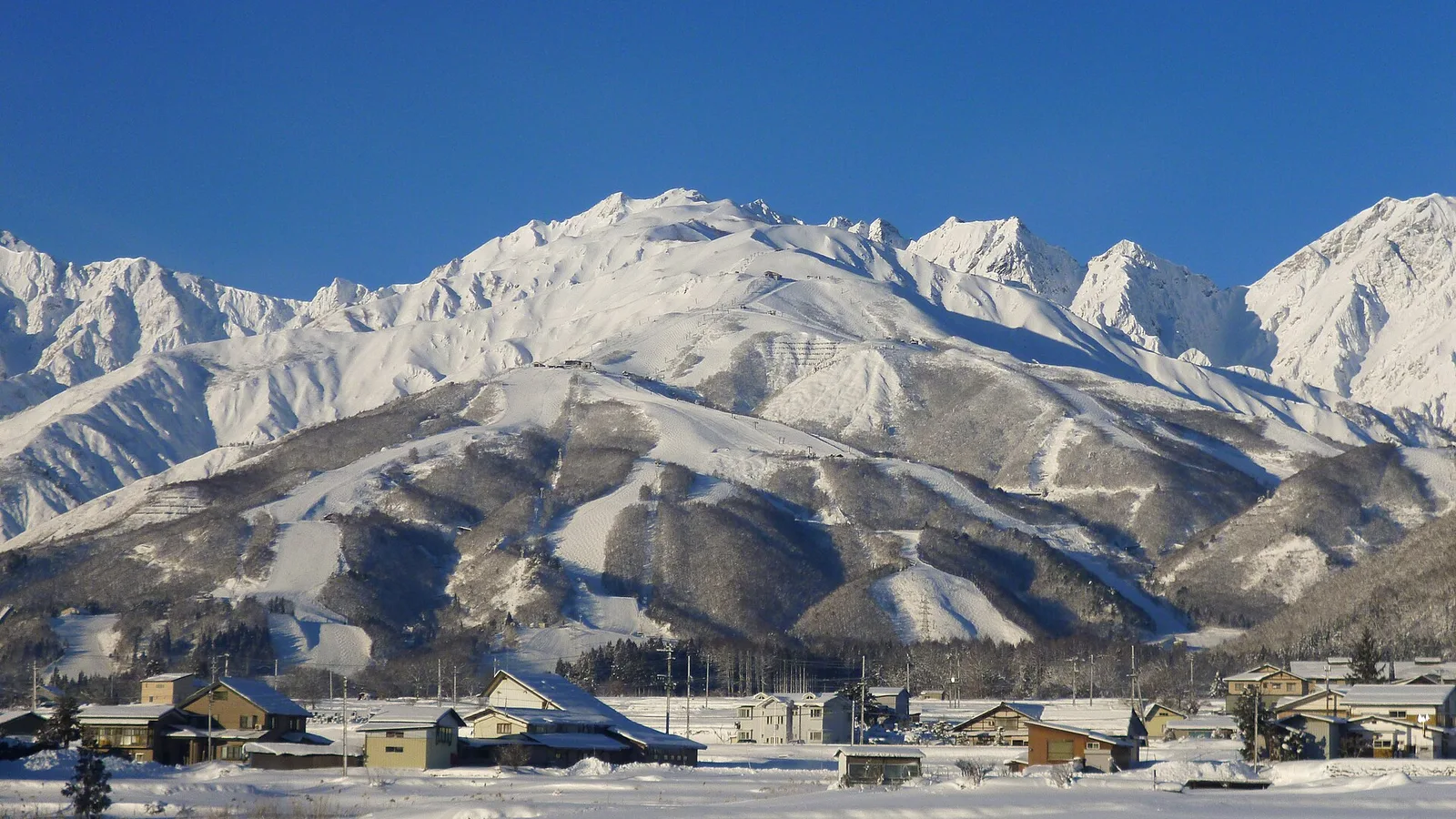
Niseko United's four ski resorts share one mountain, and all four are lit for night skiing. From the top of Happo-One in Hakuba (1,830 m), the resort's own guide lists the Hakuba Sanzan peaks, Mt. Myoko, Mt. Togakushi, Mt. Asama and the Yatsugatake range in view. Here's the question this guide answers for you: day tickets or a season pass for Niseko and Hakuba in 2026-27? For most trips of 5 to 7 days, day tickets win, and by a lot.
Niseko or Hakuba season pass or day tickets: this page finds the day where the season pass wins.
The short answer
- Going for 5 to 7 days? Buy day tickets. At Niseko, on Hakuba Valley and at Goryu and Hakuba47, day tickets beat a season pass by a wide margin. Five days at Niseko (all four resorts, peak season, Grand Hirafu's online price) cost you 62,200 yen against 184,400 yen for the pass. Five days on the Hakuba Valley ticket cost you 53,400 yen against 158,900 yen.
- Staying longer, the math flips. A season pass costs less once you're skiing 15 days at Niseko or on Hakuba Valley, 8 days at Goryu and Hakuba47, or just 6 days at Happo-One if you're 18 to 39 (early-bird price).
- One real deadline to keep in mind: miss October 29 and the Hakuba Valley pass jumps from 158,900 yen to 188,900 yen. There's a full buying calendar further down.
- Prices sold only to residents of Japan aren't in any of these numbers — as a visitor you can't buy them, so they would only confuse the comparison. See how we check prices.
Jump straight to the calculator →
Adult prices. Day tickets at the peak-season (Niseko) or high-season (Happo-One) price, as of September 20, 2026.
What to look for at Niseko and Hakuba
Before we get to the money, here's what you're actually paying for. These notes come from each operator's own pages, so picture your trip as you read them — the numbers follow in the next section.
Niseko United: four resorts on one mountain
Four resorts, one ticket, one mountain: Niseko Annupuri (1,308 m), about 100 km south of Sapporo. The reason the snow there is famous is almost embarrassingly simple — winds off the Eurasian continent pick up moisture over the warm current of the Sea of Japan and dump it as snow clouds, storm after storm, all winter. An All Mountain ticket lets you move between all four resorts in the same day, and each one has its own personality:
- Grand Hirafu is the largest of the four, with hotels, shops and restaurants at its base.
- Hanazono has learning areas for beginners, terrain parks and tree runs. A gondola links it to neighboring Weiss Mountain, and the Restaurant EDGE next to the Hana1 station is its after-ski spot.
- Niseko Village has long trails through natural forest, with The Green Leaf Niseko Village and Hilton Niseko Village at the base.
- Annupuri has views from its slopes and natural hot springs (onsen) in its base area.
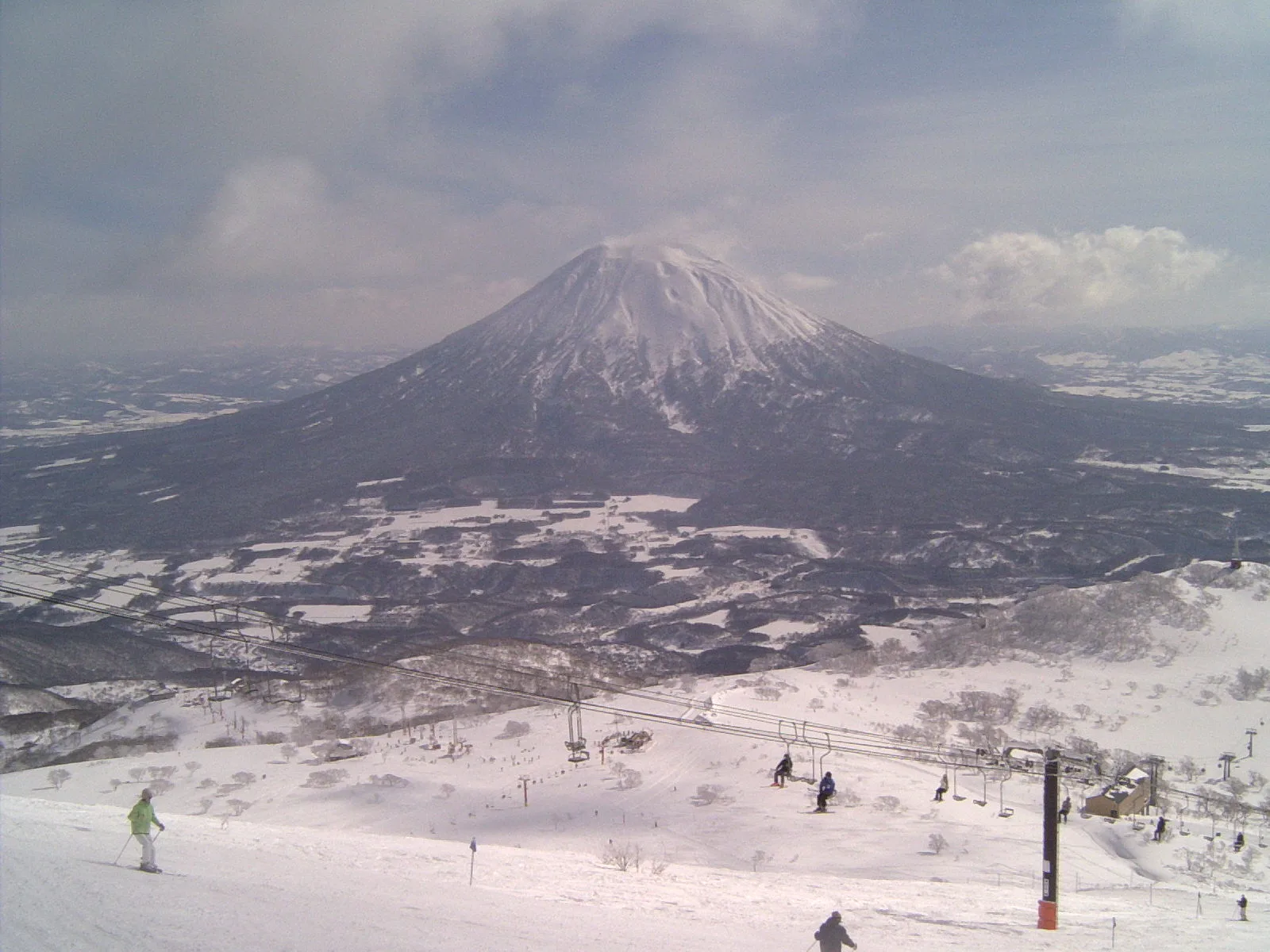
The cone in the photo is Mt. Yotei, seen from the slopes of Hirafu. The snow-covered volcano rises above the resort, with skiers and a chairlift line in the foreground.
Night skiing at all four Niseko resorts
All four resorts stay lit after dark, and Niseko United calls this the largest night-skiing area in Japan. In its December 2025 news it gave these evening hours: Hirafu, Niseko Village and Hanazono from 16:00 to 19:00, and Annupuri from 16:30 to 19:30. For 2026-27, its lift ticket page lists the night skiing period as December 12, 2026 to March 22, 2027. Opening days and hours can change.
Picture the scene the operator describes: snowflakes catching the floodlights on the way down, tree runs glowing, the slopes emptier and quieter than they were that morning. Snow often keeps falling into the evening. After your last run, you walk straight from the snow into a restaurant or bar at the base.
- Hirafu: 12 lit courses and two gondolas.
- Niseko Village: the Village Express and Banzai chair keep running, with easy terrain for learning.
- Annupuri: long groomed runs and a relaxed feel at night.
- Hanazono: the Symphony Gondola stays open at night, with a beginner course, a course for more confident riders and a terrain park.
New lifts for 2026/27
Niseko United's news of June 25, 2026 lists lift projects. Niseko Village is building an eight-passenger gondola, the Mori-no Gondola, about 2 km long, to replace the Mori-no double chairlift. The lower section, up to 670 m, is scheduled to open for the 2026/27 winter, and the second, up to about 930 m, is expected in 2027. Grand Hirafu has unveiled a 10-person gondola, the Ace Gondola. Annupuri plans to replace its gondola, which has run since 1985, ahead of the 2028/29 season. It says capacity will rise from about 1,440 to about 2,800 passengers per hour. All dates are the operator's plans and can change.
Happo-One: the summit view and the Olympic course
Happo-One says its area runs from 760 m to 1,831 m, with 16 courses and 21 gondolas and lifts across 220 hectares. The longest run is 8,000 m, from Riesengrat through Kurohishi and Skyline to the Sakihana slope. By its count, 30% of the terrain is beginner, 50% intermediate and 20% advanced.
From the top of the slopes (1,830 m), the operator lists the Hakuba Sanzan peaks, Mt. Goryu-dake and Mt. Kashimayari-ga-take. With the three peaks at your back, it lists Mt. Amakazari, Mt. Hiuchi, Mt. Myoko, Mt. Togakushi, Mt. Asama (which sends up smoke) and the Yatsugatake range to the east. Near the top of the Riesengrat course, a village-run hut, Happo-ike Sanso, offers meals and lodging.
Its course guide (Japanese) reads like a menu:
- Olympic Course I follows the men's downhill course of the Nagano Winter Olympics in February 1998. It starts at Kurohishidaira, passes the Panorama slope and the Russi Jump, and runs through a corridor-like section. The end is a steep, twisted slope with moguls, down to the Kokusai slope. The operator calls it "Kokuichi", says there is no bypass, and gives a maximum gradient of 35 degrees (average 31 degrees) and an advanced rating.
- Riesen Slalom course is the operator's signature course: 800 m of vertical drop, about 3 km long and wide. Its maximum gradient is 30 degrees, and the operator says intermediates can ski it comfortably. Moguls can form in the afternoon.
- Kurohishi and Usagidaira each have a mogul run the operator calls a Happo-One specialty. On a powder day the bumps fill in. The second lift area at Kurohishi is a gentle, north-facing slope where, the operator says, the snow is good at any time.
- Skyline has three lines: a groomed bowl, an ungroomed ridge called "Lauter" that the operator recommends for powder, and a forest-road bypass.
- Tenbo course is an expert powder area below the start house of the men's super-G at the same Games. It is an open slope with a maximum gradient of 37 degrees, and from the start you can see as far as the Southern Alps.
- Kurohishi forest road course is a beginner run of about 5.5 km with an average gradient of 6 degrees. A viewpoint on it shows the Hakuba Sanzan as 3,000 m-class peaks. Joined to the Sakihana slope, the operator says it makes a run of more than 6 km.
For learning, the operator points to the wide, gentle Sakihana slope. Nakiyama, at the entrance of the ski area, is graded intermediate and has a kids' and beginners' area, Nakiyama Snow Land, with a covered moving belt and a sledding area. When Nakiyama is closed, a free kids' park opens beside the top station of the gondola (1,400 m). For lunch, the guide names the restaurants Yeti at the top of the Panorama slope and Sun Terrace Panorama at the bottom, and Cafeteria Kurohishi. The operator's climate table gives average monthly snow depths of 160 cm in December, 210 cm in January, 240 cm in February, 200 cm in March and 170 cm in April, and an average January temperature of -9 degrees C.
Hakuba Valley: ten resorts on one pass
Hakuba Valley says its 10 resorts sit at the base of the 3,000 m Northern Japan Alps and hosted the 1998 Nagano Winter Olympics. It describes the range as "from gentle groomed runs to 8-km-long cruising courses". One pass opens the gates at all ten, and a shuttle bus links the resorts on the days you use a lift ticket. Its resort pages give each one a character:
- Hakuba Happo-One: a vertical drop of 1,071 m, which the page calls some of the steepest piste in the valley, and an 8,000 m run.
- Hakuba Cortina: heavy snowfall (the page says it holds the highest annual records), tree skiing in powder, and a ski-in, ski-out hotel with a hot spring.
- Tsugaike Mountain Resort: a 4,000 m gondola that goes non-stop to the top. The page calls the ride itself a sightseeing activity.
- Hakuba Iwatake Snow Field: a 360-degree view of the Hakuba mountain range from the top of a gondola, with a snow park and cross-country trails.
- Hakuba Norikura Onsen: a view of the northernmost part of the Northern Alps, with a 38-degree steep course and a mogul course.
- Able Hakuba Goryu: three areas (Alps-daira, Toomi and Iimori) and 15 courses. Alps-daira is open until the end of Golden Week.
- Hakuba47: a snow park with kickers. From its summit you can reach Goryu.
- Kashimayari: a family park with a 150 m snow tubing park and a snow escalator for children's ski debut.
- White Resort Hakuba Sanosaka: forest slopes with views of snow-covered mountains and Lake Aoki, mostly gentle to moderate.
- Jigatake: mostly gentle slopes, tree runs at the top and views over Azumino.
Goryu and Hakuba47: kids' day and the hot spring
Able Hakuba Goryu and Hakuba47 share one lift ticket, and the operator says its shared season pass covers all 24 courses in three areas. On the third Sunday of each month from December to April, and on May 5, children in elementary school or younger ride the lifts free ("Ski Kids' Day", as the operator calls it). Season pass holders also get a discount at Ryujin-no-yu, a hot spring at Hakuba Himekawa Onsen: adults pay 500 yen instead of 800 yen. In the 2027 green season, the pass gives half price on the round trip of the Goryu Alpine Botanical Garden gondola. The base facilities listed on the operator's site include lockers, changing rooms, a nursing room and two daycare centers, plus the Alps360 restaurant.
How the season feels: December to May
Niseko United's season guide (published September 28, 2025) describes the winter in steps. Early December can bring a good base or a slow start, but the guide says to expect short lift lines and easy restaurant bookings. The stretch from late December into early January is the busiest, and Chinese New Year is a second peak. January and February are the heart of winter, with dry powder often refreshing the mountain overnight. In March the snowpack is still deep, the crowds thin and clear blue skies become more common. By April the snow softens for relaxed laps. The final period runs from April 5 to May 5, 2027, with 1-day tickets only (6,300 yen for adults). This is the operator's general description, not a forecast for 2026-27.
For a record rather than a forecast, Niseko United's report on the 2025-26 winter (published May 28, 2026) is specific. The resort opened on December 4, and the base was thinner than many skiers expect through Christmas. The operator still counted 3.7 m of snowfall in December, with 25 fresh snow days at the Grand Hirafu weather station (850 m). January brought 6.2 m on 27 fresh snow days, which the operator calls one of the standout Januarys of recent years. February added 2.63 m on 19 days and March 75 cm on 9 days. The peak base depth at 850 m was 4 m on February 20, and skiing lasted to May 6. The season total was 13.5 m, with fresh snow on 80 days and a largest single day of 75 cm on December 13. The operator adds that the winter was on par with recent ones and lighter than 2020-21 (15.9 m). Each winter is different, and this says nothing about 2026-27.
The numbers: what you'll actually pay at Niseko and Hakuba in 2026-27
Here's what's in your wallet, area by area. The four are different mountains with different terrain, so treat these tables as price comparisons, not a verdict on which ski experience is better. Every break-even further down compares a season pass with day tickets in the same area — never across areas.
Day tickets, adult, side by side
Yen, adult, as of September 20, 2026. For multi-day totals, we picked the cheapest mix of the operator's tickets that covers your days — the calculator below does the same for you. Niseko prices are peak season (December 24, 2026 to February 28, 2027) and Happo-One is high season (December 19, 2026 to March 22, 2027).
| Area and way to buy | 1 day | 5 days | 7 days |
|---|---|---|---|
| Niseko All Mountain, counter | 13,500 | 65,500 | 91,500 |
| Niseko All Mountain, online (price shown by Grand Hirafu) | 12,800 | 62,200 | 86,900 |
| Hakuba Valley (one price list; online sales planned for around November) | 11,100 | 53,400 | 74,500 |
| Happo-One, counter | 9,800 | 49,000 | 68,600 |
| Happo-One, online (new ticket for day 1, then top-ups) | 9,800 | 47,500 | 66,200 |
| Happo-One, early-bird 2-day tickets (online, from October 1) | 9,800 | 42,700 | 59,300 |
| Goryu and Hakuba47, counter (deposit taken out) | 9,500 | 44,000 | 61,500 |
| Goryu and Hakuba47, online (new ticket, then top-ups; deposit taken out) | 9,000 | 40,700 | 56,400 |
Notes:
- Niseko online price: The Niseko United online shop was marked "Preparing for Sale" on September 20, 2026, and the Grand Hirafu page marked its ticket purchase links "in preparation". The online prices in the table are the ones printed on the Grand Hirafu page, about 5% below the counter. Treat them as prices to recheck.
- Niseko rules: Multi-day tickets are valid on consecutive days only. Other dates cost less for 1 day: 12,600 yen in regular season (December 12 to 23, March 1 to 22), 8,800 yen in early season and spring, and 6,300 yen in the final period (April 5 to May 5, 1-day tickets only). The tool uses the peak-season price, so it favors the season pass.
- Niseko 8- to 12-day tickets: Hanazono's price page lists them for the All Mountain ticket, online only. In the Japanese version the rows read "8-day ticket (10 days)" and so on, which we read as 8 days of skiing within 10 days. The peak-season online prices are 99,200 yen (8 days), 111,600 yen (9), 123,900 yen (10), 136,300 yen (11) and 148,600 yen (12). The tool uses them for online buyers only. A counter buyer is limited to tickets of 7 days or fewer. Under the same tables the operator notes that multiple-day tickets are valid on consecutive days only, and the note is not limited to 1- to 7-day tickets, so we do not assume an 8- to 12-day ticket can skip days.
- Happo-One: The 1-day ticket costs 9,800 yen at the counter or as a new online ticket, and 9,500 yen when you top up an IC ticket you already hold online. Two-day tickets are valid on non-consecutive days. The early-bird 2-day ticket (16,600 yen) is online only and is described in the calendar below.
- Goryu and Hakuba47: The counter price of 10,000 yen for 1 day includes a 500 yen IC card deposit, which the operator refunds once you return the card. A new online ticket is 9,500 yen, and a top-up is 8,200 yen (top-ups are for people who already hold an IC ticket, not at the ticket center). The table takes the deposit out. When you buy several tickets at the counter, our calculation subtracts the 500 yen once, not per ticket (4 counter days: 26,000 + 10,000 - 500 = 35,500 yen). The operator's page does not spell out a rule for this case, so the calculation above applies single-deduction logic consistently across multiple tickets. The counter-to-top-up gap is 1,800 yen as printed, or 1,300 yen after the deposit comes back.
Season passes a visitor can buy
| Season pass | Price (yen) | Dates | Notes |
|---|---|---|---|
| Niseko United All Mountain | 184,400 | Counter at the four resorts; online shop listed but not open | No early-bird price is listed. Grand Hirafu's page prints an online price of 175,100 yen. A 1,000 yen key card deposit is not counted |
| Hakuba Valley | 158,900 (early-bird) | Through October 29, 2026 | Same price for adults and ages 13 to 18 |
| Hakuba Valley | 188,900 (regular) | October 30, 2026 to February 2, 2027 | |
| Happo-One, ages 18 to 39 | 49,000 (early-bird) / 59,000 (regular) | Early-bird October 1 to November 15; regular from November 16 | Online application only |
| Happo-One, ages 40 and over | 95,000 (early-bird) / 115,000 (regular) | Same as above | Online application only |
| Goryu and Hakuba47 shared pass | 60,000 online, 65,000 counter (early-bird) | On sale August 1 to October 31 | No night skiing on this pass |
| Goryu and Hakuba47 shared pass | 80,000 online, 85,000 counter (regular) | From November 1 | Refund only if operation is under 10 days |
Source: the operators' official pages listed at the end (Hakuba, Happo-One and Goryu pages are in Japanese).
Prices we left out: resident-only, My Number and repeater
Japanese operators publish several prices a visitor cannot buy. We left them out of every calculation.
| Price | Amount (yen) | Condition on the operator's page |
|---|---|---|
| Hakuba Valley season pass, resident early-bird | 121,700 (adult) | You live in Japan when you buy. On sale July 14 to August 27 |
| Hakuba Valley season pass, repeater | 110,000 (adult) | Residents of Japan who bought the 2025-26 pass. On sale July 14 to August 6 |
| Happo-One My Number early-bird tickets | 6,400 (1 day), 12,600 (2 days), 18,300 (3 days), 24,000 (4 days) | You hold a My Number card. Online, October 1 to November 30 |
| Happo-One repeater season pass | 90,000 (ages 40 and over), 47,000 (ages 18 to 39) | Only for people who bought last year's pass; invited by e-mail |
For the Hakuba Valley resident prices, the condition is residence, not nationality. The page asks for a photo ID at pick-up: a driver's license or My Number card for Japanese nationals, or a residence card for foreign nationals.
Hakuba Valley ticket validity
Hakuba Valley day tickets must be used within a set window that starts when you first ride a lift or a Hakuba Valley shuttle. Unused days expire.
| Ticket | Valid for |
|---|---|
| 1 day | The day you start |
| 2 days | 4 days |
| 3 days | 6 days |
| 4 days | 8 days |
| 5 days | 10 days |
| 6 days | 11 days |
| 7 days | 12 days |
| 8 days | 13 days |
| 9 days | 14 days |
| 10 days | 16 days |
Source: Hakuba Valley lift tickets (Japanese). Online sales of Hakuba Valley day tickets are planned for "around November" (the operator's wording). Night skiing and night shuttles are not included.
Refunds and short seasons
| Ticket | What the operator says |
|---|---|
| Hakuba Valley season pass | No cancellation or refund. No compensation if the season is shorter than usual. Refund (minus fees) only if all the ski areas cannot open at all in 2026-27 |
| Happo-One season pass | No cancellation or change after you apply. The operating period and courses may shrink with snow conditions |
| Happo-One day and early-bird tickets | No refund of remaining days once use starts. No refund if the gondola or lifts do not run on your day |
| Goryu and Hakuba47 season pass | No refund, even for the ski area's own reasons. Refund (minus fees) if the ski area operates fewer than 10 days |
| Niseko United online passes | Non-refundable and non-replaceable, for any reason including illness, weather and transport delays. The 500 yen key card is not a deposit |
Travel insurance is outside the scope of this comparison.
Prices you may see elsewhere
- Annupuri alone: the operator lists 7,800 yen for a peak-season 1-day ticket in 2026-27 (ages 13 to 64). Some 2025-26 guides list 7,000 yen for that ticket — that's last year's figure, not this year's price.
- "Early-bird tickets are up to 60% off": don't count on it here. The real early-bird discounts run about 16% on the Hakuba Valley pass (158,900 yen against 188,900 yen), about 17% on the Happo-One season passes, 15% on the Happo-One early-bird 2-day ticket, and 25% on the Goryu and Hakuba47 pass online (60,000 yen against 80,000 yen).
- Two resorts instead of four: a Grand Hirafu and Hanazono ticket costs 12,500 yen at the counter or 11,800 yen online for 1 peak-season day, about 1,000 yen below the All Mountain ticket. Hanazono itself says the two resorts cover roughly 60% of the total skiing area. We left this option out of the calculator.
What isn't in these numbers
- Child, teen and senior prices, night tickets, rentals, lessons and food.
- Niseko 8- to 12-day tickets at regular, early-season and spring prices. They're sold online only (no counter sales). The calculator uses the peak-season online prices for them (see the note above) and never offers them to a counter buyer.
- The Ikon Pass, Mountain Collective and Epic Pass, and hometown-tax gift passes.
- Whether a multi-day Niseko ticket bought before December 24 keeps its lower price after that date isn't stated on the operator's page — ask at the counter if it matters to your trip.
- A new IC card deposit at Happo-One and any card fee at the Niseko counter. Neither is listed on the pages we read, so neither is added here.
Break-even: how many days until a season pass costs less?
This is the number that actually decides which one to buy: the fewest ski days at which the season pass finally costs less than day tickets, area by area. We worked it out with the same calculator below, using the cheapest ticket mix for each day count.
| Area and season pass | Early-bird price: days | Regular price: days |
|---|---|---|
| Niseko United All Mountain, 184,400 yen (one price, counter or online day tickets) | 15 | 15 |
| Hakuba Valley (158,900 yen through October 29; 188,900 yen from October 30) | 15 | 18 |
| Happo-One, ages 18 to 39 (49,000 yen; 59,000 yen from November 16) | 6 | 7 |
| Happo-One, ages 40 and over (95,000 yen; 115,000 yen from November 16), vs counter day tickets | 10 | 12 |
| Happo-One, ages 40 and over, vs online day tickets | 11 | 13 |
| Happo-One, ages 40 and over, vs early-bird 2-day tickets | 12 | 14 |
| Goryu and Hakuba47 (60,000 yen web or 65,000 yen counter; 80,000 yen web or 85,000 yen counter from November 1) | 8 | 10 |
What the numbers actually tell you:
- Right at the break-even day, you're barely saving anything. At 15 days on Hakuba Valley, the early-bird pass saves you just 500 yen over day tickets. At 15 days at Niseko, it's 1,700 yen against online day tickets (12,100 yen against counter tickets). One night ticket or one rental wipes that out.
- At Happo-One, 5 days is a wash. If you're 18 to 39, five counter days (49,000 yen) cost exactly the same as the early-bird pass. You only come out ahead from day 6.
- At Goryu and Hakuba47, 10 days past the deadline barely moves the needle. Online day tickets (80,100 yen) cost almost the same as the regular-price pass (80,000 yen), so if you miss the October 31 early-bird cutoff, the pass buys you almost nothing extra at 10 days.
- Niseko's online season pass isn't on sale yet. The page prints 175,100 yen for it, but sales hadn't opened as of our check. Even against that price, 14 days of online day tickets (173,700 yen) still beat it, and 15 days (186,100 yen) is where the pass finally pulls ahead — so the break-even stays at 15.
Hitting the break-even day on paper isn't a guarantee you'll actually save — these numbers assume you ski every single one of those days, with no night tickets, rentals or lessons added on top.
Calculator: day tickets or season pass?
Plug in your own trip below. Choose the area, your age band (it only changes the Happo-One season pass), how you buy and your days. Add your round-trip transport cost if you want the full trip total — it gets added to both sides, so it won't shift your break-even day.
What this calculator leaves out:
- Child, teen and senior prices, night tickets, rentals, lessons and food.
- Niseko regular-season, early-season, spring and final-period prices. They are lower than the peak price, so the season pass looks better here than it is.
- Happo-One's price before December 19 and after March 22 (6,400 yen a day), and Goryu and Hakuba47's "special discount" 1-day ticket (7,500 yen top-up, 8,500 yen new online, 9,000 yen counter, from opening to December 15 and from March 15).
- Niseko 8- to 12-day tickets outside the peak-season online price, the rule for tickets that cross December 24, refund rules, and prices for residents of Japan, My Number card holders and repeat buyers.
Scenarios: 5, 7, 10 and 15 ski days
5 days at Niseko in peak season
Five days of online All Mountain tickets cost you 62,200 yen. The season pass costs 184,400 yen — 122,200 yen more, for the same five days. Add a New Chitose to Niseko bus round trip at 10,000 yen (the 2025-26 fare) and the gap barely moves: both sides go up by 10,000 yen, so you're still 122,200 yen better off with day tickets. One thing to plan around: Niseko's multi-day tickets only run on consecutive days, so if you want a rest day in the middle, buy 1-day tickets instead — five of them would cost 64,000 yen online. Night tickets, rentals and lessons aren't in any of these numbers.
7 days in Hakuba: four prices
| Area (7 days, adult) | Day tickets | Season pass, early-bird | Season pass, regular |
|---|---|---|---|
| Happo-One, ages 18 to 39, online | 66,200 | 49,000 (pass costs 17,200 less) | 59,000 (pass costs 7,200 less) |
| Hakuba Valley | 74,500 | 158,900 (pass costs 84,400 more) | 188,900 (pass costs 114,400 more) |
| Goryu and Hakuba47, online | 56,400 | 60,000 (pass costs 3,600 more) | 80,000 (pass costs 23,600 more) |
These are different mountains, so treat the table as a price comparison, not a ranking — the same seven days work out very differently depending which area you pick. Night tickets, rentals and lessons aren't counted.
10 days at Happo-One, ages 40 to 64
| How you buy 10 days | Day-ticket total | Early-bird season pass (95,000) | Regular season pass (115,000) |
|---|---|---|---|
| Counter, 9,800 yen a day | 98,000 | Pass costs 3,000 less | Pass costs 17,000 more |
| Online (new day 1, then top-ups) | 94,400 | Pass costs 600 more | Pass costs 20,600 more |
| Early-bird 2-day tickets, five of them (on sale October 1 to November 30) | 83,000 | Pass costs 12,000 more | Pass costs 32,000 more |
As a visitor, your best move is the early-bird 2-day ticket (16,600 yen) — it has no residence requirement. Five of them cost you 83,000 yen, which is 12,000 yen less than the early-bird season pass. The My Number early-bird tickets aren't an option for you. Night tickets, rentals and lessons aren't counted.
15 ski days: Niseko vs Hakuba Valley
| Area, 15 days | Day tickets | Season pass | Difference |
|---|---|---|---|
| Niseko, counter | 196,500 | 184,400 | Pass costs 12,100 less |
| Niseko, online (includes 8- to 12-day online tickets) | 186,100 | 184,400 | Pass costs 1,700 less |
| Hakuba Valley, early-bird pass | 159,400 | 158,900 | Pass costs 500 less |
| Hakuba Valley, regular pass | 159,400 | 188,900 | Pass costs 29,500 more |
Fifteen days is a boundary, not a promise — the Niseko online total mixes a 7-day and an 8-day ticket (both at the peak-season online price), and you can't buy that 8-day ticket at the counter. Night tickets, rentals and lessons aren't counted.
Night skiing, shuttles and perks: what a pass gives you besides lifts
Night skiing is not always on the pass
Niseko All Mountain day tickets are valid until the end of night skiing on the last day of the ticket, during the night skiing period (December 12, 2026 to March 22, 2027). Niseko's night tickets are separate: Grand Hirafu lists a Hirafu and Hanazono night ticket at 6,900 yen at the counter or 6,200 yen online for a peak-season evening. The Hakuba Valley pass does not include night skiing or the night shuttle. The Goryu and Hakuba47 shared season pass excludes night skiing, and the operator sells a night pass separately.
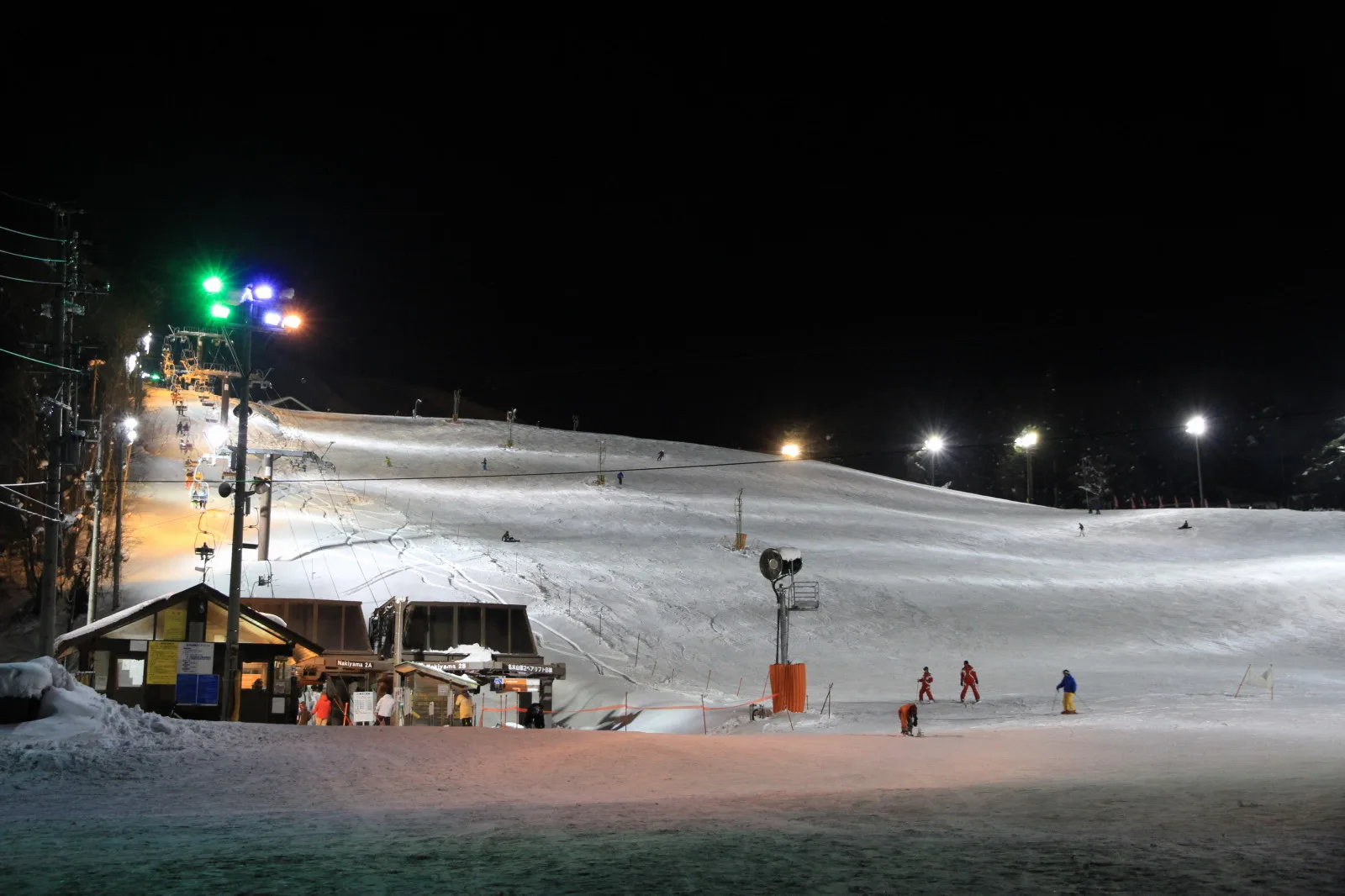
The photo shows Nakiyama at the entrance to Happo-One at night: floodlit snow, a chairlift on the left and a few skiers below. Goryu's night skiing runs on the Tomi and Iimori slopes from 18:00 to 21:30, from late December to late March (planned). The operator's Japanese page calls it the only night skiing in Hakuba Village.
Shuttles between resorts
Niseko United's shuttle is open to holders of an All Mountain pass, a day pass, an hourly pass, a season pass or a point pass. It is planned to run from November 28, 2026 to April 4, 2027 (shuttle timetable, PDF). Scanning a day pass when you get off starts one day of use. If you do not want to start it, do not scan and pay the fare. Hakuba Valley's shuttle is free between all its ski areas, on the days you use a lift ticket. A shuttle ride alone uses up one day of a Hakuba Valley ticket.
Season pass perks
- Hakuba Valley: free shuttle on ski days, and half price on 1-day lift tickets at resorts owned or operated by Vail Resorts. Discounts at designated facilities are to be announced around November. The perks are for the pass holder only. If someone else uses the pass, the buyer owes a penalty of ten times the purchase price.
- Goryu and Hakuba47: half-price adult 1-day tickets at other Snow Birds Club resorts, five special discount coupons, and three half-price 1-day tickets for Goryu and Hakuba47 themselves. The hot spring costs 500 yen instead of 800 yen, and the botanical garden gondola is half price in the 2027 green season.
- Niseko: the season pass cannot be lent or transferred, and the operator checks that the user is the buyer.
Off-piste rules that come with the pass
Niseko United says Niseko used to have the highest number of fatal avalanche accidents in Japan, and it set the Niseko Rules to reduce them. Use the gates to enter backcountry areas, do not duck under boundary ropes, wear a helmet and carry an avalanche beacon, and do not go into backcountry areas when the gates are closed. A rescue in the backcountry costs at least 100,000 yen. The operator also lists rule breakers' lift passes as subject to confiscation. Niseko keeps an avalanche information page for the area.
When to go and when to buy: 2026-27 early-bird deadline calendar
Dates are as of September 20, 2026, and change every year. Next check: October 5, 2026.
Buying calendar
| Date | What happens | Source |
|---|---|---|
| October 1, 2026 (Thu) | Happo-One opens early-bird season pass sales (through November 15) and early-bird 2-day tickets (through November 30) | Happo-One (Japanese) |
| About October 2026 | Bus reservations and the timetable for 2026-27 open for the Chuo Bus New Chitose and Sapporo to Niseko buses. The Niseko United online shop opening date is not announced | Niseko United access |
| October 29, 2026 (Thu) | Last day of the Hakuba Valley early-bird season pass (158,900 yen). From October 30 it is 188,900 yen | Hakuba Valley (Japanese) |
| October 31, 2026 (Sat) | Last day of the early-bird shared season pass for Goryu and Hakuba47 | Goryu and Hakuba47 (Japanese) |
| Around November 2026 | Hakuba Valley day tickets go on sale online. Pass perks at designated facilities are announced. The Alpico winter timetable for Nagano to Hakuba is due "around mid-November" | Hakuba Valley (Japanese) |
| November 13 to 14, 2026 | Hakuba Valley season pass pick-up starts, depending on the pick-up place, with photo ID | Hakuba Valley (Japanese) |
| November 15, 2026 (Sun) | Last day of Happo-One's early-bird season pass (49,000 and 95,000 yen) | Happo-One (Japanese) |
| November 28, 2026 (Sat) | Niseko United's four resorts are planned to open. The early-season price (8,800 yen a day) is not sold online | Niseko United |
| November 30, 2026 (Mon) | Last day to buy Happo-One's early-bird 2-day ticket | Happo-One (Japanese) |
| December 2026 | Hakuba Valley opening (planned, day not announced) | Hakuba Valley (Japanese) |
Month by month
| Month | Snow and crowds (operator's general description) | Price tiers | Holidays and dates |
|---|---|---|---|
| November 2026 | Early December snow varies by year. Niseko opens November 28 (planned) | Niseko early season (from November 28): 8,800 yen a day | |
| December 2026 | Late December is the busiest time at Niseko | Niseko regular season December 12 to 23 (12,600 yen); peak from December 24 (13,500 yen). Happo-One: 6,400 yen from December 1, high season 9,800 yen from December 19 | Niseko night skiing from December 12 (planned) |
| January 2027 | January and February are the heart of winter at Niseko | Peak | January 1 (Fri); January 11 (Mon, Coming-of-Age Day), so January 9 to 11 is a three-day weekend |
| February 2027 | Chinese New Year is the second peak at Niseko (2027 date not yet announced) | Peak until February 28 | February 11 (Thu); February 23 (Tue) |
| March 2027 | Crowds thin and clear skies are more common at Niseko | Niseko regular season March 1 to 22 (12,600 yen); spring from March 23 (8,800 yen). Happo-One spring from March 23 (6,400 yen). Goryu and Hakuba47 spring tickets from March 15 | March 21 (Sun); March 22 (Mon) |
| April 2027 | Niseko Village is planned to close April 4 and Hanazono April 11 | Niseko final period from April 5 (6,300 yen, 1-day tickets only) | April 29 (Thu) |
| Early May 2027 | Niseko's Annupuri, Grand Hirafu and Happo-One are planned to stay open through May 5 | Final period | May 3 to 5 (Mon to Wed) |
Sources: Niseko United lift tickets, Niseko United season guide, and the Cabinet Office list of national holidays for 2027 (Japanese).
How locals plan it: early-bird deadlines and online top-ups
Japanese operators lower their prices in summer and raise them in steps — and knowing the pattern saves you real money. Hakuba Valley shows it clearly: the resident repeater price ends August 6, the resident early-bird price ends August 27, the general early-bird price ends October 29, and the regular price then runs from October 30 to February 2, 2027. Here's what that pattern means for you, pulled from the operators' own pages, many of them Japanese-only.
- The early-bird price isn't only for residents. Hakuba Valley sells a general early-bird pass at 158,900 yen with no residence condition, right next to the resident-only prices. What decides the resident prices is where you live when you buy, not your passport.
- Happo-One has an early-bird ticket built for visitors. The early-bird 2-day ticket costs you 16,600 yen (15% off), for ages 18 and over, open to anyone. It's online only, on sale October 1 to November 30, valid December 19 to May 5 on non-consecutive days, with no refund. The My Number early-bird tickets, though, aren't for you as a visitor.
- At Goryu and Hakuba47, top up instead of buying fresh each time. The operator itself recommends buying online before you arrive and keeping the IC card topped up rather than queuing at the ticket center. A 1-day top-up is 8,200 yen, 1,800 yen below the counter price. The catch: top-ups only work once you already hold an IC ticket, so your first day still costs 9,500 yen for a new online ticket.
- The break-even point swings a lot by area. A season pass pays off from 8 days at Goryu and Hakuba47, 6 days at Happo-One if you're 18 to 39, 10 days or more at Happo-One if you're 40 and over, and 15 days at Hakuba Valley and Niseko (early-bird prices).
- A bus-and-lift-ticket bundle exists too — see the table below. It's usually announced around October, so treat the 2025-26 prices as a guide, not this year's number.
How to buy: where lift passes are sold and what to book instead
Official shops and counters
The prices in this article are the operators' own list prices.
- Niseko United: lift ticket prices, the online lift pass shop and the All Mountain season pass. Online payment is by credit card only. Each person's name, address and date of birth are required, and season passes need a passport-style photo. The key card costs 500 yen with your first online purchase and is not refundable.
- Hakuba Valley: the season pass (Japanese) is sold online with a photo upload and a Visa or Mastercard. The pick-up needs photo ID.
- Happo-One: lift tickets and the season pass (Japanese). Season passes are picked up at the Happo Information Center with the e-mailed QR code and ID (driver's license, health insurance card or passport).
- Goryu and Hakuba47: lift tickets and the season pass (Japanese).
Bus and lift ticket pack (2025-26 pack, 2026-27 lift prices)
The Niseko bus pack was sold in 2025-26 as one ticket: a round-trip bus between Sapporo or New Chitose Airport and Niseko, plus a 1-day All Mountain lift ticket. Chuo Bus says the 2026-27 reservations and fares are due around October. The pack cannot be booked on the website. You reserve the round trip, then swap it for the pack at a counter or on the bus.
| Item (adult) | Yen |
|---|---|
| Round-trip bus, New Chitose or Sapporo to Niseko (2025-26 fare) | 10,000 (6,000 one way) |
| 1-day All Mountain ticket, peak, counter (2026-27 price) | 13,500 |
| Bus fare plus lift ticket bought separately (counter / online at 12,800 yen / regular season at 12,600 yen) | 23,500 / 22,800 / 22,600 |
| Bus and All Mountain lift ticket pack (2025-26 price) | 16,000 |
| Pack vs buying separately (mixed years, a guide only) | 7,500 / 6,800 / 6,600 less |
We're comparing the 2025-26 pack and bus fare against 2026-27 lift ticket prices here, since we haven't checked the 2025-26 lift prices. Source for the bus fares and the pack: Chuo Bus (Japanese, 2025 information). The pack was on sale from December 13 to March 22 in 2025-26, and you could use the lift ticket on any day within the bus's operating period. On the 2025-26 timetable, the New Chitose Airport bus left at 10:00 and reached Niseko Hirafu at 13:33 (source). Trains are limited: a rapid train from New Chitose Airport to Otaru (about 72 minutes), then a local train from Otaru to Niseko (about 90 minutes).
Heading to Hakuba instead? Alpico's non-reserved bus from Nagano Station cost 3,500 yen one way for adults in winter 2025-26 (December 13, 2025 to March 31, 2026), with tickets sold only on the day; the 2026-27 timetable is due around mid-November. Coming from Tokyo, the JR Tokyo Wide Pass article covers GALA Yuzawa, a winter-and-spring ski stop (it doesn't cover Nagano city). If your trip involves several Shinkansen (bullet train) rides, Is the JR Pass Worth It? does that math for you. On arrival day, Narita Airport to Tokyo walks through your options into the city, and Tokyo Subway Ticket vs Suica covers city trains before or after your ski days.
What to book instead
Save your booking energy for what's around the lift ticket: Niseko properties opened 2026-27 bookings on March 31, 2026.
If you need a ride between the airport and the slopes, airport transfers and ski-area tours are listed on KKday. We do not list prices here, since they change by date.
Browse transfersAffiliate link
However you slice the math, the pattern is consistent: day tickets win for a week-long trip at most of the four areas (Happo-One's 18-to-39 season pass pays off from 6 days), a season pass mostly pays for itself once you're living on the mountain, and the early-bird deadlines are where the real money is won or lost. Lock in your dates, use the calendar above, and the rest is just choosing which snow you want to wake up to.
Niseko or Hakuba Season Pass: common questions
Is a Hakuba Valley season pass worth it?
For a 5- to 7-day trip, not really — you saw the numbers above. It only turns in your favor once you're skiing 15 days or more (18 if you miss the early-bird cutoff).
How much does a Niseko lift pass cost in 2026-27?
As of September 20, 2026, you'll pay 13,500 yen for an adult All Mountain 1-day ticket in peak season (December 24 to February 28), 12,600 yen in regular season, 8,800 yen in early season and spring, and 6,300 yen in the final period. Annupuri alone is 7,800 yen for a peak-season day.
Is there an early-bird lift pass for Hakuba Valley?
Yes, for the season pass: 158,900 yen through October 29, open to anyone. The resident-only early-bird price ended August 27 and the repeater price August 6 — neither is open to you as a visitor. We haven't found an early-bird Hakuba Valley day ticket as of September 20, 2026. Happo-One's early-bird 2-day ticket and the early-bird Goryu and Hakuba47 pass are separate deals.
Is it cheaper to buy lift passes online or in the resort?
At Goryu and Hakuba47, a top-up costs you 8,200 yen against 10,000 yen at the counter. At Happo-One, it's 9,500 yen against 9,800 yen. Grand Hirafu prints 12,800 yen online against 13,500 yen at the Niseko counter. Hakuba Valley lists just one price for day tickets, with online sales planned for around November.
How much is a one-day pass for Hakuba Valley lifts?
You'll pay 11,100 yen as an adult (13 and over) or 6,400 yen as a child (6 to 12). Online sales are planned for around November, and the ticket doesn't include night skiing.
Niseko or Hakuba: which lift pass costs less?
They're different mountains, so this is a price comparison, not a verdict on which is better skiing. For 5 peak-season days, you'd pay 62,200 yen for Niseko All Mountain (online), 53,400 yen for Hakuba Valley, 47,500 yen for Happo-One (online) or 40,700 yen for Goryu and Hakuba47 (online), as of September 20, 2026.
Can I get a refund if there is no snow?
Not always, and it's worth knowing before you book. Hakuba Valley refunds its season pass only if every one of its ski areas fails to open at all. Happo-One doesn't refund. Goryu and Hakuba47 refund you if the area operates fewer than 10 days. Niseko's online passes are non-refundable, period.
Can visitors buy the Japan-resident early-bird prices?
No — you'd need to live in Japan when you buy. The general early-bird price of 158,900 yen, though, is open to anyone.
Can a friend use my season pass?
No. Niseko passes aren't transferable, and at Hakuba Valley you'd be on the hook for ten times the purchase price if someone else used yours.
When do Niseko lift tickets go on sale for 2026-27?
As of September 20, 2026, the Niseko United online shop was still marked "Preparing for Sale," with no start date announced. The early-season price (November 28 to December 11) isn't sold online. We're checking back on October 5, 2026.
Sources and data date
All prices were checked on September 20, 2026. Prices, sale dates and opening days can change.
- Niseko United: lift ticket prices, online lift pass, All Mountain season pass, Niseko Rules, About Niseko United, night skiing at all 4 resorts, lift network news (June 25, 2026), season guide, access and shuttle
- Niseko Tokyu Grand Hirafu: lift tickets. Hanazono: lift tickets. Niseko Annupuri: lift tickets
- Hakuba Valley: lift tickets (Japanese), season pass (Japanese), English home page
- Hakuba Happo-One: lift tickets (Japanese), season pass (Japanese), courses (Japanese)
- Able Hakuba Goryu and Hakuba47: lift tickets (Japanese), season pass (Japanese)
- Hokkaido Chuo Bus: Chitose and Sapporo to Niseko (Japanese). Alpico: Nagano to Hakuba winter bus
- Cabinet Office, national holidays for 2026 and 2027: Japanese page