Koyasan World Heritage Ticket Worth It? Osaka Day Trip Math
Prices checked October 30, 2026 against the official pages. Every figure links to its source.

Published: October 30, 2026
Koyasan is a mountaintop of temples. Its official site calls it a single sacred precinct, and 51 of its 117 temples take overnight guests. From Namba in Osaka, the ride to the top takes about 1 hour 51 to 55 minutes, and the last stretch is by cable car. Is the Koyasan World Heritage Ticket worth it for a day trip? That comes down to one number: 1,120 yen.
The short answer
- The digital ticket is 3,980 yen from Namba. Regular round-trip train fares are 2,860 yen. The difference is 1,120 yen. The ticket also covers two days of Nankai Rinkan buses on the mountain, so it wins when your bus rides add up to more than 1,120 yen.
- If you walk most of the mountain, regular fares are cheaper. With no bus rides at all, the ticket costs 1,120 yen more than going without it.
- The digital ticket is 230 yen cheaper than the paper ticket (3,980 yen against 4,210 yen). With the Limited Express Koya going up, it is 290 yen cheaper (4,910 yen against 5,200 yen).
- The limited express costs 930 yen extra inside the ticket. That is 20 yen less than the 950 yen ticketless fare and 170 yen less than the 1,100 yen window fare.
Fares are as of October 30, 2026, and the April 1, 2026 price revision applies. Prices can change, so check the official page before you buy.
What makes a Koyasan day trip from Osaka worth doing
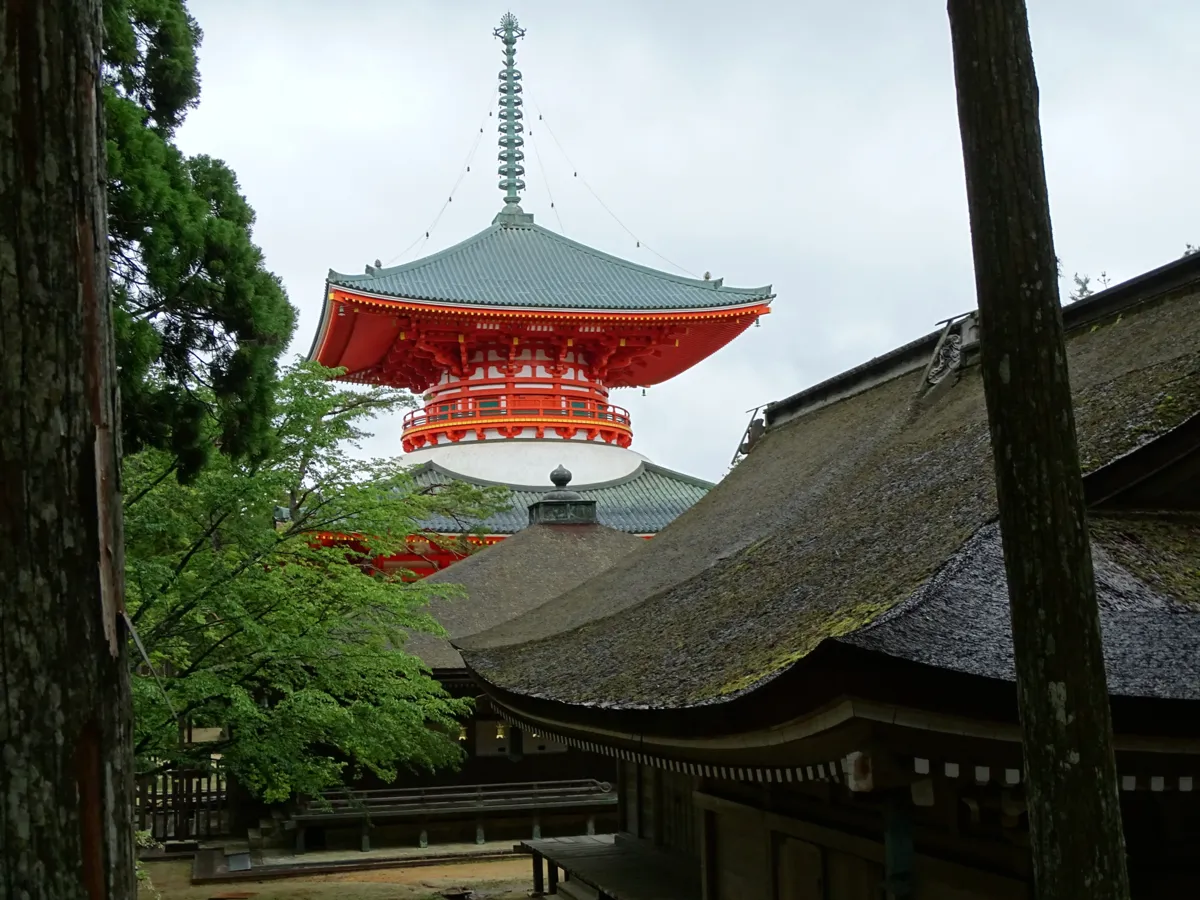
You do not go to Koyasan to see one temple. You go to walk through a place where the whole mountaintop is the temple grounds. The official site of Kongobuji, the head temple, describes Koyasan as one sacred precinct. Of its 117 temples, 51 offer lodging for visitors.
The day has a shape, and the shape comes from the trains. You ride the Nankai line out of Namba. The Limited Express Koya has reserved seats only, so a seat number is part of the plan. At Gokurakubashi, the end of the line, you change to the cable car and climb to Koyasan Station. From there, the Nankai Rinkan buses carry you around the mountain top.
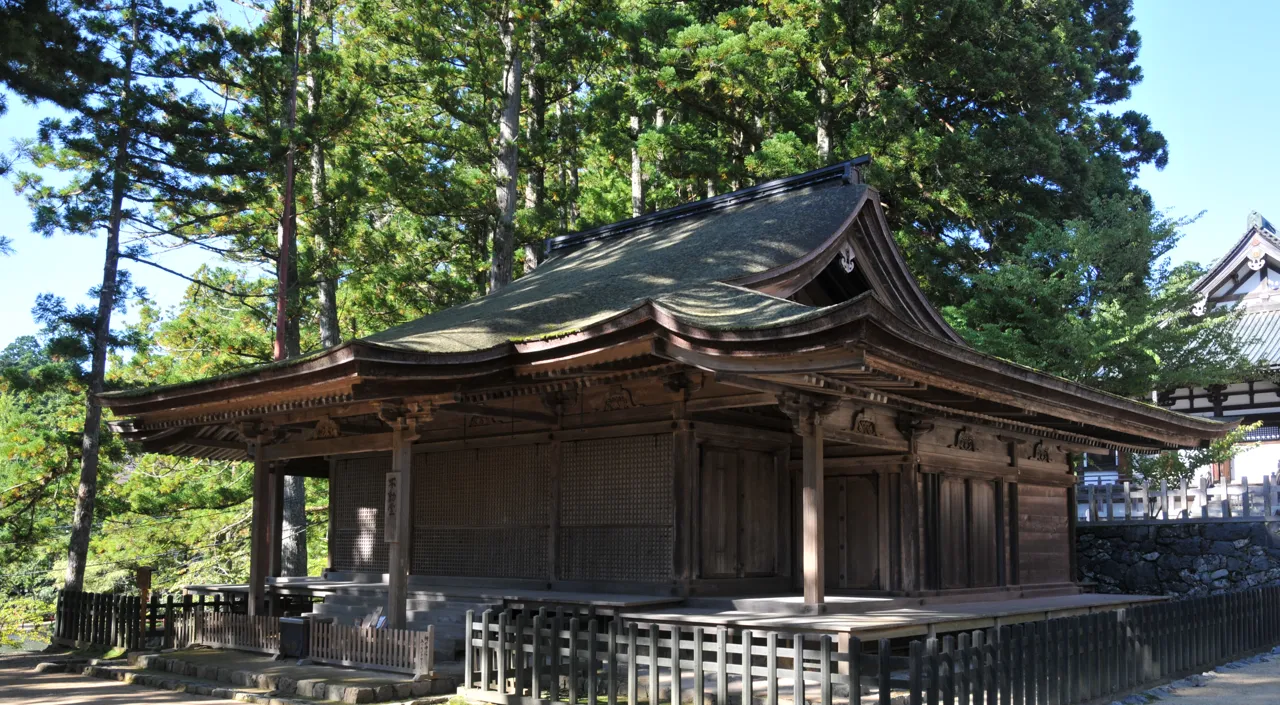
The Danjo Garan and Kongobuji
The Danjo Garan is the temple complex where the day usually begins. Two buildings in it have their own entry fee on the Kongobuji price page: the Kondo (main hall) at 500 yen, and the Konpon Daito (the great pagoda) at 500 yen. Both are open to visitors aged junior high school and up, from 8:30 to 17:00.
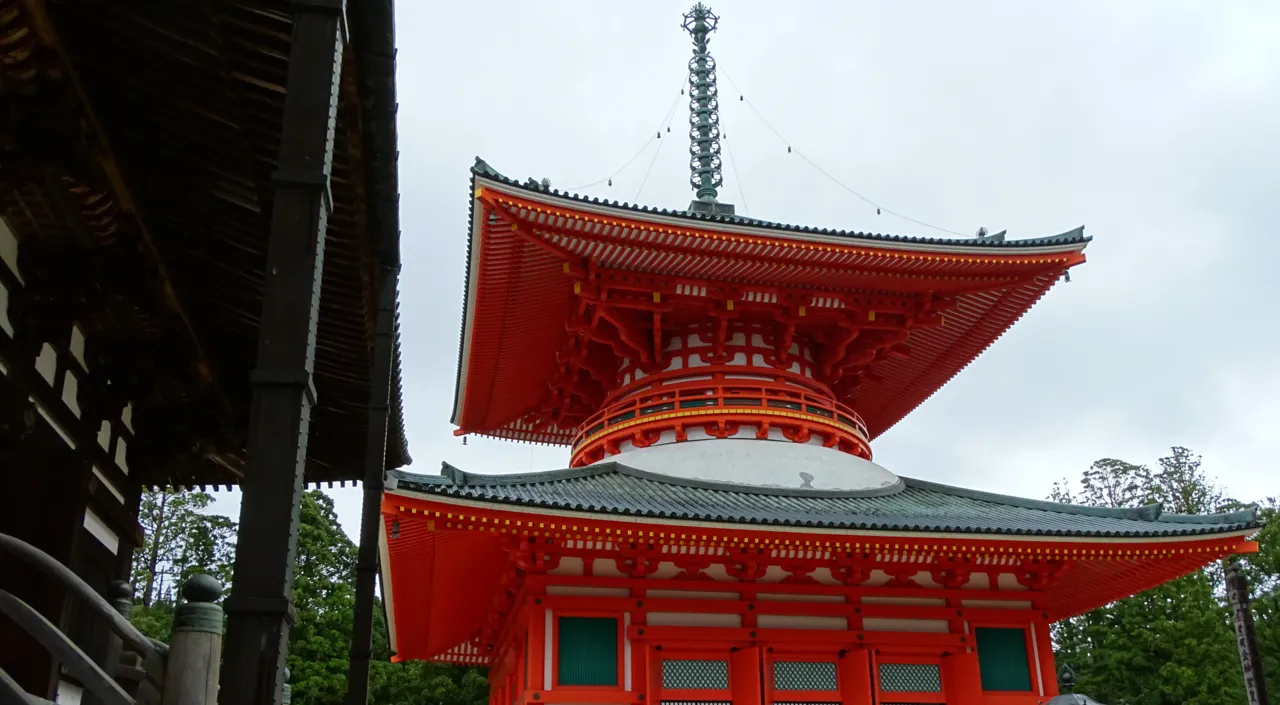
Kongobuji has the same hours, 8:30 to 17:00, and the last entry is at 16:30. Entry is 1,000 yen for junior high school and up, and 300 yen for elementary school children. Note the last-entry time: it is half an hour before closing, so a visit that starts at 16:45 is too late.
Reihokan, the museum of temple treasures, opens at 9:00 and closes at 17:00. It is the one place on this list with three prices. On the Kongobuji price page (October 30, 2026), the adult fee is 1,300 yen, high school and university students pay 800 yen, and elementary and junior high school students pay 600 yen. Some guides list Reihokan at 600 yen, which is the elementary and junior high school price, not the adult one.
The Tokugawa mausoleum costs 200 yen (9:00 to 16:30). There is also a combined inner-hall ticket at 2,500 yen, for junior high school and up. The Nankai ticket's own coupons cover Kongobuji, the Kondo, the Konpon Daito and Reihokan. The calculator leaves coupon discounts out.
Okunoin and the hours that change in November
Okunoin is where the day can end. Its lantern hall opens at 6:00 and closes at 17:00. Do the arithmetic from Namba: the ride up is 1 hour 51 to 55 minutes, so to stand at the lantern hall when it opens you would have to leave Namba at about 4:05 in the morning, before counting the bus and the walk. A day trip from Osaka meets Okunoin in the middle of the day, not at dawn.
The offering desk (the Okunoin office for temple stamps) runs on two schedules. From May to October it is open 8:00 to 17:00. From November to April it is open 8:30 to 16:30. If you come in November, the whole desk moves half an hour later in the morning and half an hour earlier in the evening. A plan that ends at Okunoin at 16:45 in October is too late in November.
What the ticket covers on the mountain
The Koyasan World Heritage Ticket includes the train round trip to Koyasan Station, with the cable car (Gokurakubashi to Koyasan) in the fare. It includes the Nankai Rinkan Bus two-day free pass, which does not cover the Tachisato line, the Koya-Ryujin line or the Kyoto-Koyasan line. It also includes coupons for the four sites above, for five shops and restaurants (Juzuya Shirobei, Juzuya Kahei, Nakamoto Tamadoh, Koya-jaya Waku, Sumihama Gomadofu Honpo), for Ichinohashi Tenpu and Tenpu Terrace (a small gift with 2,000 yen of purchases), and for Temple Cafe Jokeiin (200 yen off a 1,000 yen order). The ticket is valid for two consecutive days from the day you choose.
A day that fits the opening hours
Count the day from the clock. Leave Namba at 7:00, and the ride of 1 hour 51 to 55 minutes puts you on the mountain at about 8:51 to 8:55. Kongobuji opens at 8:30 and Reihokan opens at 9:00, so you begin with the Danjo Garan and Kongobuji, then Reihokan once it opens. Okunoin and its offering desk come after, and in November the desk closes at 16:30. Kongobuji takes its last entry at 16:30 too. A plan that reaches the lantern hall at 16:00 has half an hour to spare before the desk closes, and the lantern hall itself stays open to 17:00.
Colors, lights and the late-October question
Autumn color on Koyasan is a forecast, not a date. The weather company tenki.jp forecasts peak color from late October to early November in 2026. In 2025, the evening lighting ran from late October to early November, from 16:30 to 5:30 the next morning. If the evening lighting is what you want, note that the lights run from 16:30 and the Kongobuji last entry is 16:30. A day trip from Namba ends with the daylight; to see the lights you would stay the night in one of the 51 temples that take guests.
Day trip or overnight temple stay?
Put the hours side by side. The lantern hall opens at 6:00, Kongobuji at 8:30, Reihokan at 9:00, and the offering desk at 8:00 or 8:30. In 2025 the lights ran from 16:30 to 5:30. A day trip sees the middle of that day, from the 9:00 museum to the 16:30 last entry at Kongobuji. A night in a temple adds the 6:00 lantern hall and the evening lights.
Neither choice is the better one. They are different days. If you have one day and want temples, buildings and the cable car ride, the day trip works. If the early morning at Okunoin is why you are going, the day trip is the wrong shape for it.
The numbers: Koyasan World Heritage Ticket price and regular fares
These are adult prices from Namba. Child prices are in the notes under the table.
| Item | Price (yen) | Source and date |
|---|---|---|
| Digital ticket, trains and buses only | 3,980 | Nankai Digital Ticket page, October 30, 2026 |
| Digital ticket with the Limited Express Koya going up | 4,910 | Nankai Digital Ticket page, October 30, 2026 |
| Paper ticket, trains and buses only | 4,210 | Nankai Koyasan World Heritage Ticket page, October 30, 2026 |
| Paper ticket with the Limited Express Koya going up | 5,200 | Nankai Koyasan World Heritage Ticket page, October 30, 2026 |
| Regular fare, Namba to Koyasan, one way (cable car included) | 1,430 | Nankai route search, September 25, 2026 |
| Regular round trip, Namba to Koyasan | 2,860 | 1,430 x 2 |
| Limited Express Koya, added to a regular ticket (Namba, Shin-Imamiya, Tengachaya, Sakaihigashi to Gokurakubashi) | 1,100 at the window; 950 with the ticketless service | Nankai Limited Express Koya page, October 30, 2026 |
Children: the digital ticket is 2,000 yen (2,460 yen with the express), and the paper ticket is 2,110 yen (2,600 yen with the express). A child cannot buy a digital ticket alone, and one purchase covers up to 8 tickets for adults and children together.
The ticket is valid for two consecutive days from the day you choose. The digital ticket goes on sale one month before travel.
The same trip, priced two ways
The tables below compare the same things. The first row is trains only, and the second adds the Limited Express Koya for the ride up.
| What you take | Regular fares (round trip + each bus ride) | Ticket | The ticket wins when your bus rides total more than |
|---|---|---|---|
| Trains only | 2,860 + bus rides | 3,980 (digital) | 1,120 yen |
| Limited Express Koya going up, bought at the window | 2,860 + 1,100 + bus rides = 3,960 + bus rides | 4,910 (digital) | 950 yen |
| Limited Express Koya going up, ticketless service | 2,860 + 950 + bus rides = 3,810 + bus rides | 4,910 (digital) | 1,100 yen |
The bus fare is the one number you read yourself. The calculator below has a box for it, and the fare table at the bus stop has the amount.
If you start from another station, the ticket price is different. Nankai's official price table of April 1, 2026 lists the stations. For example, Namba, Shin-Imamiya, Tengachaya and Sumiyoshitaisha are 3,980 yen (4,910 yen with the express), Sakai is 4,040 yen (4,970 yen), Hagoromo is 4,110 yen (5,040 yen), Izumisano is 4,330 yen (5,260 yen) and Rinku Town is 4,550 yen (5,480 yen).
Is the Koyasan World Heritage Ticket worth it? The 1,120 yen break-even
The rule is short. The ticket wins if your bus rides on the mountain total more than 1,120 yen. For a trip with the Limited Express Koya going up, that line moves to 950 yen if you would buy the express at the window, or 1,100 yen if you would use the ticketless service.
Here is how to find your number:
- Count the bus legs on your day. Each ride from one stop to the next is one leg.
- Read the fare for each leg on the table at the bus stop.
- Add them up and compare with 1,120 yen.
The answer depends on how many times you board, not on how much one ride costs. A day with four short bus rides can pass the line, and a day on foot never does. The ticket does not pay itself back through coupons in this math, because the coupon discounts are not in the numbers.
The digital ticket is always 230 yen cheaper than paper, for the same trains and buses. So the paper ticket only makes sense if you cannot show the digital one at the gate, and the next section explains how that can happen.
Rules that decide your day: refunds, train changes and the dead-phone problem
The digital ticket has rules that can end a day, and they are on Nankai's Japanese page.
- Your phone is your ticket. The ticket is a QR code that you hold up to a gate that supports it. Nankai says that if the phone is lost, broken or out of battery and cannot show the code, the ticket cannot be used, and it cannot be reissued or refunded.
- Refunds: the ticket can be refunded only when the train, bus and coupons are all unused, within the valid dates, and until 5 minutes before the express departs. There is no fee for the digital ticket. A part-used ticket cannot be refunded. The paper ticket charges 520 yen to refund.
- Train changes: you can change your train up to 2 times, until 5 minutes before departure from your boarding station. Only the buyer can change it.
- If the express stops running: the discounted express fare goes back to your card.
- Getting off along the way: a ticket that you used to leave the line at a middle station cannot be used again.
The one that matters for a day on the mountain is the phone. The QR code is what opens the gate, on the way up and on the way home. So the 230 yen difference between digital and paper buys something: a ticket that does not need a battery.
Scenarios: who comes out ahead
| Who | What the numbers say |
|---|---|
| You walk the whole mountain with no bus rides | The ticket costs 1,120 yen more than regular fares. Choose regular fares. |
| You take the Limited Express Koya going up | The ticket's express part is 930 yen (4,910 minus 3,980). That is 170 yen less than the window price of 1,100 yen and 20 yen less than the ticketless 950 yen. The ticket does not discount the express in any big way. What it buys is the seat, because the express has reserved seats only. |
| You buy at the Namba window and not on your phone | The paper ticket costs 230 yen more than digital (290 yen more with the express). The trade for 230 yen is that the paper ticket does not need a battery. |
Fares do not change with group size, because every price is per person. A child ticket is 2,000 yen and is sold only together with an adult ticket.
How locals plan it
These points come from the official Japanese and English pages of Nankai and Kongobuji, not from blogs.
- The mountain is covered by bus, and the day is built around the opening hours. The hours on the Kongobuji price page set the timing: Kongobuji from 8:30, Reihokan from 9:00 and the lantern hall from 6:00. A morning start from Namba lines up with the 8:30 and 9:00 openings.
- The old price people still remember is 2,860 yen. That number is the regular round trip fare, not the price of the ticket. The ticket is 3,980 yen in digital form as of October 30, 2026.
- Old coupon discounts still circulate. The official ticket page lists the sites with coupons and no discount rate, so treat a rate in an old forum post as old.
Calculator: ticket vs regular fares for your group
Enter your group size, say whether you take the Limited Express Koya going up, count your bus rides, and type the fare of one ride. The calculator compares regular fares with the digital and paper tickets.
The calculator does not include coupon discounts, temple entry fees, lunch, the cable car beyond what the 1,430 yen fare covers, or child fares.
Buying the ticket
For saving money, the choice between the ticket and regular fares depends on how many bus rides you take: use the calculator above. For the least fuss, the digital ticket with the Limited Express Koya going up puts the train, the reserved seat and the mountain buses on one phone screen. On time, the tickets do not change the ride: it is about 1 hour 51 to 55 minutes from Namba.
- Digital ticket: buy it on Nankai's official Koyasan World Heritage Digital Ticket page (Japanese), from one month before the travel date.
- Paper ticket: buy it at Namba Station, at the Service Center on the 2nd floor or the limited express ticket office on the 3rd floor.
- A tour instead of the ticket: if you would rather have a guide and a seat on a bus, a day tour from Osaka is another way to go. Check what the price includes, because bus fares and entry fees can be listed separately. Check the meeting place and the time you are back in Osaka.
If you will ride more Osaka and Kansai trains on the same trip, the Kansai area pass vs Kansai Railway Pass guide prices the other passes.
However you get there, the day ends in the same place: a lantern hall that opens at 6:00 and a forest path that does not care which ticket you used.
Koyasan world heritage ticket: common questions
Where can I buy the Koyasan World Heritage Ticket?
Digital tickets are on Nankai's official page, from one month before your travel date. Paper tickets are sold at Namba Station, at the 2nd floor Service Center and the 3rd floor limited express ticket office.
Can children use the digital ticket on their own?
No. Nankai says a child cannot buy the digital ticket without an adult, and one purchase covers up to 8 tickets for adults and children together.
Can I get off at a station along the way?
A ticket that you have used to exit at a middle station cannot be used again.
Can I do Koyasan as a day trip from Osaka?
Yes, and the hours show the shape of it. The ride from Namba is about 1 hour 51 to 55 minutes, Kongobuji and the Danjo Garan open at 8:30, and Kongobuji accepts its last entry at 16:30. A day trip fits between those times. The lantern hall at Okunoin opens at 6:00; to be there at opening you would have to leave Namba at about 4:05.
Related guides
- Kansai area pass vs Kansai Railway Pass vs ICOCA, the other transport passes around Osaka
- Day Trip to Nara From Kyoto or Osaka: JR vs Kintetsu, another day trip from Osaka
- Day Trip to Hiroshima From Osaka: What Skipping the Tour Costs, a day trip priced against a tour
- Is the JR Pass Worth It?, whether the nationwide pass pays back
- Kyoto Autumn Leaves 2026 Forecast, another place to see autumn color
Sources and data date
Ticket and temple information was checked on October 30, 2026. The regular fare of 1,430 yen is from the Nankai route search of September 25, 2026.
- Nankai Electric Railway: Koyasan World Heritage Digital Ticket (Japanese), price table of April 1, 2026 (Japanese, PDF), Koyasan World Heritage Ticket, paper (Japanese), Limited Express Koya, route search (Japanese)
- Koyasan Kongobuji: price and hours (Japanese), official top page (Japanese)
- tenki.jp: autumn color forecast for Koyasan (Japanese)