Passes & tickets · Kyoto · Osaka
Kansai Area Pass vs Railway Pass vs ICOCA: Which Wins
Prices checked September 25, 2026 against the official pages. Every figure links to its source.

Published: September 19, 2026
This page contains an affiliate link. If you book through it, we may earn a commission at no extra cost to you. It does not change our numbers. See our disclosure.
Fares checked on September 19, 2026.
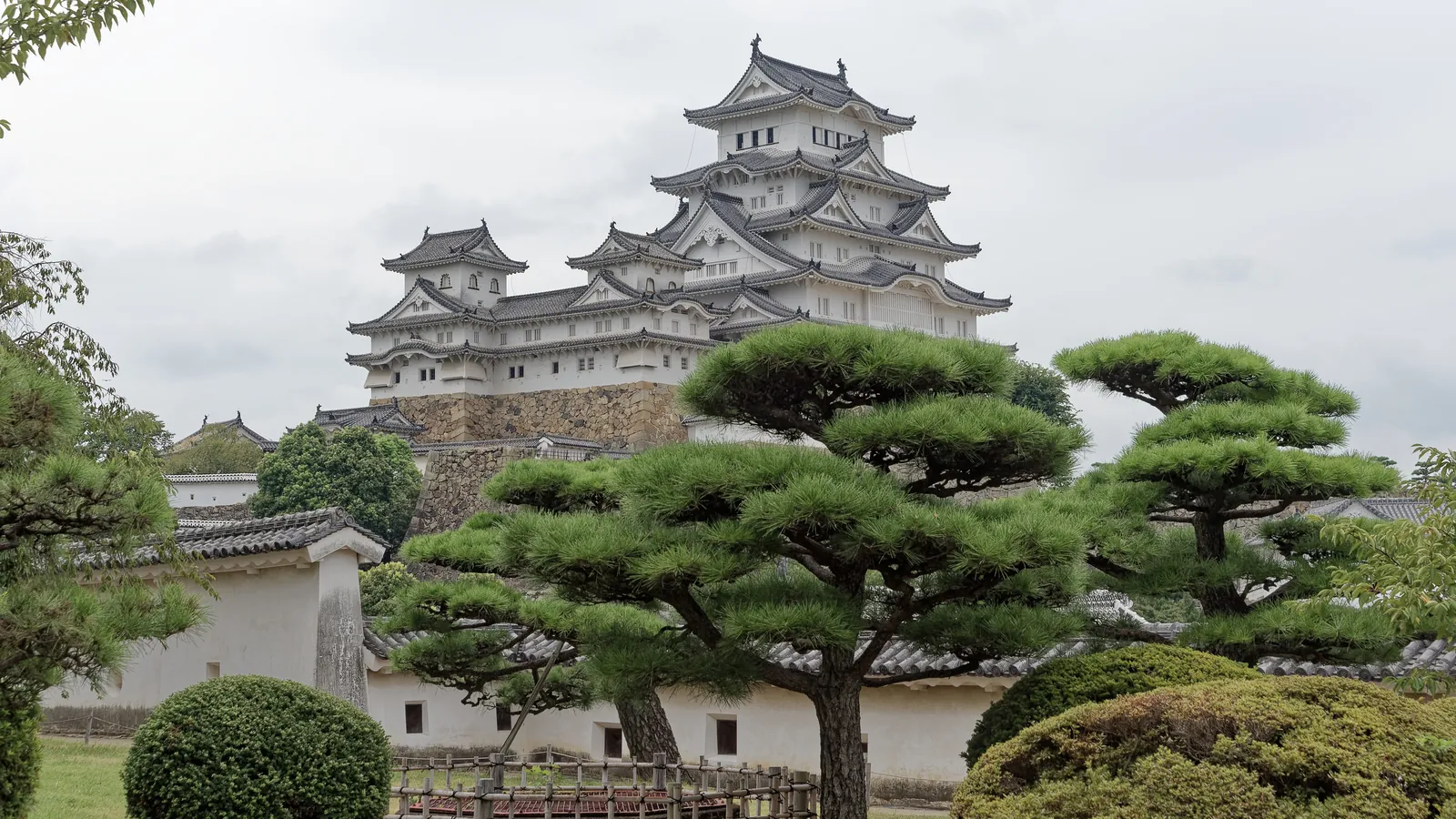
Himeji Castle's white plaster walls earned it the nickname Shirasagi-jo (White Heron Castle). UNESCO lists it as a World Heritage site (1993) and calls it "the finest surviving example of early 17th-century Japanese castle architecture." From Osaka it is 1 hour 11 minutes and 1,460 yen one way by JR (Japan Railways) rapid trains.
Fushimi Inari Shrine is even closer. From Kyoto Station it is 5 minutes and 150 yen on the JR Nara Line. The shrine dates from 711, and the whole mountain behind it (233 m) is its grounds.
Here's the short version: for three days from Osaka covering Kyoto, Nara and Kobe, you'll pay less without the pass. It starts to earn its keep once you add farther trips — Himeji, Wakayama — and ICOCA, despite the name, isn't a pass at all.
Most visitors never make it past Kyoto and Osaka: Japan Tourism Agency data put both at 45% to 53% of US and UK visitors in 2025, against just 4.6% (US) and 6.4% (UK) for Hyogo, where Himeji sits. The full table is further down — Himeji may be quieter than you'd expect.
The short answer
- ICOCA won't save you a yen — it's a payment card, not a pass. Your real choice is the Kansai Area Pass (on sale through September 30, 2026) or paying per ride with ICOCA or tickets. The old Kansai Thru Pass is gone (it ended after fiscal 2023), and Kansai Railway Pass Lite is on sale only through September 30, 2026, with no next edition announced as of September 19, 2026.
- Three days from Osaka to Kyoto, Nara and Kobe cost you 3,140 to 3,980 yen in fares — the 3-day pass is 5,800 yen. Add Himeji, Wakayama, two Haruka airport train rides and the Kyoto day tickets, and the math flips: in our four-day example the pass costs 7,000 yen against 14,900 yen paying separately.
- Skip the pass if you're riding Hankyu, Kintetsu or heading to Koyasan on Nankai — none of it is covered. We describe Kansai Railway Pass Lite below, but it isn't in the calculator.
All figures: adult, standard fares, one person, as of September 19, 2026.
Both passes run on the same clock: JR West's page says Kansai Area Pass sales end on September 30, 2026, and a pass bought by then stays valid for its full period. Kansai Railway Pass Lite is on sale through the same date and must be activated by then.
First, what changed and what ICOCA is
A lot of pages you'll find are out of date. If one still describes the Kansai Thru Pass as on sale, skip it — it's gone. JR West's new fares apply to tickets sold from April 1, 2025 (Japanese, PDF), so any fare quoted from before that date is stale too.
| Name | Status as of September 19, 2026 |
|---|---|
| Kansai Thru Pass | Ended with the fiscal 2023 sales, per the operator's release of February 22, 2024 (Japanese, PDF) |
| KANSAI RAILWAY PASS (fiscal 2024 and 2025) | 2 days 5,600 yen, 3 days 7,000 yen (child 2,800 / 3,500). Fiscal 2025 sales ran from April 1, 2025 to March 31, 2026. Renamed and reduced to Lite from fiscal 2026 |
| KANSAI RAILWAY PASS LITE (fiscal 2026) | 2 days 5,200 yen, 3 days 6,500 yen. Digital only. Sales period March 25 to September 30, 2026. Must be activated by September 30, 2026. Next edition: none announced as of September 19, 2026 |
| KANSAI ONE PASS | New issuance has ended and sales conclude as stock runs out. Facility benefits end after March 2027 (operator's site) |
| ICOCA | Not a pass. A rechargeable card that pays fares, with no discount |
| JR Kansai Area Pass | 1 to 4 days. The pass this post calculates |
Sources: Surutto Kansai (Japanese, PDF); Surutto Kansai, Lite; KANSAI ONE PASS; JR West, Kansai Area Pass.
Whether it'll be on sale again from this October through next spring is unannounced. Past announcements came on February 22, 2024 and February 20, 2025, with fiscal 2026 sales starting March 25, 2026 — a pattern, not a promise.
So the real comparison in this post is simple: the Kansai Area Pass against paying without one. ICOCA is just how you pay in that second case.
The numbers
Fares and prices in this section are as of September 19, 2026. All prices are in yen, for adults, and can change.
The passes and what they cost
| Pass | Price | Period and conditions |
|---|---|---|
| JR Kansai Area Pass, 1 / 2 / 3 / 4 days | 2,800 / 4,800 / 5,800 / 7,000 (child 1,400 / 2,400 / 2,900 / 3,500) | Days in a row (0:00 to 24:00). Foreign passport and "Temporary Visitor" status required. Japanese nationals cannot buy it, even permanent residents. Refund fee 10% (minimum 220 yen), none after use starts. The price on the day you buy applies |
| KANSAI RAILWAY PASS LITE, 2 / 3 days | 5,200 / 6,500 | Days you choose, not in a row. Digital QR ticket only. One day runs 3:00 to 2:59 the next morning. Screenshots do not work. No refund after use. – |
| Kansai Mini Pass, 3 days | 3,000 (child 1,500) | Osaka, Kyoto, Kobe, Nara and Universal City. Haruka costs extra |
| Kansai WIDE Area Pass, 5 days | 12,000 (child 6,000) | Price only. Not in the calculator |
| Kintetsu Rail Pass, 1 / 2 / 5 days | 1,900 / 3,700 / 4,900 | Useful mainly if you only visit Nara. The page shows no update date |
| Osaka Metro Enjoy Eco Card, weekday / weekend and holidays | 820 / 620 | Price only; check Osaka Metro's fare page for per-section fares |
JR West's English page marks the Kansai Area Pass price "current as of August 1, 2024" and warns it can change; the pass wasn't part of JR West's January 28, 2026 release on visitor products.
Sources: JR West, Kansai Area Pass; JR West, Kansai Mini Pass; JR West, Kansai WIDE Area Pass; JR West release, January 28, 2026 (Japanese, PDF); Surutto Kansai, Lite; Kintetsu Rail Pass; Osaka Metro.
What each pass covers
| Item | Kansai Area Pass | Lite |
|---|---|---|
| JR West conventional lines | Included (special rapid, rapid and local trains) | Not included |
| Haruka airport train | Reserved seats only, up to 2 rides. Reserve before boarding, not on the train | Not included |
| Shinkansen (bullet train) and limited express trains other than Haruka | Not valid (for example Kuroshio, Thunderbird and Konotori) | Not applicable |
| Private railways (Hankyu, Kintetsu, Nankai, Keihan, Hanshin) | Not included | Ordinary rides on many private lines. Limited express surcharges cost extra. Based on the fiscal 2025 list of companies |
| Kyoto City Subway, Keihan Keishin and Ishiyama-Sakamoto lines, Randen, buses | Vouchers only (see below) | Not included |
| Area | Osaka, Kyoto, Kobe, Nara, Himeji, Wakayama and Otsu (the map is an image) | See the official area map |
| Koyasan (Nankai) | Not valid | Nankai was covered in fiscal 2025; check the operator's page for fiscal 2026 |
The fiscal 2026 list of Lite companies is published only as an image map, so Lite isn't in the calculator below — see the official area map for coverage.
Sources: JR West, Kansai Area Pass; Surutto Kansai, Lite; Surutto Kansai, area map (PDF).
Regular fares to the usual day-trip places
The fares below are one-way, searched for September 25, 2026 at 10:00; a round trip is simply double (our own calculation). Private railway fares are cash fares, and the Hankyu figures include its barrier-free fee.
| Route | JR one way | Private railway one way | Round trip, JR | Round trip, cheaper | Pass valid? |
|---|---|---|---|---|---|
| Osaka to Kyoto | 580 (Special Rapid) | 410 (Hankyu, Osaka-umeda to Kyoto-kawaramachi) | 1,160 | 820 | JR only |
| Kyoto to Inari (Fushimi Inari) | 150 | none | 300 | 300 | JR |
| Kyoto to Uji | 240 | none | 480 | 480 | JR |
| Kyoto to Saga-Arashiyama | 240 | none | 480 | 480 | JR |
| Kyoto to Otsu | 200 | none | 400 | 400 | JR |
| Osaka to Nara | 840 (Yamatoji Rapid) | 680 (Kintetsu, Osaka-namba to Kintetsu-nara. Limited express +520) | 1,680 | 1,360 | JR only |
| Kyoto to Nara | 720 (Miyakoji Rapid) | 760 (Kintetsu, Kyoto to Kintetsu-nara. Limited express +520) | 1,440 | 1,440 | JR only |
| Osaka to Sannomiya (Kobe) | 420 | 330 (Hankyu, Osaka-umeda to Kobe-sannomiya) | 840 | 660 | JR only |
| Osaka to Himeji | 1,460 (via Sannomiya, change between Special Rapid trains) | 1,350 (Hankyu, Kobe Rapid Railway and Sanyo through fare, Osaka-umeda to Sanyo-himeji) | 2,920 | 2,700 | JR only |
| Osaka to Wakayama | 1,300 (via Tennoji) | none | 2,600 | 2,600 | JR |
| Osaka to Universal City | 200 | none | 400 | 400 | JR |
| Namba to Koyasan | none | 1,430 (Nankai, with the cable car at Gokurakubashi. Limited express Koya +1,100) | none | 2,860 | Not valid |
| Kansai Airport to Kyoto, Haruka reserved seat (one way only) | 3,590 (surcharge 1,730 on our sample day) | 2,200 (Haruka one-way ticket for visitors) | 3,590 (one way) | 2,200 (one way) | Reserved seats only, up to 2 rides |
Four things worth knowing:
- Osaka to Kyoto is cheaper on Hankyu (410 yen) than JR's Special Rapid (580 yen), and Osaka to Nara is cheaper on Kintetsu (680 yen from Osaka-namba) than JR (840 yen) — though from Osaka Station or Umeda you'd need to change trains to reach Kintetsu. Going Kyoto to Nara, JR (720 yen) beats Kintetsu (760 yen).
- The Haruka surcharge moves with the date. Across our searches from September 19 to November 1, 2026 it was 1,530, 1,730, 1,930 or 2,130 yen; the table above uses the 1,730 yen day. For the airport ride itself, see Kansai Airport to Kyoto, Namba and Umeda.
- These JR West fares are the ones after the April 1, 2025 revision (we used one source for that date).
- Private railway fares above are cash fares — IC card fares can differ slightly, and Kintetsu's fare PDF carries no date.
Sources: JR West, My Dia (search results for September 25, 2026): https://mydia.jr-odekake.net/; Hankyu fare search; Kintetsu, Osaka-namba to Kintetsu-nara (PDF); Kintetsu, Kyoto to Kintetsu-nara (PDF); Nankai timetable and fare search.
The Kyoto tickets that come with the pass
Buy the Kansai Area Pass and you also get vouchers for the Kyoto City Subway, Keihan and Hankyu — each good for one day, whether your pass runs 1 day or 4. Exchange a voucher on the day you use it, inside your pass period. Lose it and it's gone; leave it unused and there's no refund (JR West's page).
| Ticket | Regular price | Conditions |
|---|---|---|
| Kyoto City Subway 1-day ticket (voucher) | 800 | Subway only. Exchange at places such as the Kyoto City Bus and Subway Information Center at Kyoto Station (JR West's page) |
| Keihan (equal to the Kyoto Sightseeing Pass) | 1,100 for 1 day | Keihan lines in Kyoto City. Exchange at Sanjo, Tofukuji or Uji stations. Show the pass and the voucher together |
| Hankyu Kyoto Line 1-day free ticket (voucher) | No price shown | Kyoto Main Line, Senri Line and Arashiyama Line. Exchange at a Hankyu Tourist Center |
| Kyoto City bus, one ride in the flat-fare zone | 230 | Not included in any pass. The bus and subway 1-day ticket is 1,100 |
On Keihan's own page, checked September 19, 2026, the Kyoto Sightseeing Pass costs 1,100 yen for one day or 1,300 yen for 24 hours. JR West describes the Keihan voucher as covering Keihan lines in Kyoto City, so we treat 1,100 yen as its value — don't confuse it with the separate Keihan Kyoto-Osaka Sightseeing Pass at 1,650 yen.
Here's how the calculator treats these vouchers: they only count if you'd have bought that ticket anyway, in which case the no-pass column adds its price (800 or 1,100 yen). Wouldn't have bought it? The value is zero. We leave the Hankyu voucher out of the count entirely, since JR already gets you from Osaka to Kyoto with the pass — it only matters if you want Hankyu lines such as the Arashiyama Line.
One wrinkle: Kyoto City's ticket page has an old, commented-out passage about an 800 yen subway-and-bus ticket for JR West pass holders that isn't shown to readers, so it's left out of this article. The visible page lists the regular subway-and-bus 1-day ticket at 1,100 yen. Kyoto City also says its sight discounts don't stack with the Kansai Area Pass, so those are left out too. Worth asking at the counter.
Sources: JR West, Kyoto City Subway, Keihan and Hankyu vouchers; Kyoto City Transportation Bureau, subway 1-day ticket; Kyoto City Transportation Bureau, subway and bus 1-day ticket; Kyoto City Transportation Bureau, bus fares; Keihan, Special Sightseeing Pass; Hankyu, Kyoto Line 1-day free ticket (Japanese).
What ICOCA is, and what it is not
ICOCA is a rechargeable IC card — tap it at the gate — sold by JR West. It pays your fares; it doesn't lower them. If you're riding on ICOCA, use the same fare table above.
- Price: 2,000 yen, which includes a 500 yen deposit. You get the deposit back when you return the card.
- Where it works: JR West lines and many private railways, subways and buses in Kansai, including Kyoto City buses and subway. On private railways, add money before you board. On JR West's ICOCA area, it cannot be used for trips over 200 km of operating distance (with some exceptions).
- Apple Pay: an ICOCA can also be added on an iPhone.
- KANSAI ONE PASS: this is an ICOCA in a different design, and new issuance has ended.
We don't count the ICOCA card price in the calculator — you get the 500 yen deposit back.
Sources: JR West, ICOCA (English); JR-Odekake Net, ICOCA purchase (Japanese); JR-Odekake Net, ICOCA areas (Japanese); JR-Odekake Net, ICOCA on Apple Pay (Japanese).
How many visitors go beyond Kyoto and Osaka
Visit rate means the share of surveyed visitors who went to a prefecture (more than one answer allowed). These are 2025 figures, in percent.
| Nationality | Kyoto | Osaka | Nara | Hyogo (Himeji, Kobe) | Wakayama (Koyasan) |
|---|---|---|---|---|---|
| United States | 44.9 | 44.7 | 11.9 | 4.6 | 1.1 |
| United Kingdom | 53.3 | 52.5 | 17.3 | 6.4 | 1.7 |
Source: Japan Tourism Agency, Consumption Trend Survey for Foreigners Visiting Japan, 2025 (final), Table 6-1, Public Data License 1.0 (processed by Japan Trip Math), from 7,712 US and 1,351 UK responses. All this tells us is that Hyogo and Wakayama see far fewer visitors than Kyoto and Osaka — we won't stretch it further than that.
Calculator: pass or no pass for your day trips
Plug in your own plan. Four things to know before you do:
- Pick your pass length, then enter round trips for each place you'll visit. Count each place once, even across days that share a place — if Kobe and Himeji fall on the same day, count only one.
- Set the two Kyoto tickets to "Yes" only if you'd buy them anyway; each is a one-day voucher.
- Haruka counts one-way, for a reserved seat — the pass covers up to 2 rides.
- "Cheaper fares" means Hankyu from Osaka-umeda, Kintetsu from Osaka-namba and the Haruka one-way ticket, wherever we could check them.
What the calculator leaves out:
- Kansai Railway Pass Lite — its fiscal 2026 company list wasn't readable, and sales are listed as ending September 30, 2026.
- A separate Kyoto City ticket for JR West pass holders, and sight discounts — ask at the counter whether either is still on offer.
- The Hankyu voucher — it only matters if you're riding Hankyu lines such as Arashiyama.
- Sellers' prices — compare against the official price before you buy.
- IC card fares on private railways, and the missing date on Kintetsu's fare PDF.
- Child fares — the Kansai Area Pass is half price for children; the Lite child price isn't listed on the operator's page.
- A Kobe stop on the way to Himeji — price that leg separately using the fare table above.
- City rides and admission: Osaka Metro and other city fares, Universal Studios Japan tickets, and lunch.
- The Haruka surcharge on other dates — the tool uses the 1,730 yen day.
Scenarios: five ways to spend the days
These five scenarios are examples, not recommendations — see how we work out the numbers. One thing the tool won't check for you: whether your trip actually fits inside the pass days. That's on you.
Adult, standard fares, total for one person, as of September 19, 2026. The pass uses JR West's list price; compare against your seller's price before you buy. "Cheaper" means Hankyu, Kintetsu or the Haruka one-way ticket, wherever those beat JR.
| Scenario | Pass | No pass, JR | No pass, cheaper | The gap |
|---|---|---|---|---|
| S1: three days from Osaka. Kyoto, Fushimi Inari, Nara, Kobe (3-day pass) | 5,800 | 3,980 | 3,140 | No pass costs 2,660 less (cheaper) or 1,820 less (JR) |
| S2: S1 without Kobe, plus Himeji, Uji and Saga-Arashiyama (3-day pass) | 5,800 | 7,020 | 6,140 | The pass costs 340 less (cheaper) or 1,220 less (JR) |
| S3: four days. Wakayama, Himeji, Nara, Kyoto twice, Inari, 2 Haruka rides, Kyoto subway and Keihan tickets (4-day pass) | 7,000 | 18,900 | 14,900 | The pass costs 7,900 less (cheaper) |
| S4: Koyasan, Nara and Kyoto (2-day pass) | 7,660 | 5,700 | 5,040 | No pass costs 2,620 less. Nankai adds 2,860 to every column |
| S5: one Kyoto day, Inari, Uji and Saga-Arashiyama (1-day pass), without / with the subway ticket | 2,800 | 2,420 / 3,220 | 2,080 / 2,880 | Without the subway ticket, no pass costs 720 less. With it, the pass costs 80 less |
Three days around Osaka: Kyoto, Nara and Kobe
If your days look like S1, skip the pass. Osaka to Kyoto (1,160 yen by JR, or 820 by Hankyu), Fushimi Inari, Osaka to Nara and Osaka to Kobe add up to 3,980 yen by JR or 3,140 yen at the cheaper fares — well under the 3-day pass's 5,800 yen. Part of the reason: some of those cheaper fares run on lines the pass doesn't touch at all. Kyoto and Nara alone were never going to clear the pass's price.
Adding Himeji and more Kyoto stops
Swap Kobe for Himeji, Uji and Saga-Arashiyama (S2), and the picture flips. Himeji alone is 2,920 yen round trip by JR; add Uji and Saga-Arashiyama at 480 yen each, and JR fares total 7,020 yen against the pass's 5,800 yen — a 1,220 yen edge for the pass, narrowing to 6,140 yen and just 340 yen against the cheaper fares.
That's a thin enough margin to flip either way: your seller's price, whether your three days run consecutively, or a Kobe stop en route (price it separately using the fare table above) could tip it back.
Four days with Wakayama, Himeji and both Haruka rides
Load up on Wakayama (2,600 yen round trip), Himeji, Nara, two Haruka rides in reserved seats and Kyoto trips (S3), and the pass wins big: 7,000 yen for the 4-day pass against 14,900 yen at the cheaper fares. But this is the pass used to its fullest, not an average day — the two Kyoto tickets (800 and 1,100 yen) only count because we assumed you'd buy them regardless, and the Haruka surcharge shifts this gap by date.
Heading to Hiroshima instead? You'll need a different pass — see Hiroshima day trip from Osaka: pass vs tickets vs tour.
Koyasan: the Area Pass does not go there
Koyasan is the head temple site of Shingon Buddhism — the official site lists Ajikan meditation, sutra copying and temple lodging among what you can do there. You reach it on Nankai from Namba, 1,430 yen each way (1,100 yen more for the Limited Express Koya).
The catch: the Kansai Area Pass doesn't cover Nankai at all. In S4, that 2,860 yen fare lands on every column regardless of pass, and skipping the pass altogether comes out 2,620 yen cheaper. Lite covered Nankai in fiscal 2025; check the operator's page for fiscal 2026 before counting on it, since it isn't in this count.
A single Kyoto day with the Kyoto subway voucher
One Kyoto day — Inari, Uji, Saga-Arashiyama from Osaka — and the 1-day pass loses by 720 yen (2,420 yen by JR or 2,080 by Hankyu, against the pass's 2,800 yen). But say you'd have bought the 800 yen Kyoto subway ticket anyway: the no-pass total climbs to 2,880 yen, and the pass wins instead, by 80 yen. One voucher, and the verdict flips. (Kyoto City buses, 230 yen a ride, sit outside any pass and add the same to both sides either way.)
Is Kansai Railway Pass Lite worth a look?
This one isn't in the calculator — its fiscal 2026 company list is published only as an image map, and the operator's page shows no child price. Sales run March 25 to September 30, 2026, with no next edition announced as of September 19, 2026.
Here's what we can tell you: 5,200 yen for 2 days or 6,500 yen for 3, digital only, no refund once used. It skips JR, the Kyoto City Subway, Keihan's Keishin and Ishiyama-Sakamoto lines, Randen and buses, and limited express surcharges cost extra on top.
Want to check it yourself? Add up your private railway fares for the days you'd use it and weigh that against 5,200 or 6,500 yen — just leave JR rides out of the count, since Lite doesn't cover them.
What to buy instead, and how to buy
In our examples, the pass pays off on days that look like S2 or S3, and loses on days like S1. Skipping it? ICOCA is the easy way to pay as you go. Here's where to buy each pass.
Buying the Kansai Area Pass
You'll need a foreign passport and Temporary Visitor status to buy this one — Japanese nationals, even permanent residents, can't. JR West sells it through JR-WEST ONLINE TRAIN RESERVATION (from 10:00 JST, one month before use, credit card only), plus overseas and Japan-based travel agencies. Whatever the price is on your purchase day, that's what you pay.
KKday and GetYourGuide list it too — compare their prices against JR West's before you book. For the official price and terms, see JR West's page.
Buy the Kansai Area Pass by September 30, 2026; it stays valid for its full period after that.
Book hereAffiliate link
Buying Lite while it is on sale
There's no official direct-sales site for this one — the operator's page points you to Klook, KKday and WAUG. Sales run March 25 to September 30, 2026, and you must activate the pass by that same September 30 date.
Day trips and where to sleep
Landing at Kansai Airport? Kansai Airport to Kyoto, Namba and Umeda covers Haruka and the one-way ticket. And where you sleep changes how many Osaka-to-Kyoto round trips you'll be entering in the calculator — see Stay in Kyoto or Osaka? Lodging tax and train fares compared.
Whichever way the pass math falls for your days, Himeji's white walls and Fushimi Inari's mountain path are both a short, cheap ride away — worth the trip, pass or no pass.
Kansai Area Pass vs Kansai Railway Pass: common questions
Is the Kansai Area Pass worth it?
Stick to Kyoto, Nara and Kobe from Osaka, and you'll pay more than the fares (S1). Add Himeji, Wakayama, Haruka rides and Kyoto vouchers you'd buy anyway, and it can cost you far less (S3). Run your own days through the calculator above.
What happened to the Kansai Thru Pass?
It's gone — it ended with the fiscal 2023 sales, per the operator's release of February 22, 2024. Its successor was KANSAI RAILWAY PASS, renamed KANSAI RAILWAY PASS LITE from fiscal 2026.
What is Kansai Railway Pass Lite, and can I buy it?
A 2-day (5,200 yen) or 3-day (6,500 yen) digital pass. Sales run March 25 to September 30, 2026. As of September 19, 2026, no next edition has been announced.
Does the Kansai Area Pass include Osaka Metro?
No — the vouchers cover the Kyoto City Subway, Keihan and Hankyu, one day each.
Does the Kansai Area Pass cover the Haruka?
Yes, reserved seats, up to 2 rides — and you need to reserve before boarding, since you can't do it on the train. The operator's page only mentions "reserved seats," so we won't guess about non-reserved ones.
Can I use the pass on the Shinkansen or other limited express trains?
No. The Shinkansen, any limited express other than Haruka, paid seat services and expressway buses are all outside the pass.
Is Nara cheaper by JR or Kintetsu?
From Osaka-namba, Kintetsu wins at 680 yen against JR's 840 yen. From Kyoto, it flips: JR is 720 yen, Kintetsu 760. Kintetsu's limited express adds 520 yen on top, and its fare PDF carries no date.
Which is cheaper between Osaka and Kyoto?
Hankyu, at 410 yen one way as of September 19, 2026, beats JR's Special Rapid at 580 yen. Hankyu runs from Osaka-umeda to Kyoto-kawaramachi.
Does the Kansai Area Pass include Kyoto buses?
No. Kyoto City buses cost 230 yen in the flat-fare zone regardless. JR West buses are included, but only on general routes inside the valid area.
Can Japanese residents buy the pass?
No — you need a foreign passport and Temporary Visitor status, and even permanent residents don't qualify. An ICOCA, on the other hand, anyone can buy.
Can I get a refund?
For the Kansai Area Pass, it costs 10% (minimum 220 yen), and nothing comes back once you start using it. Lite tickets aren't refunded after use, either. ICOCA is different: return the card and you get your 500 yen deposit back.
Is there a Kansai Mini Pass, and a Kintetsu Rail Pass?
Yes. The Kansai Mini Pass runs 3,000 yen for 3 days (Haruka costs extra), and the Kintetsu Rail Pass is 1,900 yen for 1 day, 3,700 for 2 or 4,900 for 5. Neither is in the calculator above.
Related guides
- Day Trip to Hiroshima From Osaka: What Skipping the Tour Costs
- Osaka Amazing Pass 2026: Does It Cover the 3,500 Yen?
- Kobe From Osaka: The Short Train Ride That's Worth an Entire Day
- Day Trip to Nara From Kyoto or Osaka: JR vs Kintetsu
- SUNQ Pass vs JR Kyushu Rail Pass: Which One Wins
Sources and data date
All fares were checked on September 19, 2026.
- JR West: Kansai Area Pass, Kyoto City Subway, Keihan and Hankyu vouchers, Kansai Mini Pass, Kansai WIDE Area Pass, ICOCA (English), news release of January 28, 2026 (Japanese, PDF), fare revision release of May 15, 2024 (Japanese, PDF)
- JR-Odekake Net: Kansai Area Pass (Japanese), ICOCA purchase (Japanese), ICOCA areas (Japanese), ICOCA on Apple Pay (Japanese)
- JR West My Dia: https://mydia.jr-odekake.net/. We used search results for September 25, 2026.
- Surutto Kansai: Lite (English), how to use, area map (PDF), release of February 22, 2024 (Japanese, PDF), release of February 20, 2025 (Japanese, PDF)
- KANSAI ONE PASS: About, Sales
- Kyoto City Transportation Bureau: subway and bus 1-day ticket, subway 1-day ticket, bus fares
- Keihan Electric Railway: Special Sightseeing Pass (Kyoto Sightseeing Pass 1,100 yen for 1 day, and Kyoto-Osaka Sightseeing Pass 1,650 yen)
- Hankyu Railway: fare search, Kyoto Line 1-day free ticket (Japanese)
- Kintetsu: Osaka-namba to Kintetsu-nara (PDF), Kyoto to Kintetsu-nara (PDF), Kintetsu Rail Pass
- Nankai: timetable and fare search, Limited Express Koya
- Osaka Metro: Enjoy Eco Card
- Japan Tourism Agency: Consumption Trend Survey for Foreigners Visiting Japan, 2025 (final), tables (Excel), survey page (Japanese). Public Data License 1.0, processed by Japan Trip Math.
- UNESCO World Heritage Centre: Himeji-jo
- Fushimi Inari Taisha: official site (English)
- Koyasan Shingon Buddhism, Kongobuji: official site (English)
Haruka fares come from JR West's English pages and My Dia. Details are in Kansai Airport to Kyoto, Namba and Umeda.
Last checked: September 19, 2026.